



Evidence for Jaminet’s Corollary

Note to Abby: I did get distracted. Lemon juice next week.

In Friday’s post, I offered Jaminet’s Corollary to the Ewald Hypothesis. The Ewald hypothesis states that since the human body would have evolved to be disease-free in its natural state, most disease must be caused by infections. A consequence of the Ewald hypothesis is that, since microbes evolve very quickly, they will optimize their characteristics, including their virulence, depending on the human environment. If human-human transmission is easy, microbes will become more virulent and produce acute, potentially fatal disease. If transmission is hard, microbes will become less virulent, and will produce mild, chronic diseases.

Jaminet’s corollary is that such an evolution has been happening over the last hundred years or so, caused by water and sewage treatment and other hygienic steps that made transmission more difficult. The result has been a decreasing number of pathogens that induce acute deadly disease, but an increasing number that induce milder, chronic, disabling disease.

Indeed, most of the diseases we now associate with aging – including cardiovascular disease, cancer, autoimmune diseases, dementia, and the rest – are probably of infectious origin and the pathogens responsible may have evolved key characteristics fairly recently. Many modern diseases were probably non-existent in the Paleolithic and may have substantially changed character in just the last hundred years.

I predict that pathogens will continue to evolve into more successful symbiotes with human hosts, and that chronic infections will have to become the focus of medicine.

Is there evidence for Jaminet’s corollary?  I thought I’d spend a blog post looking at gross statistics.

When did hygienic improvements occur?

Since the evolution of pathogens should have begun when water and sewage treatment were adopted, it would be good to know when that occurred.

Historical Statistics of the United States, Millennial Edition, volume 4, p 1070, summarizes the history as follows:

[I]n the nineteenth century most cities – including those with highly developed water systems – relied on privy vaults and cesspools for sewage disposal…. Sewers were late to develop because at least initially privy vaults and cesspools were acceptable methods of liquid waste disposal, and they were considerably less expensive to build and operate than sewers.

Sewers began to replace privy vaults and cesspools as running water became more common and its use grew. The convenience and low price of running water led to a great increase in per capita usage. The consequent increase in the volume of waste water overwhelmed and undermined the efficacy of cesspools and privy vaults. According to Martin Melosi, “the great volume of water used in homes, businesses, and industrial plants flooded cesspools and privy vaults, inundated yards and lots, and posed not just a nuisance but a major health hazard” (Melosi 2000, p 91).

Joel Tarr also notes the impact of the increasing popularity of water closets over the later part of the nineteenth century (Tarr 1996, p 183). Water closets further increased the consumption of water, thus contributing to the discharge of contaminated fluids.

The data is not really adequate to tell when the biggest improvements were made. The most relevant data series, Dc374 and Dc375, begin only in 1915. They show that investments in sewer and water facilities were high before World War I, fell during the war and post-war depression, were very high again in the 1920s, and fell again after the Great Depression. It’s likely that the peak in water and sewage improvements occurred before 1930. In constant dollar terms, investment in water facilities peaked in 1930 at 610 million 1957 dollars and didn’t reach that level again until 1955. Investment in sewer facilities peaked at 734 million 1957 dollars in 1936 – probably due to Depression-era public works spending – and didn’t reach those levels again until 1953.

It seems likely that hygienic improvements were being undertaken continuously from the late 1800s and were probably completed in most of the US by the 1930s; in rural areas by the 1960s. Systems to deliver tap water were built mostly in the last quarter of the 19th century and first half of the 20th. The first flush toilets appeared in 1857-1860 and Thomas Crapper’s popularized toilet was marketed in the 1880s.

Mortality

Historical Statistics of the United States, Millennial Edition, volume 1, p 385-6, summarizes the trends in mortality as follows:

Recent work with the genealogical data has concluded that adult mortality was relatively stable after about 1800 and then rose in the 1840s and 1850s before commending long and slow improvement after the Civil War. This finding is surprising because we have evidence of rising real income per capita and of significant economic growth during the 1840-1860 period. However, … urbanization and immigration may have had more deleterious effects than hitherto believed. Further, the disease environment may have shifted in an unfavorable direction (Fogel 1986; Pope 1992; Haines, Craig and Weiss 2003).

Of course, urbanization and a worsening of the disease environment would be expected to coincide: with lack of hygienic handling of sewage, cities were mortality sinks throughout medieval times and that would have continued into the 19th century. Under the Ewald hypothesis, we would expect microbes to have become more virulent as cities became more densely populated in the 1840s and 1850s.

We have better information for the post-Civil War period. Rural mortality probably began its decline in the 1870s becaue of improvements in diet, nutrition, housing, and other quality-of-life aspects on the farm. There would have been little role for public health systems before the twentieth century in rural areas. Urban mortality probably did not begin to decline prior to 1880, but thereafter urban public health measures – especially construction of central water distribution systems to deliver pure water and sanitary sewers – were important in producing a rapid decline of infectious diseases and mortality in the cities that installed these improvements (Melosi 2000). There is no doubt that mortality declined dramatically in both rural and urban areas after about 1900 (Preston and Haines 1991).

The greatest improvements in mortality occurred between 1880 and 1950. Here is life expectancy at birth between 1850 and 1995 (series Ab644):
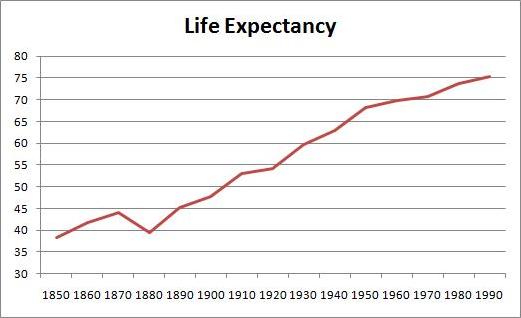
Life expectancy was only 39.4 years in 1880, but increased to 68.2 years by 1950 – an increase of 28.8 years. In the subsequent 40 years, life expectancy went up only a further 7.2 years.

Causes of Death

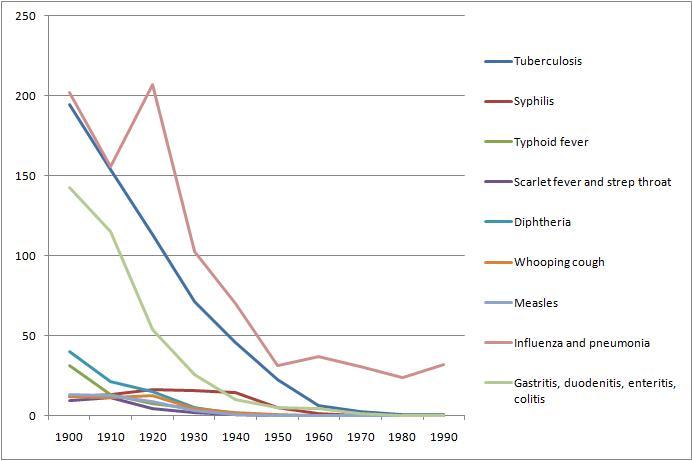
From Table Ab929-951 of volume 1, we can get a breakdown of death rates by cause from 1900 to 1990. Here are death rates from various infectious diseases:
And here for comparison are death rates from cancer, cardiovascular and renal diseases, and diabetes:
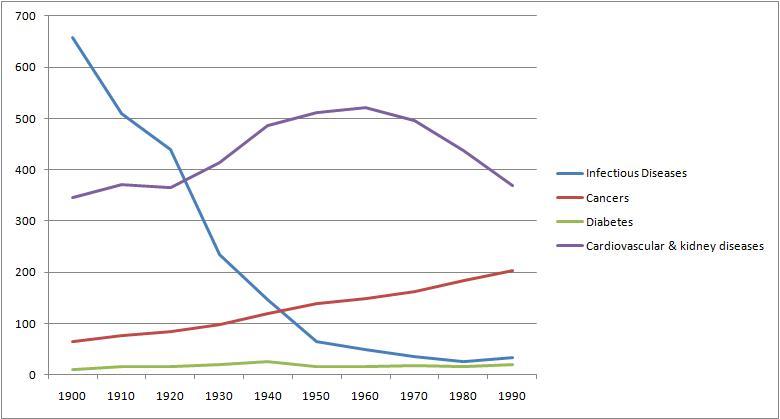
Overall, death rates have declined, consistent with rising life expectancy. However, death rates from chronic diseases have actually increased, while death rates from acute infections have, save for influenza and pneumonia, gone pretty much to zero.

Conclusion

Death rates from acute infections plummeted in the period 1880 to 1950 when hygienic improvements were being made. By and large, these decreases in infectious disease mortality preceded the development of antimicrobial medicines. Penicillin was discovered only in 1928, and by then mortality from infectious diseases had already fallen by about 70%.

We can’t really evaluate the Jaminet corollary from this data, other than to say that the data is consistent with the hypothesis. Nothing here rules out the idea that pathogens have been evolving from virulent, mortality-inducing germs into mild, illness-inducing germs.

Sometime later this year, I’ll look for evidence that individual pathogens have evolved over the last hundred years. It should be possible to find evidence regarding the germs for tuberculosis and influenza, since those continue to be actively studied.

There is great concern over the evolution of antibiotic resistance among bacteria. This data suggests that antibiotic resistance will not generate a return to the high mortality rates of the 19th century. Those mortality rates were high not due to a lack of antibiotics, but due to a lack of hygiene that encouraged microbes to become virulent.

As long as we keep our hands and food clean and our running water pure, we can expect mortality rates to stay low. Our problem will be a growing collection of chronic diseases.

Our microbes will want to keep us alive — that is good. But they will increasingly succeed at making us serve them as unwilling hosts. We will be increasingly burdened by parasites.

Diet, nutrition, and antimicrobial medicine are our defenses. Let’s use them.
Dong Po’s Pork

Su Dong Po is one of the two or three most beloved poets in Chinese history. So famous was he that the dish he loved most was given his name: Dong Po’s Pork.

It’s quite a treat: you’ll be unsure whether you’re eating the entrée or the dessert. Strangely this dish, one of the most popular in Chinese cuisine, rarely appears on the menu of Chinese restaurants in the U.S.

Preparing the Pork Bellies

Dong Po’s Pork is basically a high-class way of cooking pork bellies – the uncured precursor to bacon.

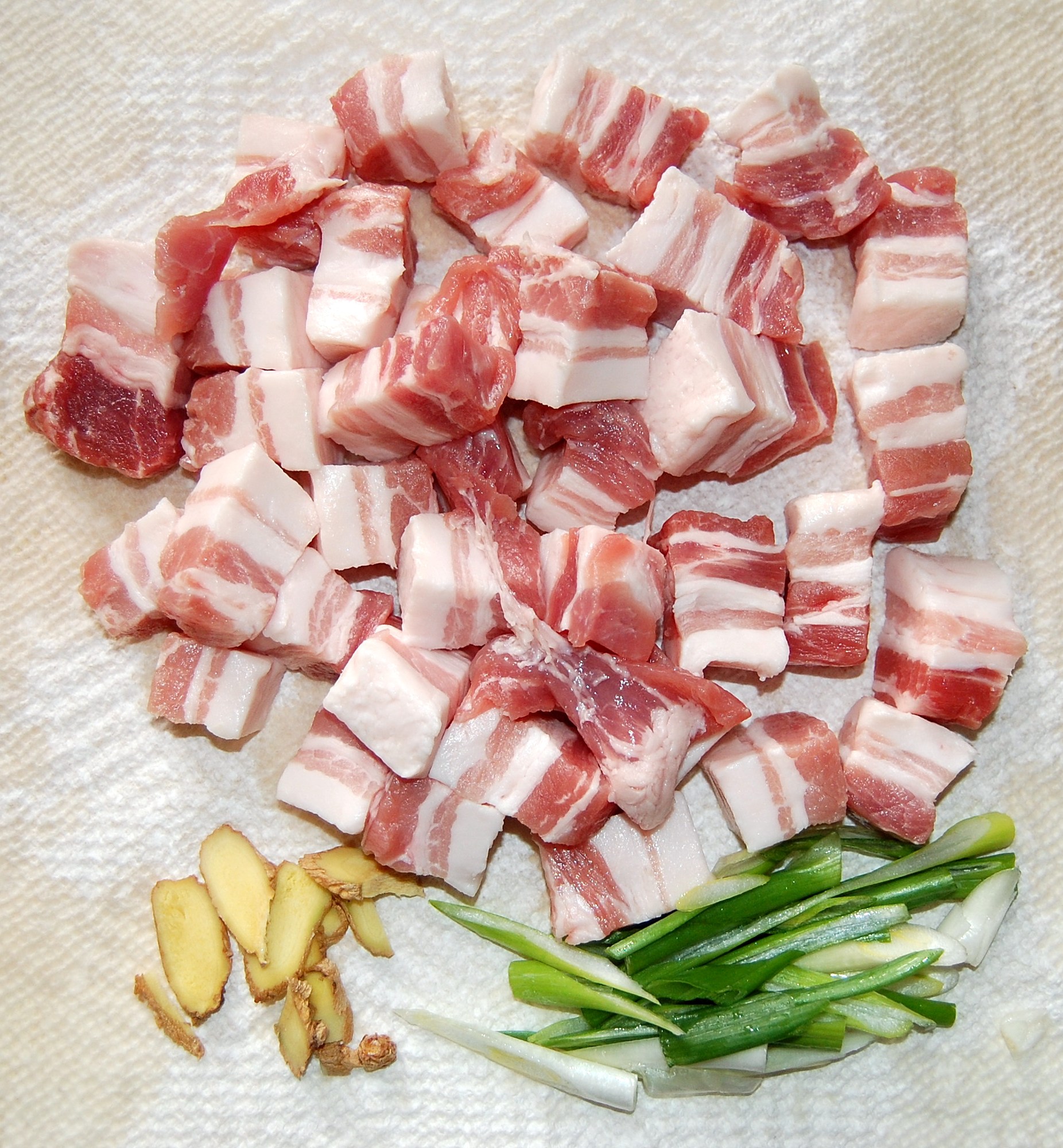
Buy the pork bellies in thick slices – at least a half-inch thick. Cut them into cubes about 1 inch on a side. You’ll also need a few slices from a ginger root and scallions:

The first step is to boil a pot of water. Add the cubed pork bellies, ginger, and scallion to the boiling water.

Boil for 30 minutes, it will look like this:

Drain the liquid, keeping the solids.

This boiling process removes unpleasant pork flavors, and leaves the pork with a very mild fatty flavor.

Preparing the Sauce

While the pork is being boiled, prepare the cooking sauce. Mix in a small bowl about 2 tbsp soy sauce – we use Kikkoman Teriyaki Marinade and Soy Sauce, but any naturally brewed soy sauce can be used – and a half cup of wine – we used Riesling since we frequently drink that, but any wine will do. Also, cut more ginger and scallions. The traditional Chinese recipe calls for star anise as well:

If whole star anise is unavailable, you can find ground anise or Chinese “5-star” spice in your supermarket spice aisle. However, it would also come out fine if you dispense with the anise; the pork, soy sauce, wine, and caramelized sugar provide most of the taste.

Traditionally, the remainder of the cooking would be done in a Dutch oven or similar pot that retains heat and can be tightly sealed to keep in steam. However, we’ll use a wok.

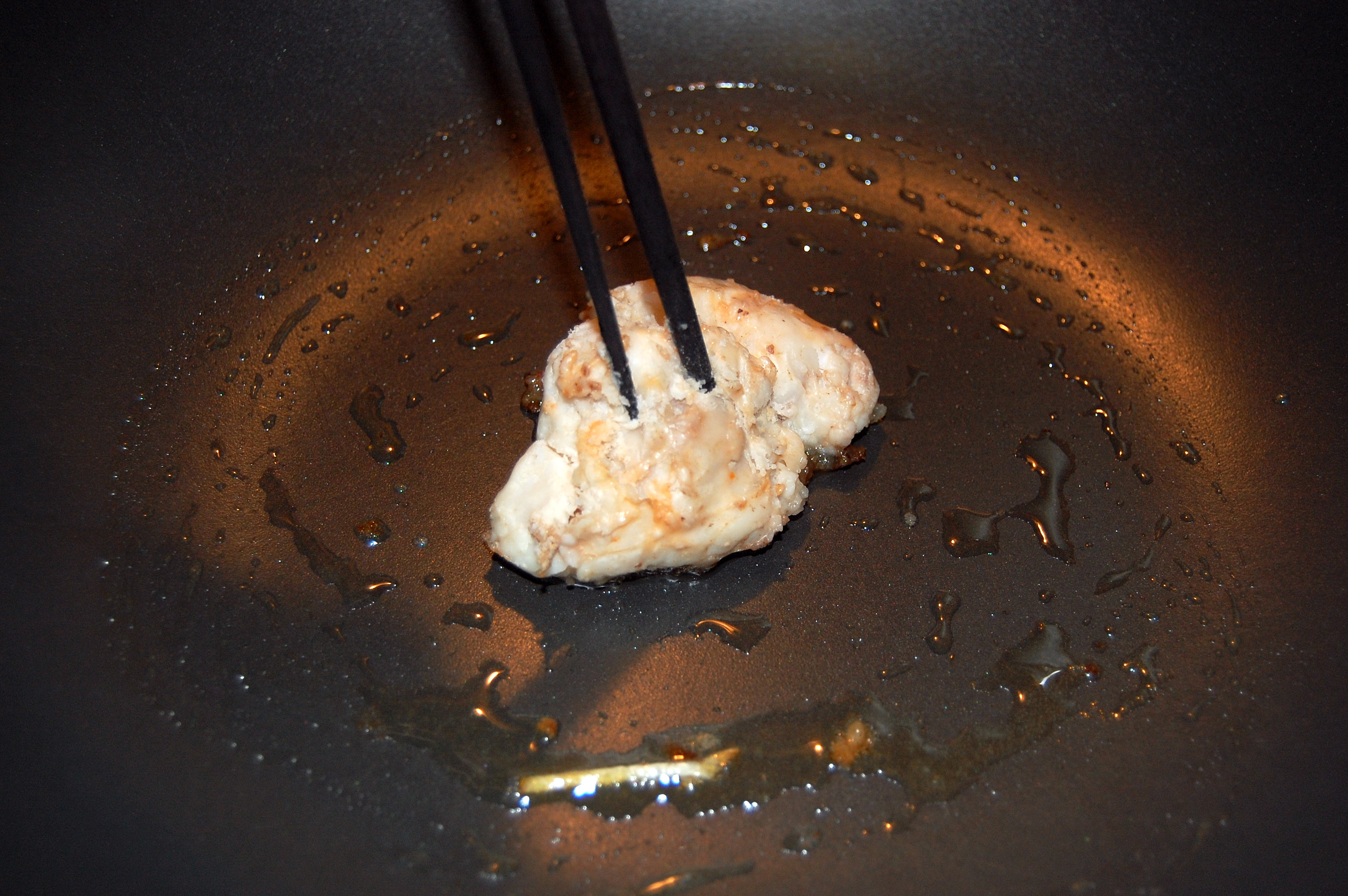
In the wok, warm some cooking fat. You can use any oil you like – olive oil or coconut oil are fine. We have been using beef tallow lately – here we are melting some fat from a block of beef fat:

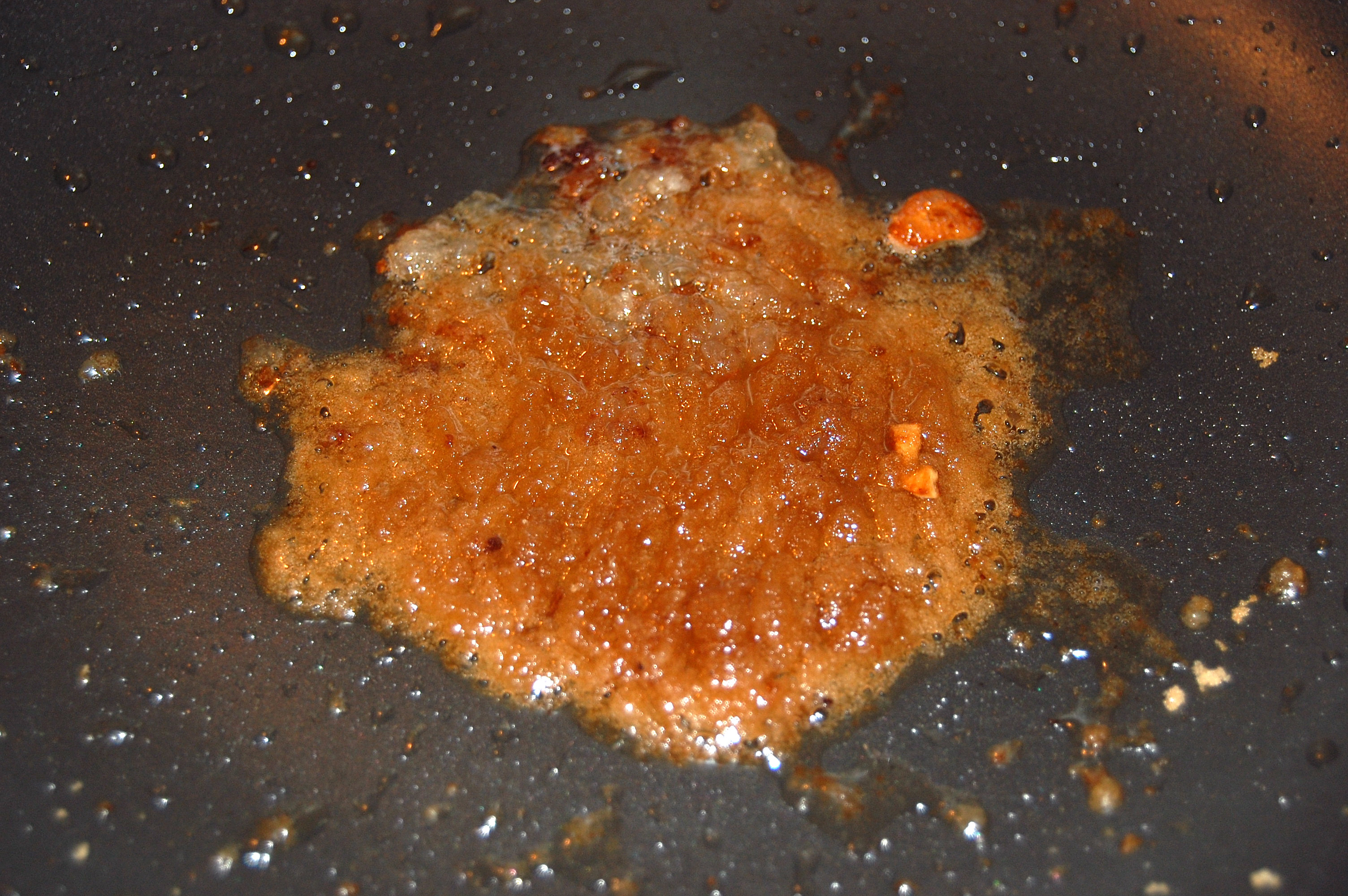
Once the oil is warm, add about 2 tbsp rice syrup. Stir as the sugar caramelizes. It’s ready as soon as bubbles appear — about 30 seconds:

We have adopted rice syrup as our sweetener of choice. It is a zero-fructose sweetener, and we like that it provides glucose calories along with its sweet taste: it seems the body evolved to expect sweet tastes to be followed by an infusion of sugar, since zero-calorie sweeteners trigger insulin release. We like our food to fit the body’s evolved expectations. (The traditional sweetener is smaller amount of brown sugar.)

Caramelizing sugar will create some advanced glycation endproducts (AGEs), so this dish is not perfectly healthy – but it is healthy enough for us.

Completing the Dish

Immediately after the rice syrup begins to caramelize, and before it burns, add the cooked pork to the pan and stir to coat the pork evenly.

Then immediately add all the other ingredients.

Cover, briefly raise the heat to bring the wine and soy sauce mixture to a simmer, then lower the heat and let it simmer covered for 30 to 60 minutes.

The object here is to steam the pork and let the sauce flavors combine with the pork. The longer you steam it, the softer the fat becomes and the more it melts in your mouth.

Every 10 to 15 minutes, uncover and stir. If your soy sauce was not salty enough for you, you can add a bit of salt while it is cooking.

By the time you’re done, there will be only a little liquid left. Transfer to a serving bowl.

Dong Po Pork is fantastic with rice. Here’s how we ate it:

Enjoy!

Around the Web; and How to Shop for Salmon Cakes

Some interesting items this week:

(1) Peter’s back! And with a very interesting post about dogs with diabetes. One highlight:

[I]nsulin is normally produced by the pancreas and it travels directly to the liver. There is first pass metabolism by the liver, lots of it. The liver extracts between 50% and 80% of all of the insulin produced by the pancreas. Relatively little ever gets to the systemic circulation. This residue is what should be controlling adipocyte function.

This is why injected insulin is not as healthful as natural insulin – it acts too strongly on the rest of the body, not strongly enough on the liver. And it is why diabetics should eat a low-carb diet.

(2) In the comments, Doug linked to a 2009 paper [1] showing that eating blueberries with milk reduced the absorption into the body of the blueberry phenolics caffeic and ferulic acid. Doug wanted to know if this should cause him to stop eating his blueberries with cream.

I don’t think so! The greatest benefits from these berry compounds seems to come in the gut, where they act as toxins to pathogens and help promote beneficial gut flora. So if milk reduces their absorption, it must be increasing their presence in the gut.

Entry of these compounds into the body might even be harmful. Peter recently discussed two potential mechanisms by which berry compounds might be harmful: inhibition of the enzyme CETP, like the drug anacetrapib; and antioxidant activity which, paradoxically, increases oxidative stress by downregulating the body’s own natural antioxidants.

It’s hard to beat the delightful taste of berries and cream. Luckily this study gives us no reason to avoid them!

(3) A new study finds that vitamin A and mimics, such as the anti-acne drug Accutane, greatly amplifies inflammation in the bowels of people with food sensitivities. [2] This may be another reason not to supplement vitamin A.

(4) Kurt Harris offers a good breakfast tip for those who like cereal:

Rice Krispies have no added sugar. It’s just toasted white rice. A good sized bowl is maybe 40 g of starch, plus whatever lactose if you add H/H or milk.

(5) Melissa McEwen  passes on from Kathryn Clancy the news that anemia is usually a sign of internal bleeding:

Iron-deficiency is not something you get just for being a lady: … Almost all doctors seem to think that iron-deficiency is part of being a woman, but that doesn’t make sense evolutionarily. Turns out, it’s no normal and doctors who think it is often miss the true cause, which is internal bleeding. 

When I was a freshman college I had iron issues. Just like in the post my doctor gave me iron pills, which absolutely destroyed my stomach. Finally a better doctor found out I had a GI bleed. Now why do so many people get GI bleeds? In my case it was from taking NSAIDs, which is a fairly common cause.

(6) Across countries, higher disease burdens are associated with lower IQ. Here is a plot from Bill Gates’s annual letter:

There are many possible causes for this correlation, but none of them suggest it’s good to get a lot of infections.

(7) Jenny Ruhl tells us that colas – whether diet or sugared, it doesn’t matter – damage the kidneys and increase stroke risk. The culprit may be phosphoric acid.

(8) The New York Times reports that loneliness eliminates the benefits of exercise. You need to be sociable as well as athletic to achieve good health!

(9) Finally, our video of the week. Matt Brody enjoyed Rachel Albert’s salmon cake recipe. He used canned salmon, which reminded me of this classic advertisement: 

References

[1] Serafini M et al. Antioxidant activity of blueberry fruit is impaired by association with milk. Free Radic Biol Med. 2009 Mar 15;46(6):769-74. http://pmid.us/19135520.

[2] Depaolo RW et al. Co-adjuvant effects of retinoic acid and IL-15 induce inflammatory immunity to dietary antigens. Nature. 2011 Feb 9. [Epub ahead of print] http://pmid.us/21307853.

Jaminet’s Corollary to the Ewald Hypothesis

In Tuesday’s comments, Kriss brought up Paul Ewald, father of the “Ewald hypothesis.” (Also brought up by Dennis Mangan here.) Ewald did some of his work in collaboration with Gregory Cochran, who may be familiar to many for his appearances on blogs (notably at Gene Expression) and for his recent book The 10,000-Year Explosion.

In a 1999 Atlantic article, “A New Germ Theory,” Judith Hooper summarizes Ewald’s hypothesis:

Darwinian laws have led Ewald to a new theory: that diseases we have long ascribed to genetic or environmental factors — including some forms of heart disease, cancer, and mental illness — are in many cases actually caused by infections.

Regular readers won’t be surprised to hear that we wholeheartedly endorse the Ewald hypothesis. We believe that nearly all diseases are caused by infections and bad diet. Malnourishing, toxin-rich diets impair immune function and create vulnerability to infectious disease.

The Ewald Hypothesis

Ewald’s reasoning goes as follows. Quotations are from the Atlantic essay.

First, genetic causes of disease are unlikely. Any gene that led to impaired functioning of the human body would be selected against and removed from the genome. Therefore, genetic diseases should have the abundance of random mutations – about 1 in 100,000 people:

As noted, the background mutation rate — the ratate which a gene spontaneously mutates — is typically about one in 50,000 to one in 100,000. Not surprisingly, genetic diseases that are severely fitness-impairing (for example, achondroplastic dwarfism) tend to have roughly the same odds, depending on the gene.

Diseases that are fitness-impairing and reach higher prevalence – and this includes nearly all major diseases – must have a cause other than genetic mutations.

Germs, on the other hand, are plausible candidates as causes for disease. Germs can benefit from doing us harm. At a minimum, they would like to modify human functioning in order to make us better hosts for themselves — by suppressing immune function, for instance. Also, they wish to induce behaviors that help them spread to new hosts – like sneezing, coughing, diarrhea, or sexual promiscuity.

Germs evolve quickly. Gene exchange, and lack of error checking during gene replication, modifies genomes quickly. Short reproductive time scales – on the order of 20 minutes – mean that helpful mutations proliferate rapidly. Big evolutionary changes can occur in a few weeks:

“The time scale is so much shorter and the selective pressures so much more intense [in microbes]. You can get evolutionary change in disease organisms in months or weeks.”

This means that germs quickly optimize their disease characteristics through natural selection. For example, virulence, or the severity of the disease that a pathogen causes, is rapidly optimized.

One factor determining virulence is how easily the organism can spread to a new host. If the organism can spread easily, there’s little cost to harming the current host, and microbes produce severe disease. If it’s hard to spread, on the other hand, organisms will be mild and peaceable toward their hosts. It pays to keep their hosts alive and healthy.

Ewald and his students collected empirical data supporting their explanation for virulence:

The dots on Saunders’s graphs made it plain that cholera strains are virulent in Guatemala, where the water is bad, and mild in Chile, where water quality is good. “The Chilean data show how quickly it can become mild in response to different selective pressures,” Ewald explained…. Strains of the cholera agent isolated from Texas and Louisiana produce such small amounts of toxin that almost no one who is infected with them will come down with cholera.

In the last few decades, evidence has only grown for the infectious origins of most diseases. In 1999, over 80% of serious diseases were known to be caused by pathogens:

Of the top forty fitness-antagonistic diseases on the list, thirty-three are known to be directly infectious and three are indirectly caused by infection; Cochran believes that the others will turn out to be infectious too. The most fitness-antagonistic diseases must be infectious, not genetic, Ewald and Cochran reason, because otherwise their frequency would have sunk to the level of random mutations.

If this analysis were repeated today, the percentage would be still closer to 100%. More cancers are now known to be caused by viruses, and the links between microbes and cardiovascular disease, dementia, and multiple sclerosis are stronger than ever.

I think Ewald and Cochran are correct in asserting that mental and neurological illnesses are especially likely to be infectious in origin. These illnesses tend to have a big impact on number of descendants, supporting the evolutionary argument for an infectious origin. And, due to their dependence on glucose, neurons are unusually susceptible to infections.

Schizophrenia is a good example of a disease that must be infectious in origin:

From the fitness perspective, schizophrenia is a catastrophe. It is estimated that male schizophrenics have roughly half as many offspring as the general population has. Female schizophrenics have roughly 75 percent as many. Schizophrenia should therefore approach the level of a random mutation after many generations.

Ewald and Cochran suggest we need a “Human Germ Project”:

In Ewald and Cochran’s view, evolutionary laws dictate that infection must be a factor in schizophrenia. “They announced they had the gene for schizophrenia, and then it turned out not to be true,” Cochran said one day when I mentioned genetic markers. “I think they found and unfound the gene for depression about six times. Nobody’s found a gene yet for any common mental illness. Maybe instead of the Human Genome Project we should have the Human Germ Project.”

I concur. Medical research should make much bigger investments in detecting, understanding the effects of, and developing treatments for human infections. Many existing lines of research, including many of the “autoimmune” and genetic hypotheses for disease origins, are not panning out, but continue to monopolize funding.

Jaminet’s Corollary

In the last century, sewage and water treatment has cleaned up our water supply and removed sewage and water as a vector for disease transmission. Hygienic methods, such as daily bathing and the use of soap, also tend to inhibit disease transmission.

Just as cholera is an extremely mild constituent of gut flora in hygienic Texas, but creates acute disease in unclean Guatemala, so we can expect that germs that created acute disease in (unclean) 1900 will have evolved to create mild chronic infections in (hygienic) 2011.

This is Jaminet’s corollary to the Ewald hypothesis:  Microbes are evolving away from severe acute disease toward milder chronic disease.

The focus of modern medicine on acute conditions, and its neglect of chronic conditions, adds to the selective pressures on microbes. Any pathogen that creates acute disease is subject to the full arsenal of modern antimicrobial drugs. But pathogens that create mild chronic disease are generally left untreated.

Modern medicine has created a powerful selective pressure on pathogens to generate chronic illnesses that are just mild enough, and that resemble aging closely enough, to elude the attention and antimicrobial arsenal of medical doctors.

Why No Dementia in Kitava?

Staffan Lindeberg in the Kitava Study found no evidence of stroke, diabetes, dementia, heart disease, obesity, hypertension, or acne on Kitava.

Why were these diseases absent? Partly due to the Kitavans’ excellent toxin-free diet, no doubt, but partly also due to an absence of the pathogens that cause these diseases.

Why was there no multiple sclerosis in the Faeroe Islands until British troops were stationed there in World War II? Because the pathogen that causes MS was absent from the islands, until the Brits introduced it.

Why has the incidence of chronic diseases increased tremendously in the last century? Partly due to longer-lived populations, but also, I believe, due to evolution of pathogens toward these diseases.

I predict the incidence of chronic disease will increase further in decades to come; and we will gradually come to appreciate that nearly all forty year olds today are not fully healthy, but are mildly impaired by a collection of chronic infections.

Conclusion

Fifty thousand years ago there were a few hundred thousand humans in the world. Today there are over 6 billion.

If a pathogen today wants to adapt to a specific host, its best bet is to adapt to humans. And within humans, its best way to flourish is to develop a chronic infection that persists for many decades.

The evolutionary arms race is not over. It has simply moved to a new field of battle. And medicine will have to evolve as the microbes do. The microbes are developing a new style of fighting. Medicine needs to shift its focus toward this rising threat of mild chronic diseases.