



They’ve Got Us Surrounded

Note:  Our best wishes and prayers for a quick recovery to erp, who has surgery tomorrow. Get well soon, e!

We think that pathogens – viruses, bacteria, fungi, and protozoa – are, along with toxic and malnourishing diets, the main cause of human disease.

People who think we exaggerate the impact of microbes on health may not have fully appreciated the ubiquity of these pathogens. We live in a sea of microbes, many of whom would like nothing better than to live at our expense.

So today, let’s look at just how abundant microbes are.

In the Water

When you swim in the ocean, how many viruses are you swallowing?

… pause … time for reader to guess …

The answer is in a fascinating story in The Scientist:

Once thought not to exist in marine environments, scientists now realize that there are some 50 million viruses in every milliliter of seawater.

These viruses can not only infect cellular life, they frequently kill it:

Every day, marine viruses kill about 20 percent of the ocean’s microorganisms, which produce about half the oxygen on the planet.

It’s not just viruses: Vibrio cholerae, the bacterium that causes epidemic cholera, is widespread in ocean water, and is the most common cause of food poisoning from eating shellfish.

In the Air

What about the air?  How many microbes do you inhale when you breath?

… pause … time for reader to guess …

The Scientist once again came to my aid:

Every cubic meter of air holds upwards of 100 million microorganisms …

Lungs contain about 2.4 liters of air, of which 0.5 liters is expelled every breath. A cubic meter has 1,000 liters, so a single breath takes in 50,000 microorganisms.

Some more information for the curious:

Recent research published in PNAS suggests that the diversity of microbial life in the air is on par with the soil, at least in urban areas, yet the air remains vastly understudied in comparison.

“Just seven or ten years ago we didn’t realize bacteria existed in clouds,” said Anne-Marie Delort, professor of microbiology and organic chemistry at Université Blaise Pascal in France. Now researchers know microbes act as a surface for the condensation of water vapor in the atmosphere, thus forming clouds. Recent research publish in Science shows microbes also play the same role during snowflake formation and other types of precipitation.

Which Is More Dangerous, Air or Water?

Not all microbes flourish in the human body, but all have to be dealt with by our immune defenses. And some can, and do, establish lasting infections in humans.

Since both air and water have pathogenic microbes, it seems fair to ask which environment is more likely to make you sick.

Luckily scientists have done a controlled trial. [1] They sent two sets of people to the beach, and instructed half to remain in the air and the other half to venture into the water. ScienceDaily has details:

A yearlong beach study led by a team of University of Miami researchers suggests that swimmers at sub-tropical beaches face an increased risk of illness….

B.E.A.C.H.E.S. (Beach Environmental Assessment and Characterization Human Exposure Study) enlisted more than 1,300 volunteers, all local residents who regularly use South Florida beaches. Researchers divided study participants into two groups: volunteers who went into the water and those instructed to stay out of the water. The group that went in the water was asked to dunk themselves completely in the water three times over a fifteen-minute period. A few days later both sets of participants received follow-up calls from researchers, checking on their health and well being.

“We found that when swimming in sub-tropical beach areas with no known pollution or contamination from sewage or runoff, you still have a chance of being exposed to the kind of microbes that can make you sick,” said Dr. Lora Fleming …

The study found that the swimmers were 1.76 times more likely to report a gastrointestinal illness, and 4.46 times more likely to report having a fever or respiratory illness. Swimmers in the study were also nearly six times more likely to report a skin illness than those volunteers who stayed out of the water.

The obvious flaw in this study was the lack of a control group placed in a vacuum. It would have been nice to know if complete isolation from microbes would have improved health even further. Perhaps the scientists lacked funding for this third group.

(Warning: inside joke coming.) Of course, it may be impossible for this study ever to be replicated in the US, since after these results how can an ocean swimming group ever be permitted by an Institutional Review Board? It seems that follow-up studies will have to be performed on foreign beaches, perhaps in Rio, the French Riviera, or Tahiti.

Conclusion

It seems the microbes have us surrounded. Whether you venture into the air or the water, you have a chance to get sick.

Is there anything you can do to protect yourself, besides staying home and cowering under your bed? Possibly. We’ll look into that in upcoming posts.

References

[1] Fleisher JM et al. The BEACHES Study: health effects and exposures from non-point source microbial contaminants in subtropical recreational marine waters. Int J Epidemiol. 2010 Oct;39(5):1291-8. http://pmid.us/20522483.

Cranky Grouch’s Spaghetti

We have a food emergency among our Italian fans.

erp’s husband, the “Cranky Grouch,” has been doing well on our diet but retains a “crazing” for pasta:

He’s lost 30 lbs without trying very hard and gives in to the crazing (not a typo) for pasta, but he’s cut down drastically on bread and desserts, so he gets full credit. He’s of Italian background and can’t be expected to never again eat his beloved macaroni.

Unfortunately, rice noodles haven’t pleased him:

Paul, My husband doesn’t like rice noodles. We’ve tried several varieties and I have to admit, I don’t like them much either, but then, I’m not a pasta fanatic.

I’d rather have tomato sauce, known around here as gravy, over plain white rice — to him, it goes against the nature of all things holy.

Mamma mia! Tomato sauce over rice – we can do better than that.

Franco also misses his pasta:

Man, I miss carbonara, you can’t believe how difficult it is to not eat pasta as an italian! And nobody tell me rice noodles is a substitute!

We sympathize with these complaints because it took us a while to figure out how to make rice noodle dishes.

At first we struggled:  some brands just didn’t taste good, and it was so easy to overcook the delicate noodles into a soft and mal-textured goo. But now that we know what we’re doing, we much prefer rice noodles to wheat. Now when we taste wheat noodles, they seem tough — we don’t miss them a bit.

I know it will be hard to persuade our Italian readers that rice noodles are better than wheat … but maybe we can help them enjoy their purgatory a bit better.

So, here it is: Cranky Grouch’s Spaghetti. Our best shot at winning over a skeptical Italian. (Franco, sorry, this one is Bolognese. Perhaps we’ll do a carbonara later.)

Rice Noodles

First, there are many different brands and different sizes of rice noodles. It took some searching, but we now have a favorite. It is a Thai brand:

We especially like this thickness: it cooks evenly but not too quickly. We use about one-third of a bag each time in order to serve four people.

There are a few tricks to cooking rice noodles. First, they cook very rapidly – much faster than wheat. And you want them al dente, a little chewy, not soft. So you have to be fast.

Bring a pot of water to a boil. When it is actively boiling, add the rice noodles. Cover briefly, until it returns to a boil. Then immediately take the lid off and use chopsticks or some other implement to stir and separate the noodles from each other.

Taste the noodles to judge when they are done. They should be chewy, neither soft nor crunchy. Cooking time varies with the thickness of the noodles, but for these it is about seven minutes.

As soon as they reach this al dente state, immediately empty the pot through a strainer, return the noodles to the pot, and cover them with cold water momentarily to cool the noodles and stop them from cooking further. Pour them through the strainer again.

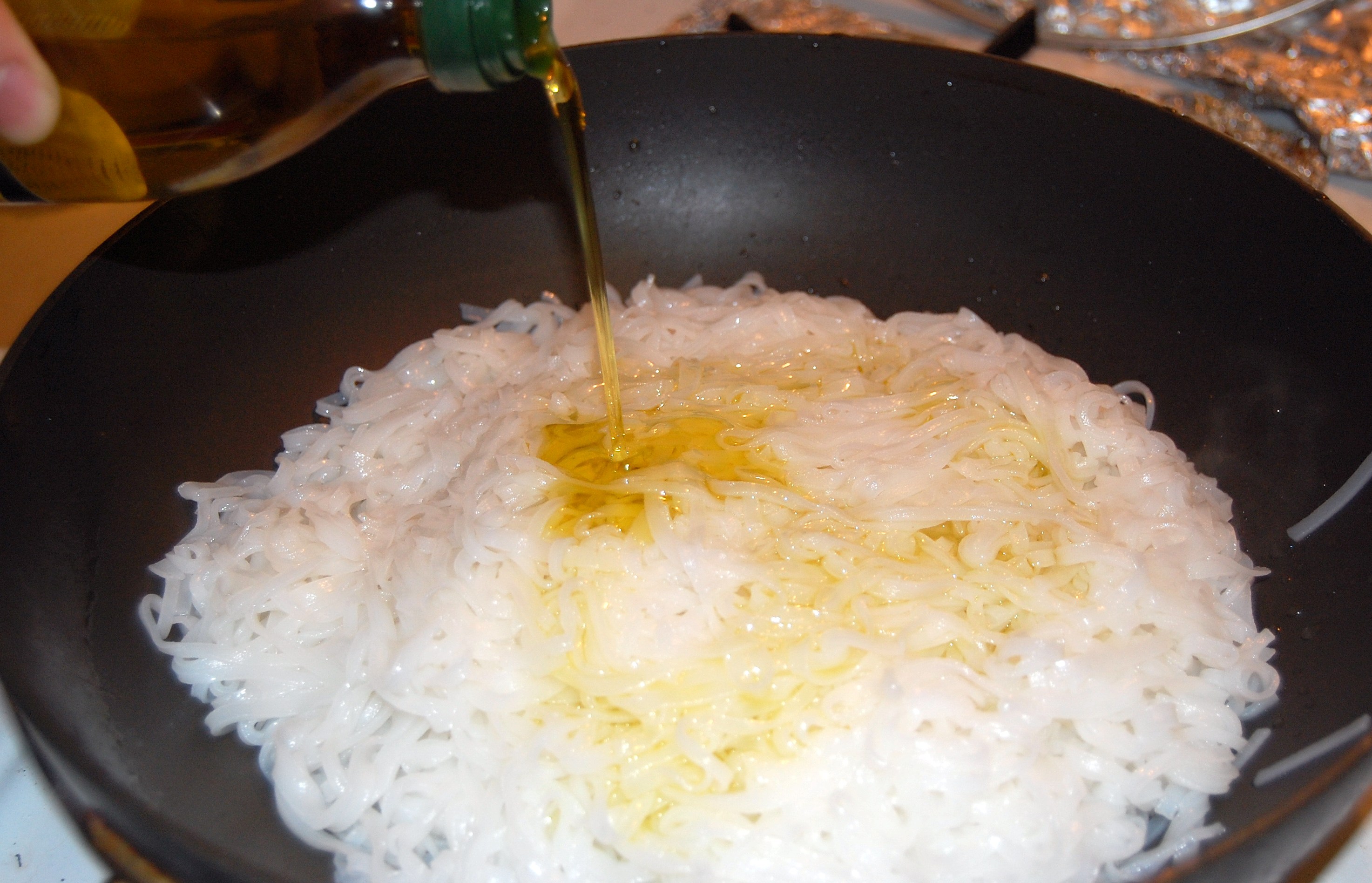
Now transfer the noodles to a container – we use a wok – and add some olive oil. Coating the noodles in oil will prevent them from sticking together. Mix the oil and noodles thoroughly.

These oiled and cooked noodles are ready to eat, but can be stored in the refrigerator if you wish, and re-heated in a microwave for eating.

Bologenese Sauce

You can prepare the sauce simultaneously with the noodles. I’m sure everyone is familiar with how to make this sauce, so I’ll just share what we do.

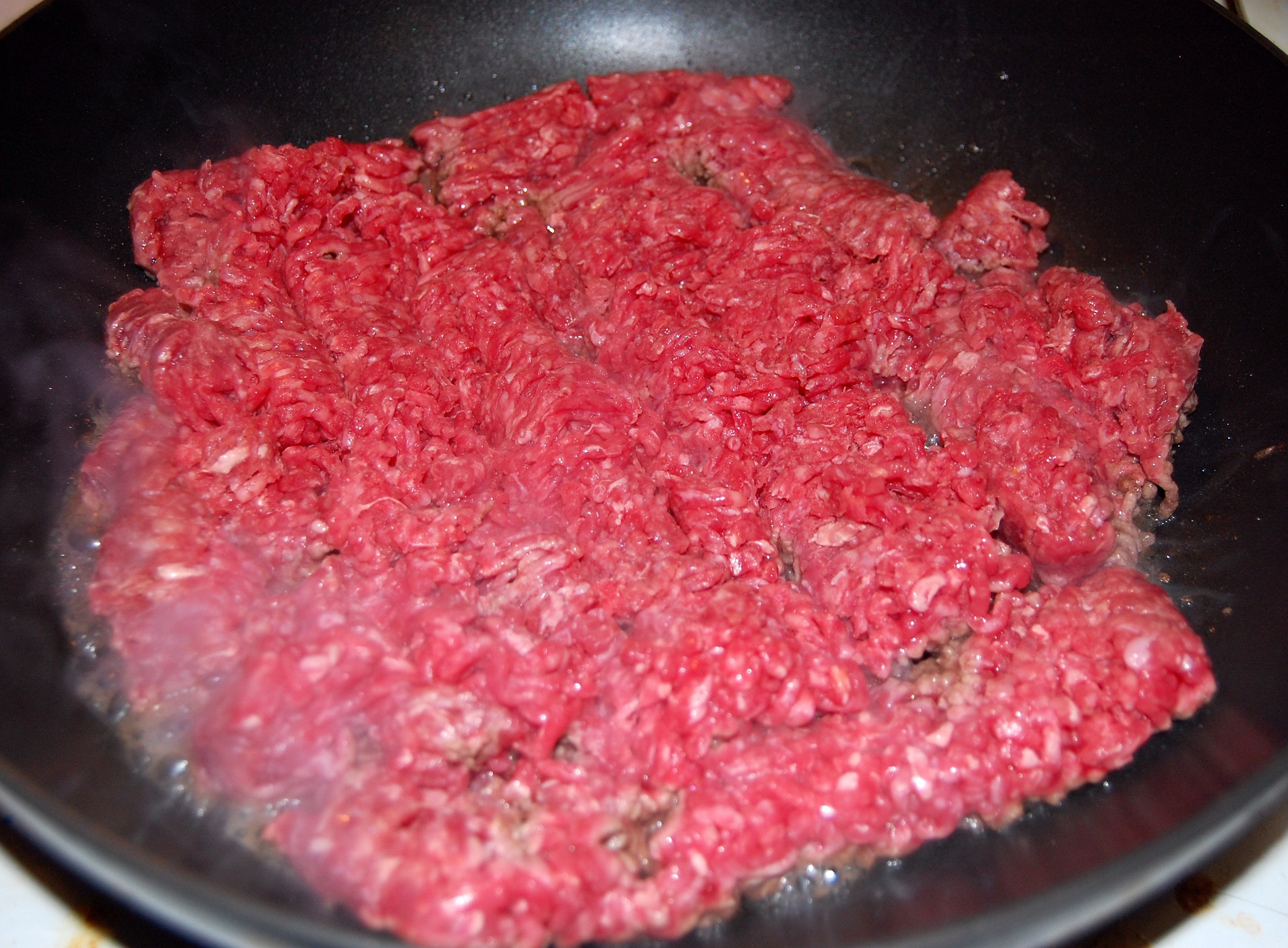
We start by browning some ground beef. We find the natural fat from 80% ground beef provides just the right amount of oil, so we neither add extra cooking oil nor drain away the fats after cooking the beef.

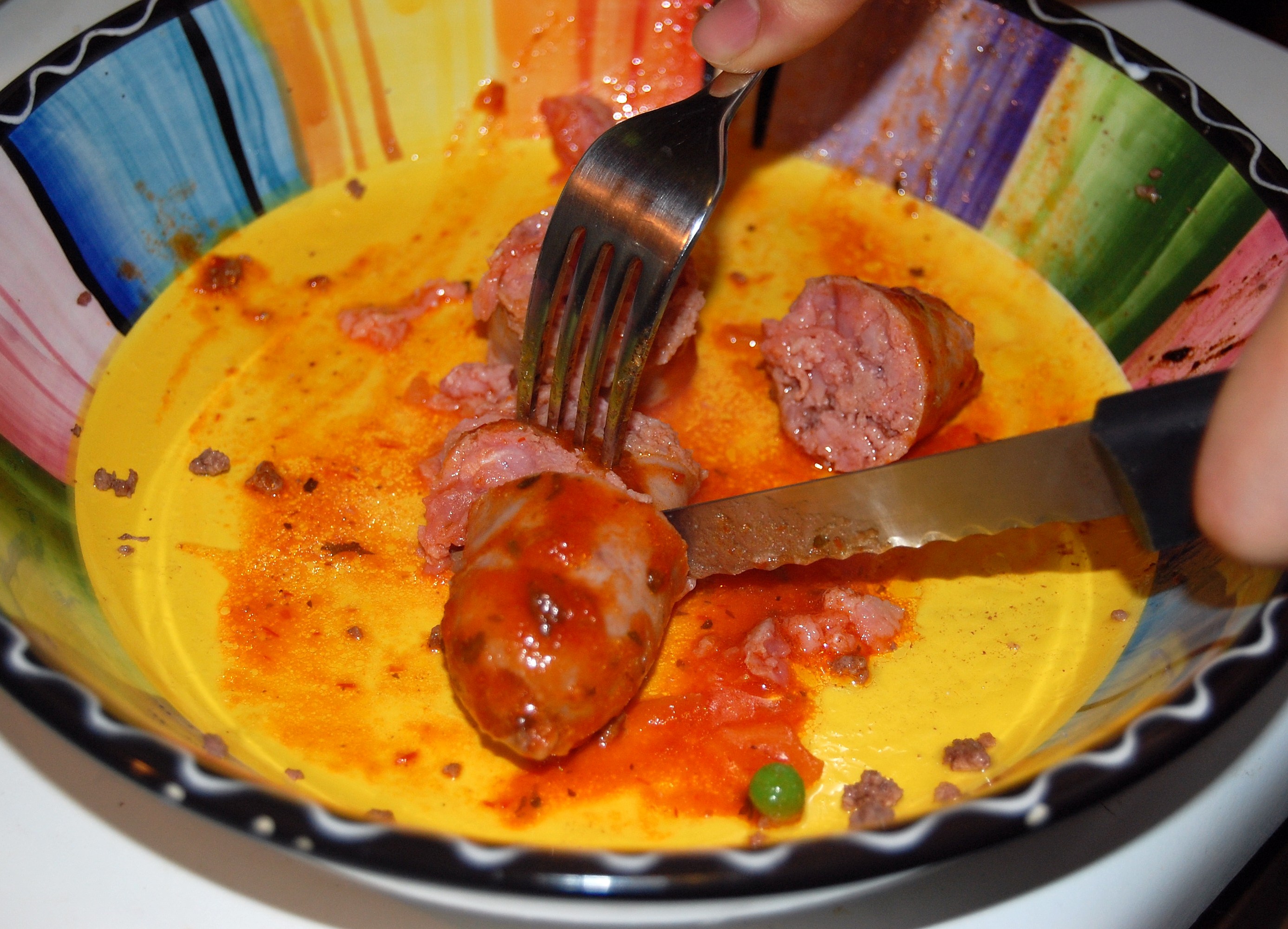
We’ll also include some sweet Italian sausage, to vary the taste a little. We’ll be slicing the sausage into bite-sized chunks but we find that can be done just as easily after the sausage has cooked a little, so to speed things along we’re throwing the whole sausages into the beef along with some onion. We like to stir-fry the onion about 2 minutes before adding the sauce.

We use store-bought spaghetti sauce – in this case, a Trader Joe’s marinara sauce – which saves some time. At the same time we add the sauce, we start pulling out sausages and slicing them:

The partially cooked sausage slices are then returned to the pot to finish cooking. We also add salt and pepper at this point, and usually (but not tonight) spinach.

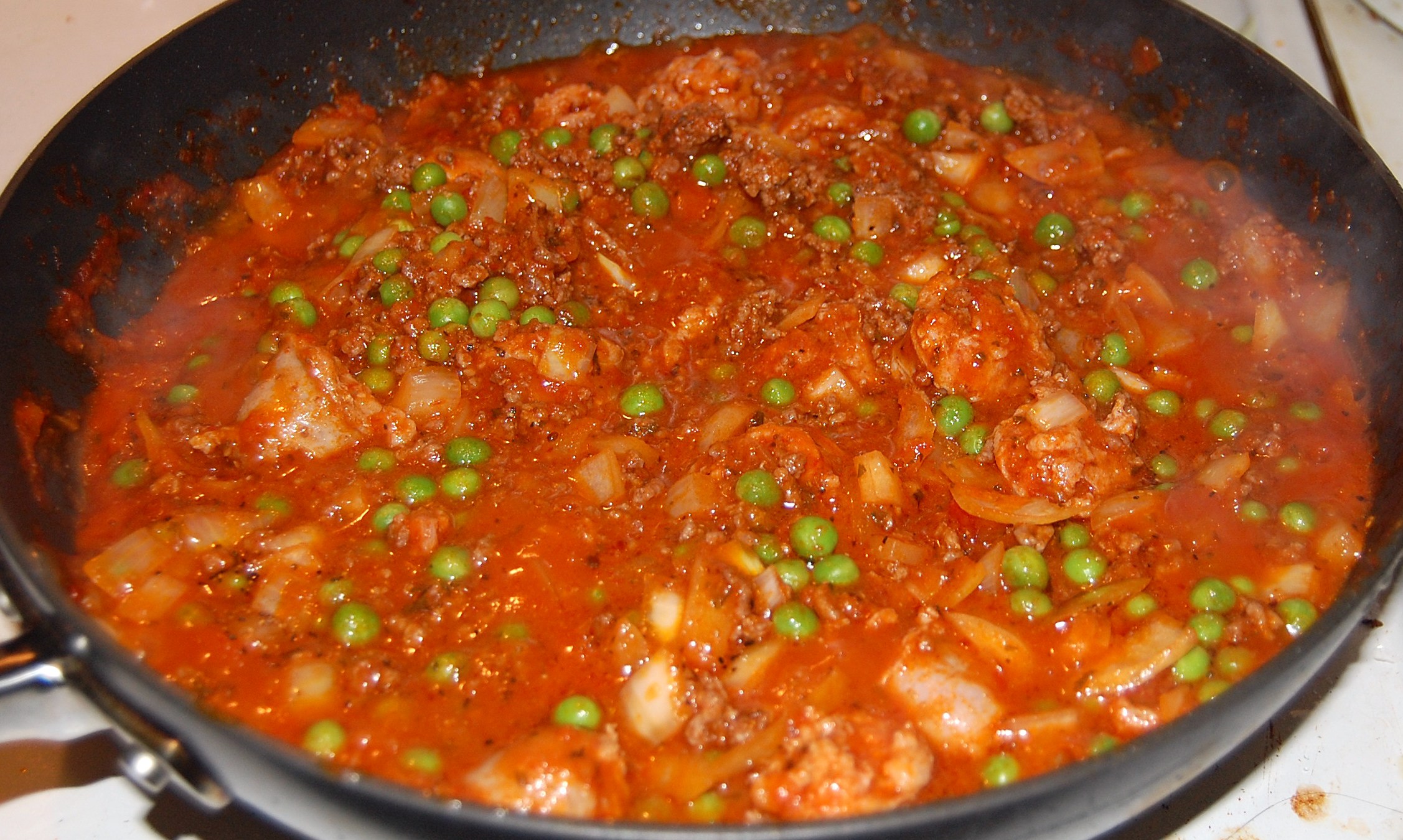
When the sauce ingredients are well cooked, we add some frozen pre-cooked peas.

We stop cooking about 2 minutes after adding the peas.

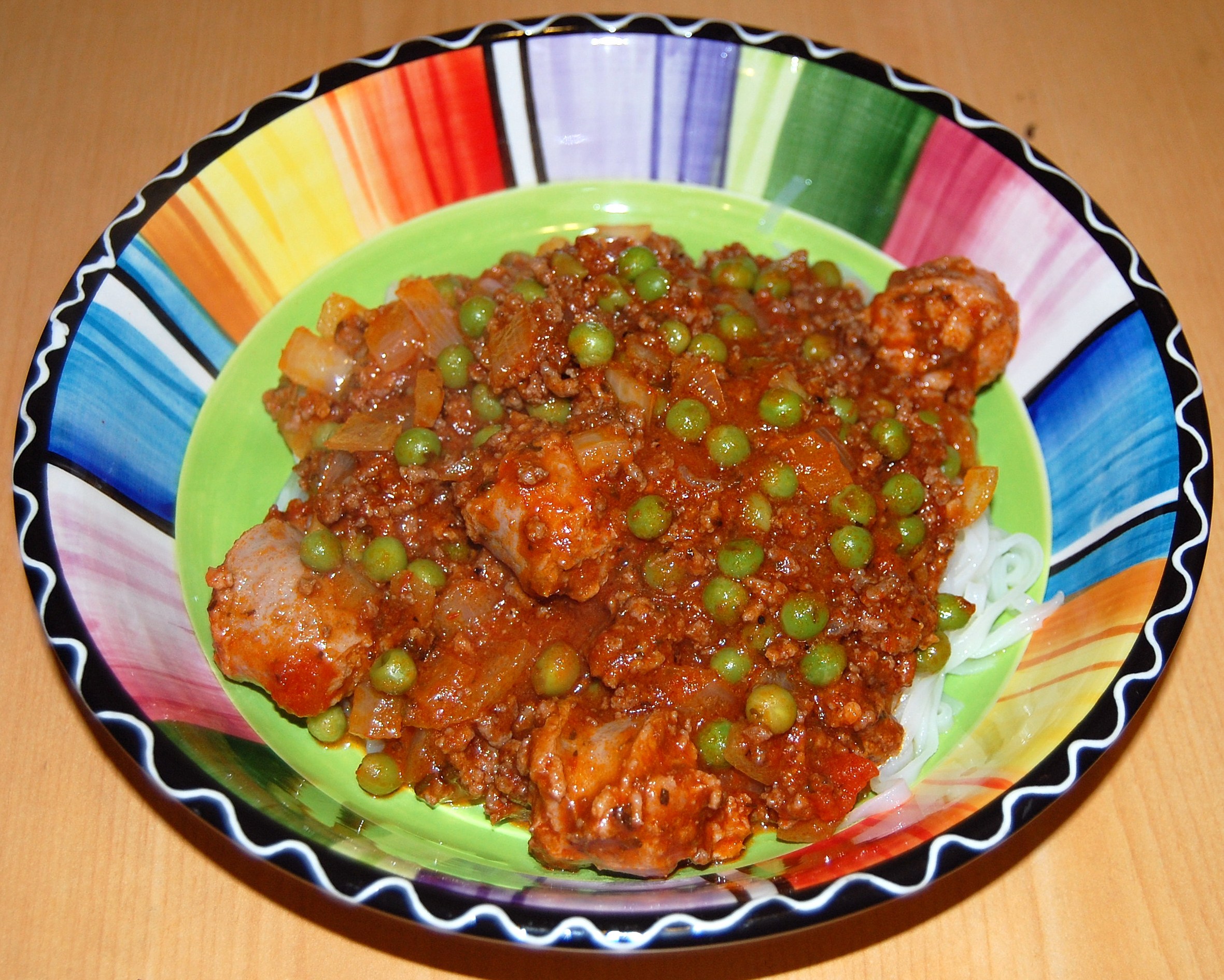
Now just put some of the rice noodles in a bowl and ladle sauce on top. The hot sauce will warm the rice noodles.

There you are! An easy spaghetti dinner that, we hope, will please even the Cranky Grouch.

Around the Web; and the Corpus Clock

Every week I collect many more interesting links than I can blog about, so I thought I’d include in Saturday posts links to interesting material on the Web.

Here are some things I found noteworthy this week:

(1) Chris Kresser has concluded that 2 food pyramids are better than one. His fat and carb pyramids could serve as a visual summary of our diet:

(2) US children who regularly buy school lunches are 29% more likely to become obese than those who bring lunch from home.

School lunch programs have to follow official US dietary guidelines, which favor the subsidized crops of wheat, corn, and soybeans. The USDA recently banned the potato from school lunches in an effort to get kids to eat more grains.

Since food toxins cause obesity, this outcome is just what we would have predicted.

(3) Giving nitrate to athletes causes their mitochondria to become more efficient.

Spinach is rich in nitrates. Popeye was right! Spinach does make you stronger.

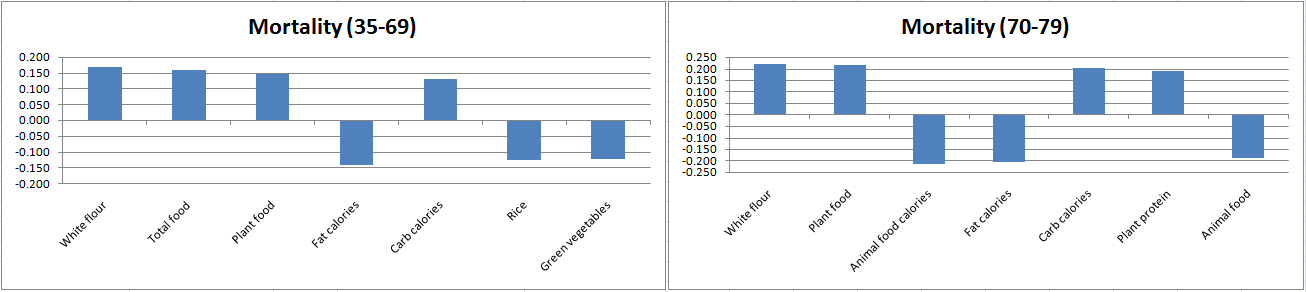
(4) More China Study data:  Ned Kock shows that fat is the safest macronutrient, animal food is safer than plant food, but that rice and vegetables are OK.

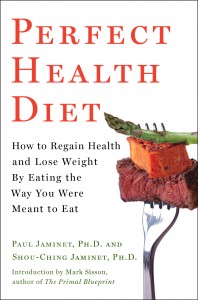
(5) Perfect Health Diet, the book, is “Paleo for engineers”. Accurate?

(6) Engineers, our video of the week is for you. When I first saw this thing, I thought it was a device for giving nightmares to young children.

Good thing Dr. Deans didn’t choose this for her kids’ nightlight! The blue lights are bad for melatonin.

Hunter-Gatherer Macronutrient Ratios: More Data

At the very beginning of our book’s macronutrient discussion (p 8), we offer four reasons to believe in a macronutrient intake around 30% carb, 55% fat, 15% protein – a relatively low-carb diet by modern standards. (Note: these ratios were updated slightly in our 2012 edition.)

One of them is that hunter-gatherer populations ate approximately in these proportions. Our cite was a 2006 review paper by Loren Cordain [1] that was based on an earlier paper (by Cordain, Janette Brand-Miller, S. Boyd Eaton, and others) in the American Journal of Clinical Nutrition [2]. These papers estimated hunter-gatherer diets from data in JP Gray’s 1999 corrected version of the 1967 Ethnographic Atlas of GP Murdock. [3]

The Cordain et al paper in AJCN was accompanied by an editorial from Katherine Milton [4] and a series of letters. Milton argued [5] that the underlying data was unreliable. Chris Masterjohn summarized her point in his review of our book:

Katherine Milton has pointed out (here) that when “casual agriculturists” and hunters that hunt with modern guns are excluded, Cordain’s 229 “hunter-gatherers” are reduced to only 24. Although Milton often seems biased in favor of plant foods, I’m not sure how much “hunter-gatherers” hunting with modern guns can tell us about what humans were eating 40,000 years ago.

The Ethnographic Atlas was compiled from anthropological contacts early in the 20th century, long after first contact of these peoples with modern societies. The peoples involved had changed their lifestyles based on trade, acquiring guns and other tools as well as access to agricultural goods. Milton was concerned that these acquisitions may have distorted their diets. Milton was also concerned that the (largely male) anthropologists who collected the data may have neglected the activities of women, who gathered plant foods, in favor of men, who hunted.

Milton presented no data of her own. Clearly it would be desirable to have data acquired directly from hunter-gatherer tribes not using guns or agriculture, and from a source other than Cordain and Eaton, whose version of the Paleo diet looks suspiciously influenced by the lipid hypothesis.

Well, we’re in luck.

Miki Ben Dor of the Hebrew-language blog Paleostyle has written to tell me of an interesting 2000 paper [6] by anthropologists Hillard Kaplan, Kim Hill, Jane Lancaster, and Ana Magdalena Hurtado in the journal Evolutionary Anthropology. Hurtado and Hill later became collaborators on Cordain’s acne paper [7].

Miki discusses the paper in Hebrew here. (Miki, by the way, wrote a very nice review of our book here.) For the benefit of those who don’t read Hebrew, I thought I’d present the data.

The Data

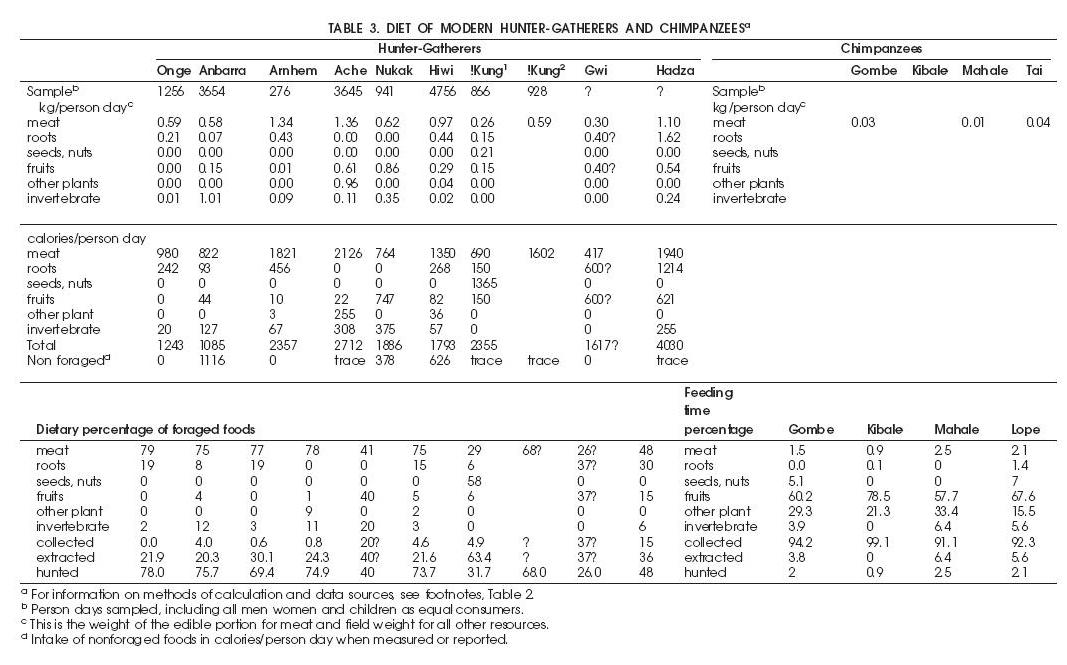
The authors present data on diets from nine hunter-gatherer cultures. The essentials are in this table (click to enlarge):

Seeds and nuts are significant only for the !Kung, who ate mongongo nuts, which provide primarily fat calories.

Fruit was a large source of calories only for the Nukak, Gwi, and Hadza. The “fruit” the Nukak of Colombia eat is the palm fruit, which has a small amount of starch but whose calories consist overwhelmingly of fat calories from palm oil. Palm oil is a healthy oil that is 50% saturated fat, 40% monounsaturated fat. The “fruit” the Hadza ate was also fatty, averaging 1200 calories/pound compared to 200 calories/pound for sweet fruits; sources included Baobab fruit and Kongoro berry. The Gwi San consumed melons, a sweet fruit.

Save for the Nukak and Hadza, the sum of root, fruit, and “other plant” intake is a fair approximation to total carb plus fiber calories.  These added up to 242 calories/day for the Onge, 137 calories/day for the Anbarra, 469 calories/day for the Arnhem, 277 calories for the Ache, 386 for the Hiwi, 300 for the !Kung, and 1200 for the Gwi. In all cases except the Gwi, carb intake was less than 20% of calories.

For the Nukak, carb intake was probably also in this range. So seven of nine cultures ate 10% to 20% carbs; for the Gwi San a majority of calories were carbs, and for the Hadza perhaps 40% of calories were carbs.

Meanwhile, foods obtained by men – primarily meat – provided 70% to 85% of calories for the Onge, Anbarra, Arnhem, Ache and Hiwi; 60% for the Nukak, about 50% for the !Kung, and 65% for the Hadza. [Table 2]

Another interesting observation from this data is that fruits were generally a less important source of calories than roots. It is likely that starches have outweighed sugars as a source of calories for humans for at least the last 2 million years.

Conclusion

In the book we argued that most hunter-gatherer cultures, when they weren’t constrained by Malthusian population pressures and famines, probably ate close to a 20% carb, 65% fat, 15% protein macronutrient ratio.

This data is largely consistent with that. Indeed, most cultures seem to have eaten slightly less than 20% carbs.

This paper does not provide sufficient data to break down the protein vs fat composition of the diets. But since protein seems to be eaten to a specific target of around 15% of energy / 360 calories by nearly all observed cultures, we can guess that that’s how hunter-gatherers ate as well. The acquisition of fat calories from fatty fruits and nuts, like palm fruits, confirms that fat was sought after.

The preference for starchy roots and tubers over sugary fruits is also no surprise. Not only are roots and tubers more calorie rich than most fruits, they are also (given the problematic nature of fructose) probably the healthier choice!

We don’t idolize Paleolithic or modern hunter-gatherer diets, so I won’t say that this data by itself proves our diet is correct. But I think it does add to the evidence that ancestral humans ate a diet that closely resembles ours.

References

[1] Cordain, L. “Implications of Plio-Pleistocene Hominin Diets for Modern Humans,” pp 363-383 in Peter S. Ungar, ed., Evolution of the human diet: the known, the unknown, and the unknowable, New York: Oxford University Press, 2006. http://www.thepaleodiet.com/articles/2006_Oxford.pdf.

[2] Cordain L et al. Plant-animal subsistence ratios and macronutrient energy estimations in worldwide hunter-gatherer diets. Am J Clin Nutr. 2000 Mar;71(3):682-92. http://pmid.us/10702160.

[3] Gray JP. A corrected ethnographic atlas. World Cultures J 1999; 10:24–85. Murdock GP. Ethnographic atlas: a summary. Ethnology 1967; 6:109–236.

[4] Milton K. Hunter-gatherer diets—a different perspective. Am J Clin Nutr. 2000 Mar;71(3):665-7. http://pmid.us/10702155.

[5] Milton K. Reply to L. Cordain et al. Am J Clin Nutr 2000 Dec;72(6):1590-1592. http://www.ajcn.org/content/72/6/1590.full.

[6] Kaplan HS, Hill KR, Lancaster JB, Hurtado AM. A Theory of Human Life History Evolution: Diet, Intelligence, and Longevity. Evolutionary Anthropology 9:156-185, 2000. http://www.unm.edu/~hkaplan/KaplanHillLancasterHurtado_2000_LHEvolution.pdf.

[7] Cordain L et al. Acne vulgaris: a disease of Western civilization. Arch Dermatol. 2002 Dec;138(12):1584-90. http://pmid.us/12472346.