



Ketogenic Diet for NBIA (Neurodegeneration with Brain Iron Accumulation)

It’s always a pleasure to hear from readers who report improved health.

Some of these emails are poignant: distressing because of the pain of their diseases, yet heartening because of the improvements a good diet brings.

It can’t get more poignant than to hear that children with a painful, deadly, and untreatable disease have, thanks to diet, begun smiling, laughing, and getting better.

Last week Kindy Flyvholm, who bought our pre-publication e-book, wrote with just such a report. I’m delighted to be able to pass it on, and hopeful that this report will help other children escape unnecessary suffering and enjoy life more abundantly. Thank you, Kindy, for sharing your story!

Ketogenic diets as therapy for neurological dysfunction

In our book and on this blog, we advise everyone with a neurological or brain disorder to try a ketogenic (“ketone generating”) diet. The book spells out how to tweak the Perfect Health Diet to make it ketogenic: basically, reduce carbs and add copious amounts of coconut oil.

Ketogenic diets can be surprisingly helpful with brain and nerve dysfunctions. The reason is that neurons have very limited metabolic options: they can burn only glucose or ketones. Glucose metabolism is complex and prone to failure; ketone metabolism is simple and robust. Especially in disease states, a neuron on glucose can be a totally different creature from a neuron on ketones. Neurological diseases that are disastrous on a glucose-rich diet can become mild when neurons are fed ketones.

It doesn’t work for every brain disease, in part because ketones don’t diffuse through the brain all that well. Ketones reach the subcortical and inner cortical layers of the brain easily, but don’t readily reach superficial layers. [1] However, in some diseases the places reached by ketones are the ones in trouble. The evolutionarily oldest parts of the brain, such as the brain stem, are the most likely to benefit from a ketogenic diet. Thus, neurodegenerative diseases that cripple the body may be top candidates for a therapeutic ketogenic diet.

NBIA (Neurodegeneration with Brain Iron Accumulation)

One such disease is NBIA, short for Neurodegeneration with Brain Iron Accumulation. NBIA is most commonly caused by a mutation in the gene PANK2, which codes for the mitochondrial enzyme that converts vitamin B5 (pantothenic acid) into CoenzymeA (a crucial metabolic substrate). This version of NBIA is called PKAN, for pantothenate kinase-associated neurodegeneration.

NBIA/PKAN is characterized by an accumulation of iron in the basal ganglia of the brain. The iron is readily visible in brain MRIs, producing an “eye of the tiger” brightness pattern. [2] It produces symptoms that overlap with those of Parkinson’s disease. [3] About 1 in 500 people carries a PANK2 mutation, so some form of the disease strikes 1 in 250,000 people.

The disease typically first presents itself about age 3, when leg dystonia and spasticity causes an impaired gait, sometimes including toe-walking. The disease progresses and children lose the ability to walk. Dystonia extends to the hands and the face; the head cannot be held upright, and swallowing becomes difficult. Blindness from retinopathy and hearing loss often develop. Premature death occurs usually in the teens, often by age 10 or younger. The last years are excruciatingly painful.

Here is a picture of Zach, age 12:

You can see his inability to hold his head upright, and the hand position characteristic of dystonia. Zach cannot swallow naturally and has to be tube-fed.

The bumps in his chest are from the battery packs used to drive a deep brain stimulation device. The idea is to introduce signals that counter the excruciatingly painful dystonic spasms. Like other therapies for NBIA, deep brain stimulation is often ineffective. In Zach’s case, the device worked for less than one month. It is now turned off but is not removed because the operation would be too traumatic.

Ketogenic Diet Therapy

Kindy writes:

It was in desperation that we began researching options (ANY OPTION) to prevent the horrible pain that precedes death especially in the case of children with early-onset NBIA.

Many research paths led to the ketogenic diet being an option.  A lot of discouraging information was presented as well (like how impossible it is to follow or how disruptive it is to family life, etc).

It’s remarkable, but doctors are so divorced from dietary science that they do not know how simple and natural a ketogenic diet can be, and assume that only absurdly onerous formulations are needed. As we point out in the book, a large fraction of mammals eat ketogenic diets as their natural diet; and all mammals including humans subsist on ketones during starvation.

Doctors were pessimistic about its chances, but a ketogenic diet produced amazing results:

My son, who is 6, … has been on the diet for less than one month and his hands have relaxed enough for him to regain his pointing ability (which had been lost).

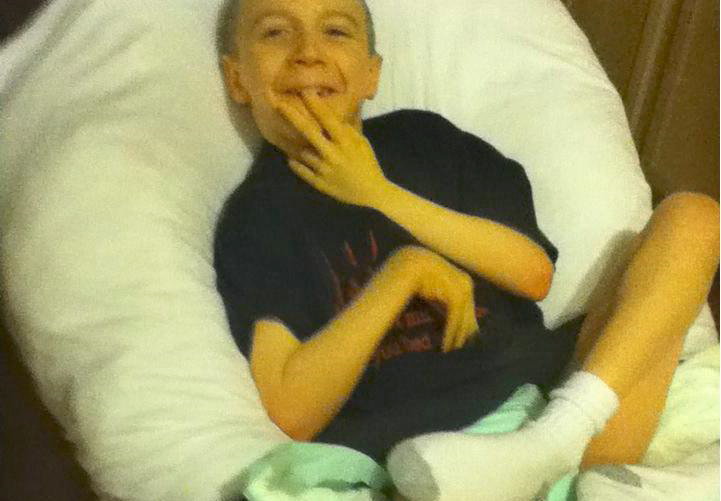
Zach, the 12 year old on the diet, is much further progressed in the disease.  Zach has been on the diet since late October, 2010, reaching 80% fat levels towards mid-December.  The following are the improvements that have been noted by Zach’s family and therapists:  Zach has begun holding up his head even though his neck has been hyper extended backwards since he was 9, he has begun pointing with his finger again instead of the palm of his hand, he is moving his right arm again some, and the latest thing is that he is now able to go from a laying position to a sitting position on his own by hanging on to something or someone.  He has not done this since he was 9 years old.

Both boys have begun smiling and laughing all the time.

I know just how they feel!

The previous picture was Zach before starting the ketogenic diet. Here he is on the diet:
Kindy continues:

Zach has gotten off all pain medicine and only has a small amount of 3 [anti-spasmodic] medicines left which hopefully he can get off of over the next year.

Going in and out of ketosis has immediate effects, as this anecdote shows:

Zach had a recent day where his muscle spasms returned severely.   Bad enough he needed to go to the hospital for morphine.  At the last minute (before going to the hospital), the parent looked at her recipe for that day and realized she had used a lot of white chicken meat.  She added in some more coconut oil into his next few tube feedings and the spasms went away immediately.  This is extremely powerful.

Kindy concludes:

We are not under any delusions.  Our children may be taken from us at any time.  If they are taken pain free, then we are blessed compared to the alternative.  The situation thus far with our ‘experiment’ has proven much more than we could have hoped.

Conclusion

Kindy, it’s wonderful that your research and perseverance has bought hope to your son, and that you’re spreading the word to help others find the same hope. I’m so grateful that you’ve shared your story with us. Hopefully your experiences will reach the NBIA community, save children from unnecessary pain, and maybe extend their lives significantly!

We salute every parent who has to deal with neurological and genetic diseases in their children. As this disease illustrates, anyone with a neurological disorder should experiment with a ketogenic diet. Ketogenic diets have been tested in very few diseases, and there is no telling how many neurological diseases may prove amenable to this therapy. But there is already considerable evidence that neurological diseases of the elderly, such as Alzheimer’s and Parkinson’s, are treatable with a ketogenic diet.

Last Thursday, I defended the idea of a healthy diet as the best therapy for disease (“Therapy AND Life”). The NBIA kids illustrate just how powerful dietary therapies can be.

Medical doctors seem to have great misapprehensions and fear of experimenting with this diet. They do not understand it, don’t know how it should be implemented, and have never tried it themselves. Many of the medical ketogenic diets are malnourishing and generate terrible side effects. Not surprisingly, many patients quit the diets.

This coming Thursday, I’ll discuss how to implement a safe, healthy, and pleasurable-to-eat ketogenic diet. There’s no reason for an unpalatable or malnourishing diet to stop patients from enjoying the benefits that Zach has seen!

References

[1] Hawkins RA, Biebuyck JF. Ketone bodies are selectively used by individual brain regions. Science. 1979 Jul 20;205(4403):325-7. http://pmid.us/451608.

[2] Gregory AM, Hayflick SJ. Neurodegeneration with brain Iron Accumulation. Orphanet Encyclopedia, September 2004. http://www.orpha.net/data/patho/GB/uk-NBIA.pdf.

[3] Klein C et al. Hereditary parkinsonism: Parkinson disease look-alikes–an algorithm for clinicians to “PARK” genes and beyond. Mov Disord. 2009 Oct 30;24(14):2042-58. http://pmid.us/19735092. Paisán-Ruiz C et al. Early-onset L-dopa-responsive parkinsonism with pyramidal signs due to ATP13A2, PLA2G6, FBXO7 and spatacsin mutations. Mov Disord. 2010 Sep 15;25(12):1791-800. http://pmid.us/20669327.
Ice Cream

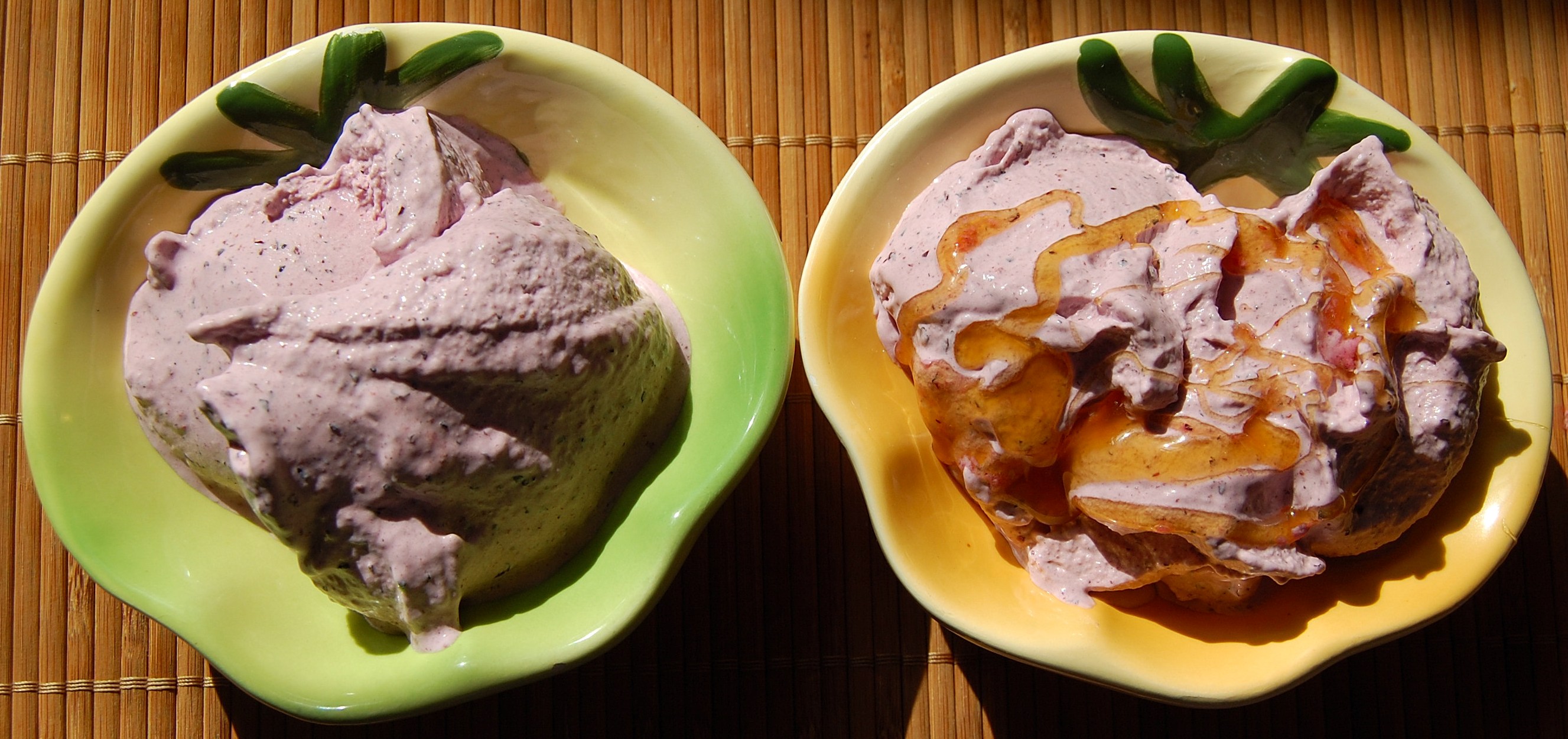
I thought I’d show how we make ice cream these days. It’s an easy dessert to make, and great for kids. They may even help in the cleanup by licking the utensils!

We’ve adopted rice syrup as a sweetener lately. The nice thing about “safe starch” syrup is that the dessert can be made as sweet as one likes, without the health concerns of fructose. With sucrose, I felt obliged to minimize the sweetness.

We’ve also begun to use lemon juice in a lot of our cooking, since the citrate offers a number of health benefits. We’ve come to like the citrus flavor and fragrance in our ice cream too.

With these innovations, our basic formula for ice cream is:

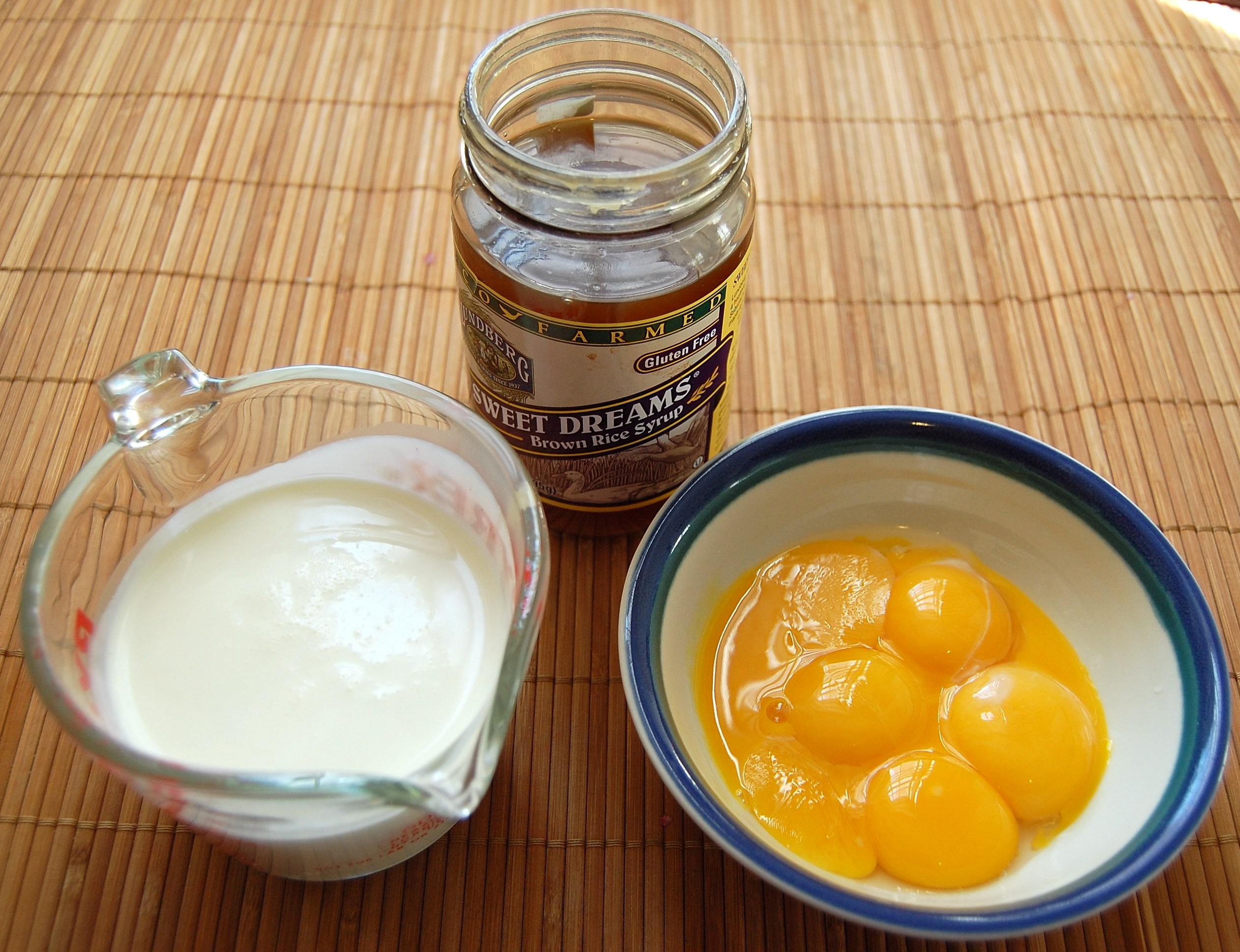
  • 2 cups (1 pint) heavy cream. Ideally, the cream should be free of carrageenan, skim milk, or other additives, as discussed in this thread.
  • 6 egg yolks
  • 2 tablespoons rice syrup (more can be drizzled on when it’s done to accommodate those with a sweet tooth)
  • 1 lemon (juice and some meat)
  • berries, nuts, and other flavorings to taste

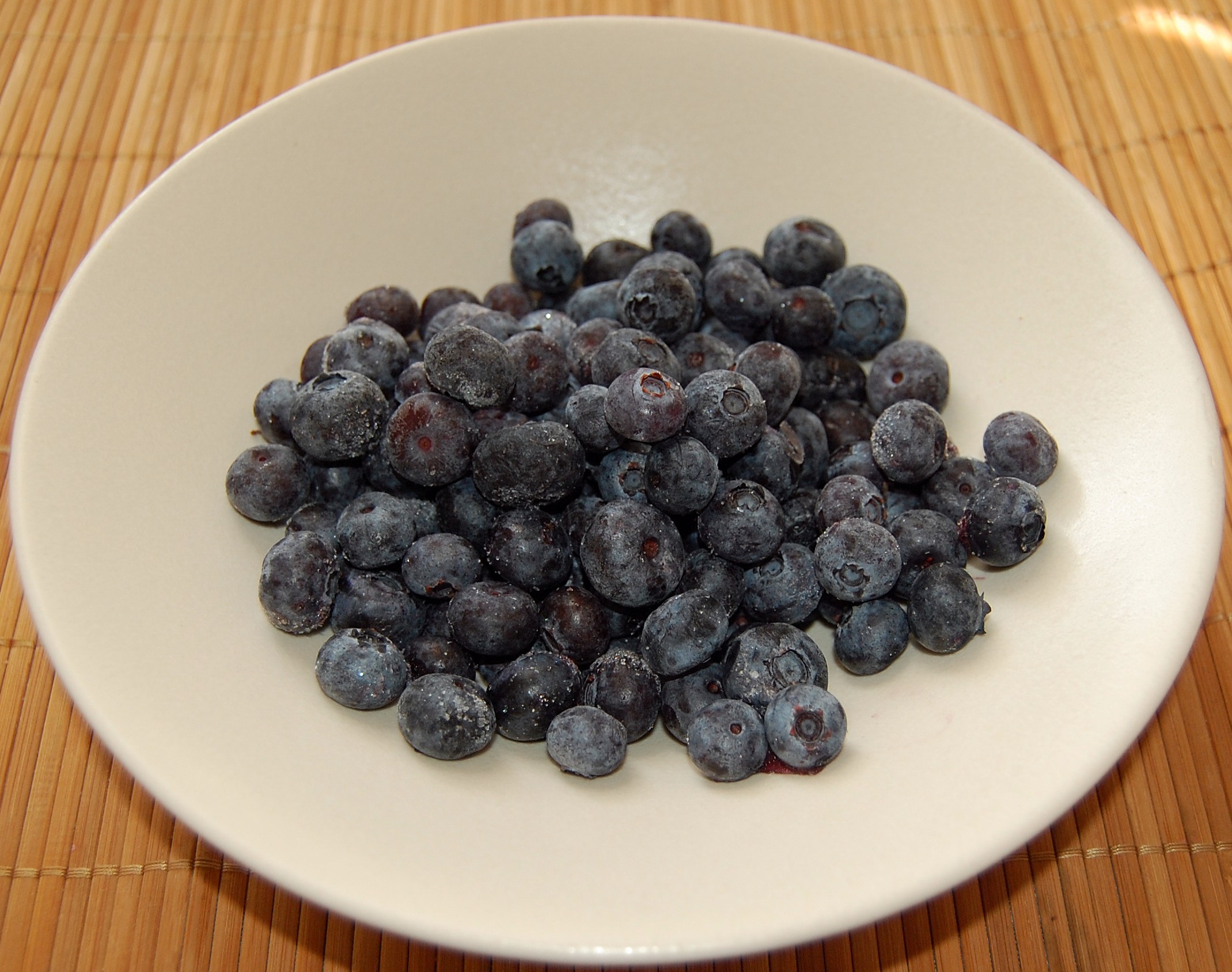
Today we made blueberry ice cream.

Some ingredients:

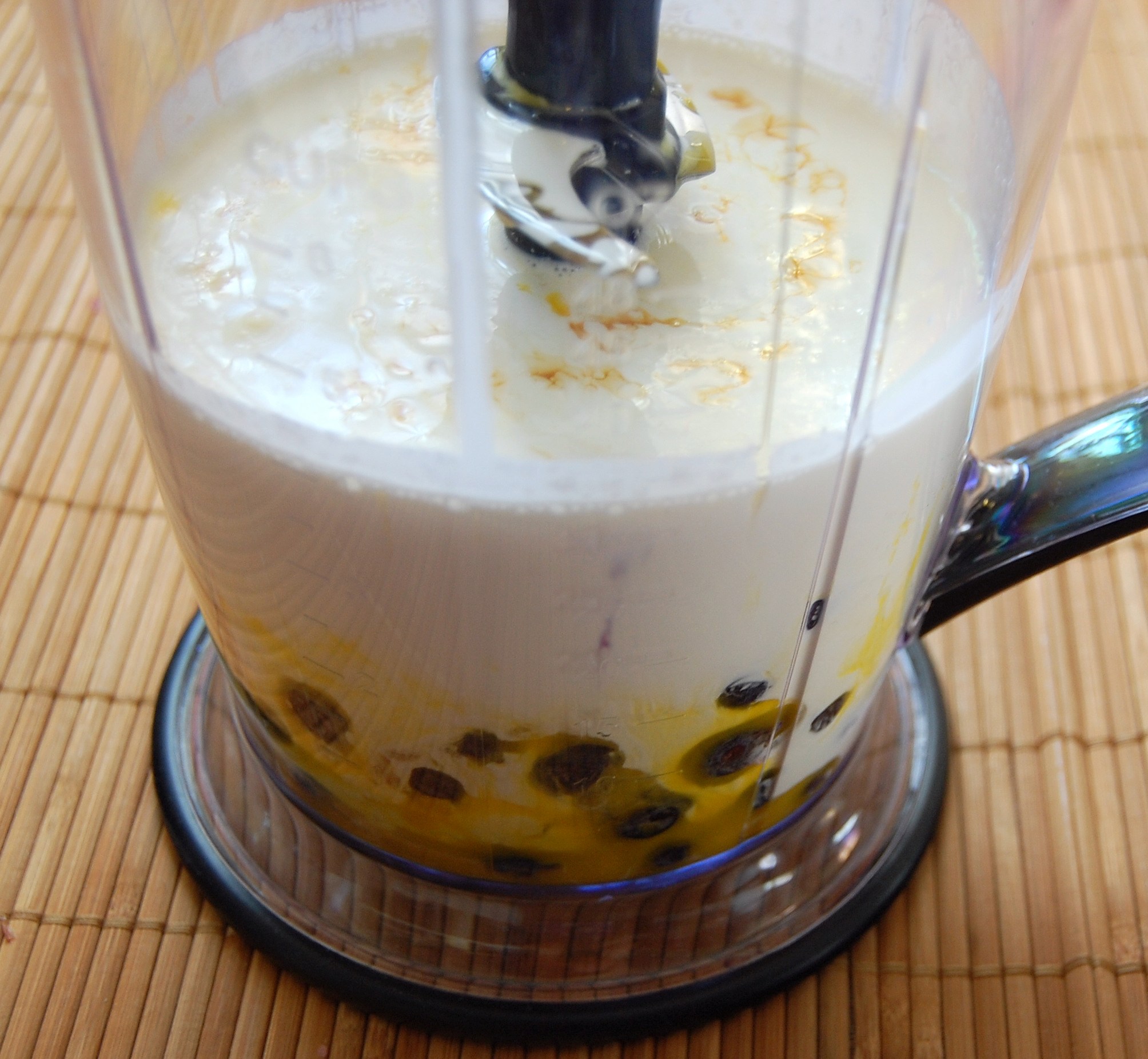
In the blender, before and after:

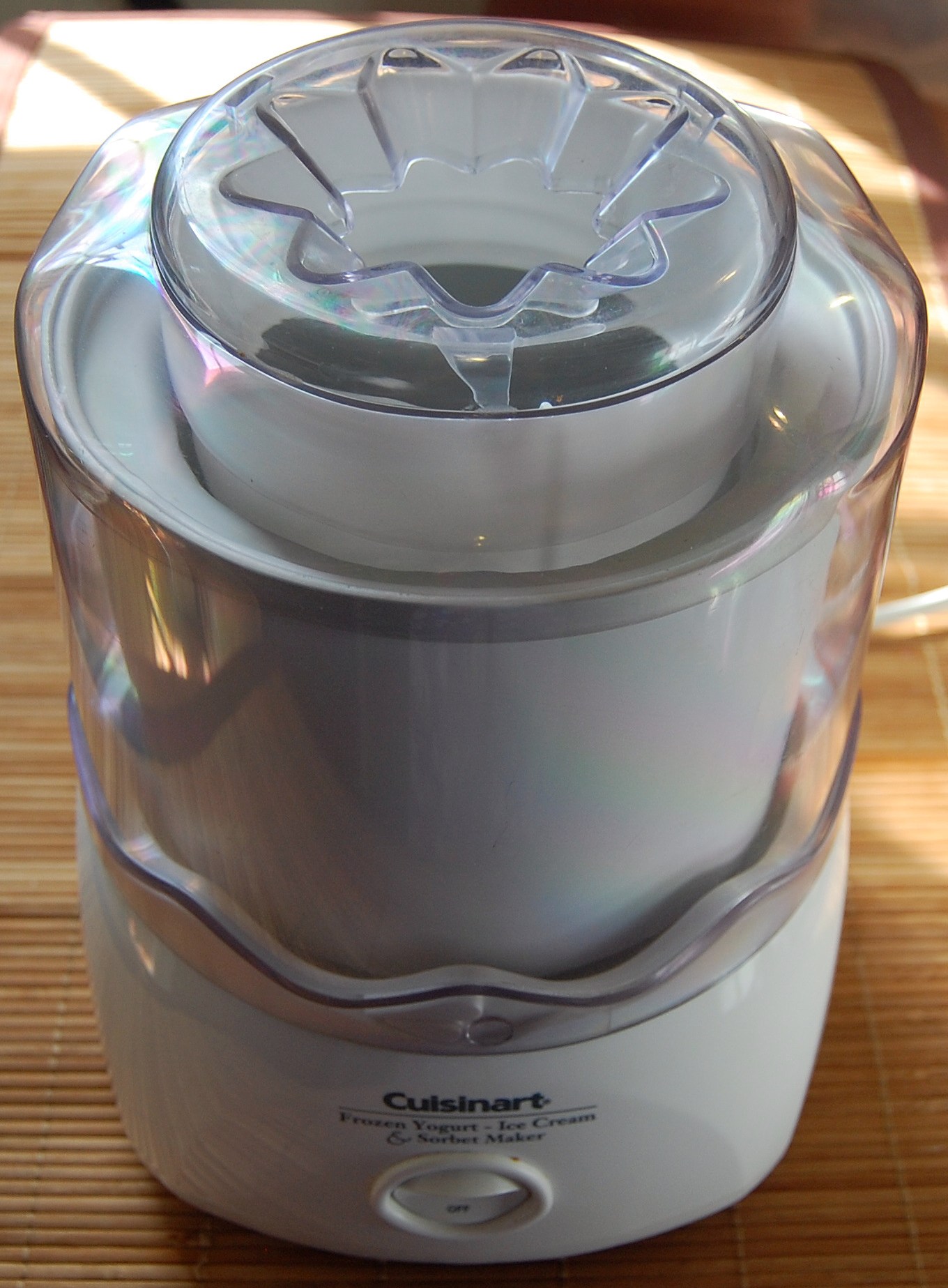
The ice cream maker:

This has a neat design: the pot that holds the ice cream is frozen beforehand (which requires 48 hours), and it mounts on a motor and turns. The rest of the ice cream maker is stationary; a stationary paddle churns the mixture as the pot turns.

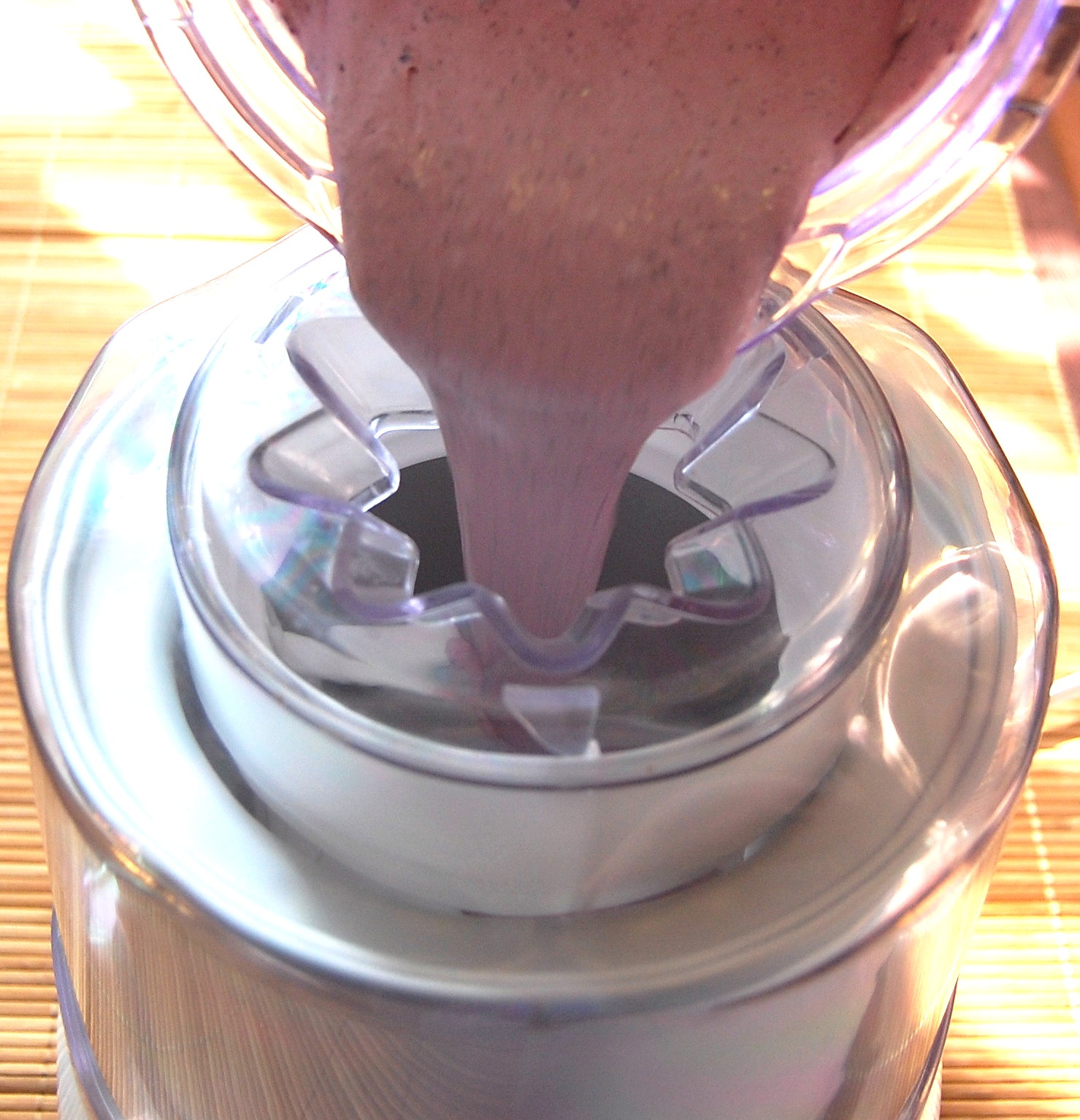
Here we are pouring in the mixture:

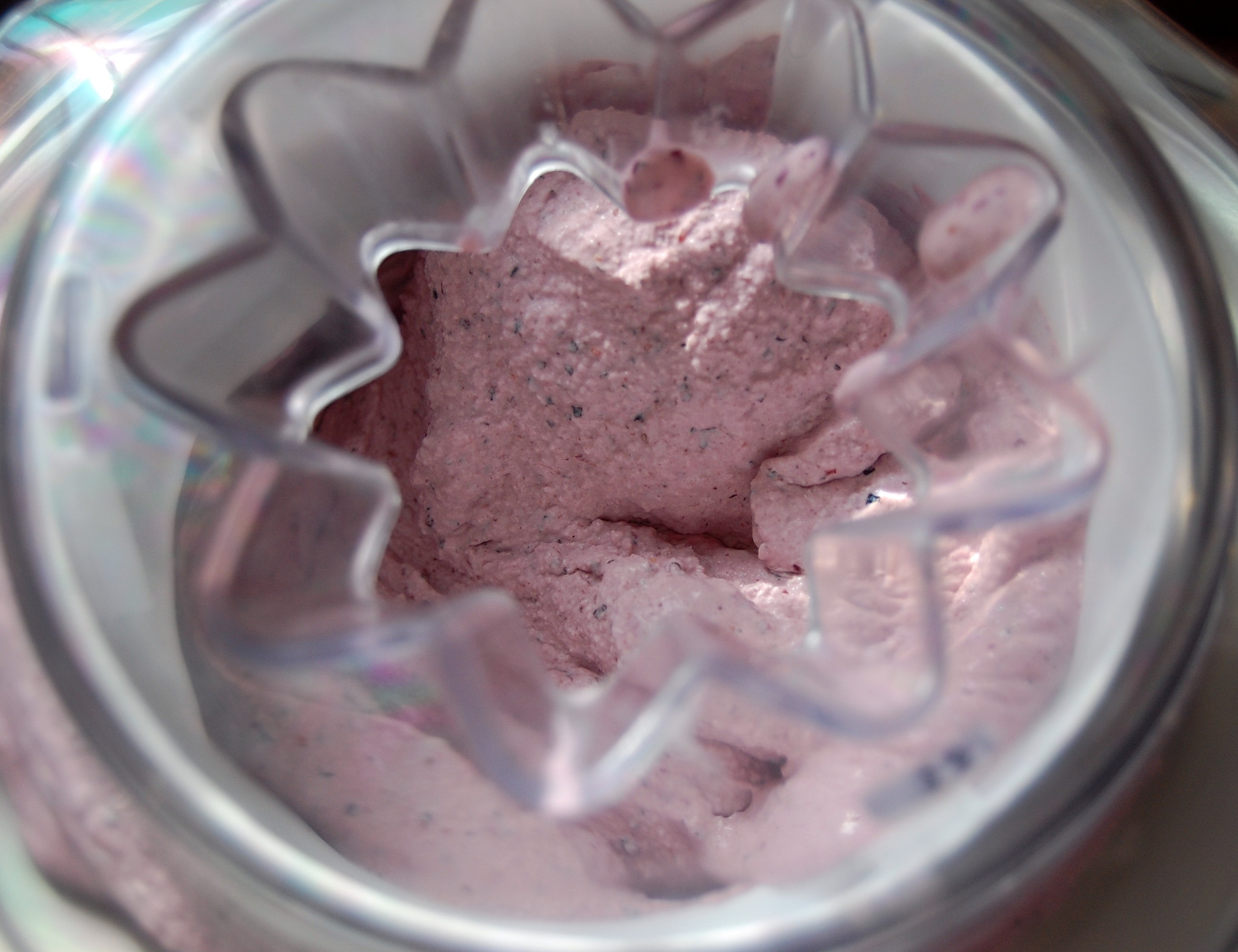
And 15 minutes later it’s done:

And served:

Shou-Ching is the one with the sweet tooth!

UPDATE: Calorie Counts

For those concerned with such things, here’s the calorie breakdown of the ice cream:

Ingredient Carbs Fat Protein
Rice syrup, 2 tbsp 150
Blueberries, 2 cups 170
Egg yolks, 6 246 12
Cream, 1 pint 24 780 16
TOTAL: 344 (25%) 1026 (73%) 28 (2%)

Fructose from the berries represents about a quarter of the carb calories or 7% of total calories.

Around the Web; Eating Disorders and Hypothyroidism

Items that caught my eye this week:

(1) Would You Be My Meatheart?: I wasn’t clever enough to give this to Shou-Ching for Valentine’s Day, but would have known to use genuine hearts from the Asian market. Wait till next year honey!

(2) By the way: Who knew Manolo has a food blog?

(3) Ronaldo Forced Out of Soccer for Lack of Thyroid Hormone. Famed soccer star Ronaldo is retiring because he has hypothyroidism and he says soccer authorities consider treatment to be doping – so he has to retire to fix his health.

Absurd! Mary Shomon agrees.

(4) Ronaldo may play the “beautiful game,” but we Americans play the crazy game. This running back plays football like I used to:

(5) Startling if True: Paleo Pepper abridges a talk by Dr. Flechas at iodine4health.com claiming that thyroid hormone replacement may actually increase risk of breast cancer among hypothyroid women – what is needed is high-dose iodine:

A women with hypothyroidism has a 6% chance of developing breast cancer. Once she starts taking thyroid hormone, it doubles her chances. Once she’s been on thyroid hormone replacement for 15 years, it more than triples it – she now has a 19.6% chance of developing breast cancer.

I have not seen such statistics before and would have to check these claims. We recommend iodine and selenium as the first steps in dealing with hypothyroidism, but generally support thyroid hormone replacement.

(6) Burying the Lede: Is “strengthens pelvic floor muscles” really the number one benefit?

(7) Another Perfect Health breakfast idea: Emily suggests cream of rice with cream, butter, and apricot applesauce.

(8) Paleolithic Dairy?: Ravi at Daia Sol Gaia argues that dogs may have been domesticated and goats tamed and used for milk as early as 35,000 years ago – the start of the Upper Paleolithic. Is goat milk a Paleo food?

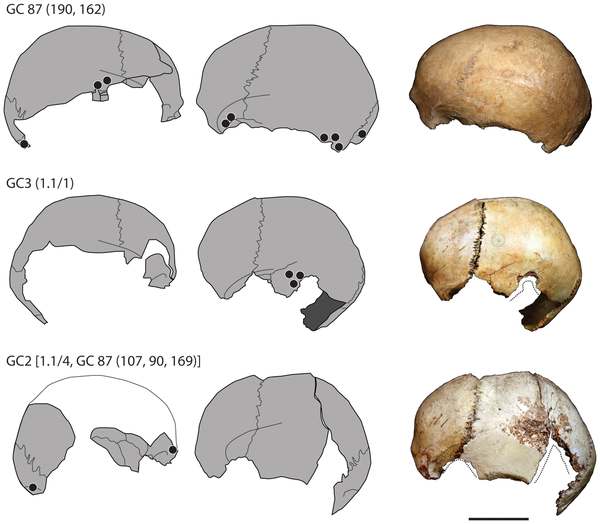
(9) The authentic way to drink Paleo goat milk: Paleolithic settlers at Gough Cave in England, c. 13,000 to 10,000 BC, ate human bone marrow and brain and used the skulls as drinking chalices:

Via Dienekes. Apparently drinking from human skulls is a widely attested practice, both in Paleolithic and historical times – see e.g. the Krum and Herodotus’s Scythians.

Reference: Bello SM et al. Earliest Directly-Dated Human Skull-Cups. PLoS ONE 6(2): e17026. doi:10.1371/journal.pone.0017026. Link.

(10) Avoid vegetable oils if you want a baby: Chris Highcock found a paper showing that infertile women eat 23% more polyunsaturated fat, and 17% less saturated fat, than fertile women. Infertile men eat 20% more polyunsaturated fat than fertile men.

Reference: Revonta M et al. Health and life style among infertile men and women. Sex Reprod Healthc. 2010 Aug;1(3):91-8. http://pmid.us/21122604.

(11) Never give up:

“I had the head doctor of surgical I.C.U. say, ‘Miracles happen.’

(Via Craig Newmark)

(12) Which Machine for the Hippo? I thought this was a cool picture:

(From NPR via John Durant)

(13) Finally, our video: We’ve had a bit of discussion of eating disorders this week, in the comments to the “Therapy AND Life” post. That reminded me of this CBS News interview of a “Biggest Loser” contestant who said she developed an eating disorder during the show:

Therapy AND Life

UPDATE: The Daily Mail article cited below was not only silly, it appears to have been dishonest. I’ve received the following email:

There is an article on your website about me (17/2/2011). Yes, I’m Judith Fine and that article was in the Daily Mail. Firstly, they completely twisted everything that I said so that it makes it look as if I have severe eating problems. Most of that article was a complete pack of lies, neither is it me in the photograph. Could you please, immediately remove it from you website as I am in the process of picking this up with the Daily Mail.

I’ve edited the post to remove content related to Judith. — PAJ

“Orthorexia” has been in the news recently, for instance in this Valentine’s Day article by Diana Appleyard in the Daily Mail:

We all know the type. They never let wheat, yeast or dairy pass their lips. They’ve cut out alcohol and caffeine. They’re obsessed with healthy eating — yet every day, they look more unwell and unhappier.

These are the symptoms of a condition called ‘orthorexia’ by dieticians….

Orthorexia was coined in 1997 by Californian doctor Steven Bratman in his book Health Food Junkies, and means ‘correct appetite’ (from the Greek orthos for right and orexis for appetite). It is a fixation with eating ‘pure’ food that, far from doing you good, can become so extreme that it leads to malnutrition, chronic ill health and depression.

Well, I don’t eat wheat; I didn’t even know yeast was a food; and though dairy is a big part of my diet, alcohol and caffeine modest parts, I recognize that milk proteins, alcohol, and caffeine can be problematic.

Given that none of these foods are necessary for good health, it’s not obvious to me why excluding them would lead to malnutrition, chronic ill health and depression.

But from the rest of the article, it looks like the real trouble with orthorexia is not the fixation with healthy eating, but faulty ideas of what constitutes a healthy diet. The article’s leading example of an unhealthy “orthorexic” diet is one that excludes fat.

Any fat-less diet is bound to be malnourishing. Perhaps the trouble is not orthorexia, but mistaken ideas about nutrition. Diets people think are therapeutic are, in fact, damaging.

Therapy versus Life … sometimes

Which brings me to a recent essay by Kurt Harris, “Therapy versus Life.”

It’s almost impossible to excerpt, so I’ll just assume you’ve read it. It’s strongly worded, but the ideas are familiar:  I suspect at least 90% of medical doctors would agree.

Doctors are healers, God bless ’em; but every day they have to face patients they cannot heal. This breeds a certain mental toughness.

As I often say, malnutrition, food toxins, and chronic infections are the primary causes of ill health. In some cases, like Judith Fine’s inability to have periods, it’s easy to recognize malnourishment as a likely cause. But the causes of most patients’ impaired health are much less obvious.

Unfortunately, doctors generally cannot diagnose or treat either bad diets or chronic infections. Doctors are great at treating acute disease, and can mitigate many symptoms that chronic diseases generate, but most are helpless to remedy mild, chronic ill health.

Doctors may believe that a patient’s declining health is simply natural aging; or that genuine health impairments may be undiagnosable, untreatable, or incurable. Kurt says it in his forum:

[T]he healthy should not assume they are sick and even the sick may be wasting their time trying to fix what can’t be fixed.

When patients learn that doctors can’t help them, they often turn to experimental self-treatment.

99% of the time, this works out badly. As Kurt’s car metaphor shows, there are many more ways to damage your body than to heal it.

And the 1% of the time it works, the patient doesn’t go tell the doctor. But when it backfires, the patient goes back to the doctor worse than ever. So the doctors see this method fail 100% of the time.

This reinforces the doctors’ consensus: Be prudent. Try to live normally – as healthy people do. Eat like healthy people, live like healthy people, and bear with your incurable maladies as best you can. Thrashing and groping for cures will only do harm.

Therapy – experimental self-therapies – are damaging to life. Choose life, not therapy.

But Diet Is Therapy

But that’s not all there is to it … because the right diet can fix many health problems.

Kurt says this himself:

[T]here is a dietary metabolic milieu that we are adapted to, and the best chance we have of optimizing our health is to try and emulate it …

The human body often can [fix itself] if we just stop ruining it.

We agree. The Perfect Health Diet is, in essentials, identical to Kurt’s PaNu. And when people in ill health eat this way, they commonly get better.

So the right diet is therapy. Choose this diet as therapy, and you’ll have a better life.

What If Your Life is Malady-Inducing?

I chose life over therapy for decades. I rarely went to the doctor. I focused all my energy on life. But I ate a lousy diet.

This isn’t the place to tell my story – that’s coming – but a lousy diet and a focus on life, not therapy, gave me a disabling chronic disease.

And a therapeutic diet gave me my life back. The Four Steps of our book are essentially the steps I took to cure a disabling neurodegenerative condition. With antibiotics, they worked.

So when Kurt asks,

Do you think every problem in your life can be fixed by changing your diet?

I can honestly say: every health problem was fixed!

Therapy for Life

If the Ewald hypothesis and Jaminet corollary are right, then we all stand in need of dietary therapy. As we age, our infectious burden increases and our immune system gets less effective. Sooner or later, infectious diseases threaten us all.

Our rescue is not from medicine, which does not yet know how to treat chronic infections. Our best chance for a long, healthy life lies in diet, nutrition, and immunity-enhancing behaviors like fasting.

Fortunately, the scientific evidence is accumulating to tell us what the right diet is. Specialist professionals still can’t see the forest for the trees, the elephant for its parts; but generalists, aided by respect for ancestral/traditional diets and for evolutionary selection, have blazed the trail. Kurt lists some reliable guides.

Conclusion

Diet is the best therapy. A good diet is life-giving. Good diet and nutrition may cost a few extra minutes a day, but can add decades of happiness.

So I say: choose therapy AND life. We can be healthy centenarians together. Let’s do it!