



Low Carb Paleo, and LDL is Soaring – Help!

To Kindy, Zach’s parents, and the NBIA/PKAN kids: I’ve been reading papers on the disease and trying to figure out the best diet for the disease. But the biochemistry is a bit complex, more complex than I realized last week, and I want to make sure my advice is sound. So I’m delaying my NBIA/PKAN/ketogenic diet posts until next week.

My sincere apologies for the delay!

I’m a little busy this week – busy with work, busy with learning about NBIA/PKAN, and eager to spend time with my brother who is visiting from Germany – and so I thought I’d do a “You be the doctor” quiz.

Here’s the puzzle. Someone adopts a low-carb Paleo diet. Very healthy diet, right? But their LDL cholesterol level starts to rise. And rise. And rise.

Larry Eshelman emailed me last December with this problem. His LDL history:

  • 103 mg/dl (1990-2002, eating a low fat diet)
  • 115 mg/dl (2002-2007, eating a low carb diet)
  • 195 mg/dl (2007-2009, after reading Gary Taubes and adding saturated fat)
  • 254 mg/dl (Dec 2009, very low-carb Paleo for 5 weeks)
  • 295 mg/dl (Jun 2010, very low-carb Paleo for 7 months)

(SI system readers, convert to mmol/l by dividing by 38.67.)

A common problem

This is not a terribly uncommon problem in the Paleo community; it afflicts famous and brilliant bloggers as well as ordinary folks. It’s been discussed by Richard Nikoley in several posts:

Some examples of high LDL on a Paleo diet, with links – most of these provided to me by Larry (thanks Larry!):

OK, that’s enough: this is a minority phenomenon, but it’s definitely not an exceptional n=1 phenomenon.

Larry’s Progress

Larry wrote me at the beginning of December asking for advice. He implemented everything I suggested. I just heard back from him this week with new data.

His LDL decreased from 295 mg/dl to 213 mg/dl in a recent test. His HDL rose from 74 mg/dl to 92 mg/dl. His triglycerides fell from 102 to 76 mg/dl.

LDL is still high, but improving; the others are excellent and improving.

So, quiz questions:

  • Can you guess what my December advice to Larry was?
  • What causes these cases of soaring LDL on Paleo? (Of course, there are multiple possible causes of high LDL, but I think among Paleo dieters one explanation is more likely than others, and that’s what I’m looking for.)

My answers tomorrow night.

UPDATE: Answers here: Answer Day: What Causes High LDL on Low-Carb Paleo?
Pho (Vietnamese Noodle Soup)

Pho is probably the most popular dish of Vietnam. Noodle soups are extremely popular throughout the Far East, but Vietnam is known for its distinctive flavors.

Beef Broth

To start, make a beef broth. You might want to refer back to this post: Ox Feet Broth, Miso Soup, and Other Soups. It’s not necessary to start from ox feet, any beef bones will do. It’s nice to choose bones that have a lot of collagen and fat, that makes a richer broth.

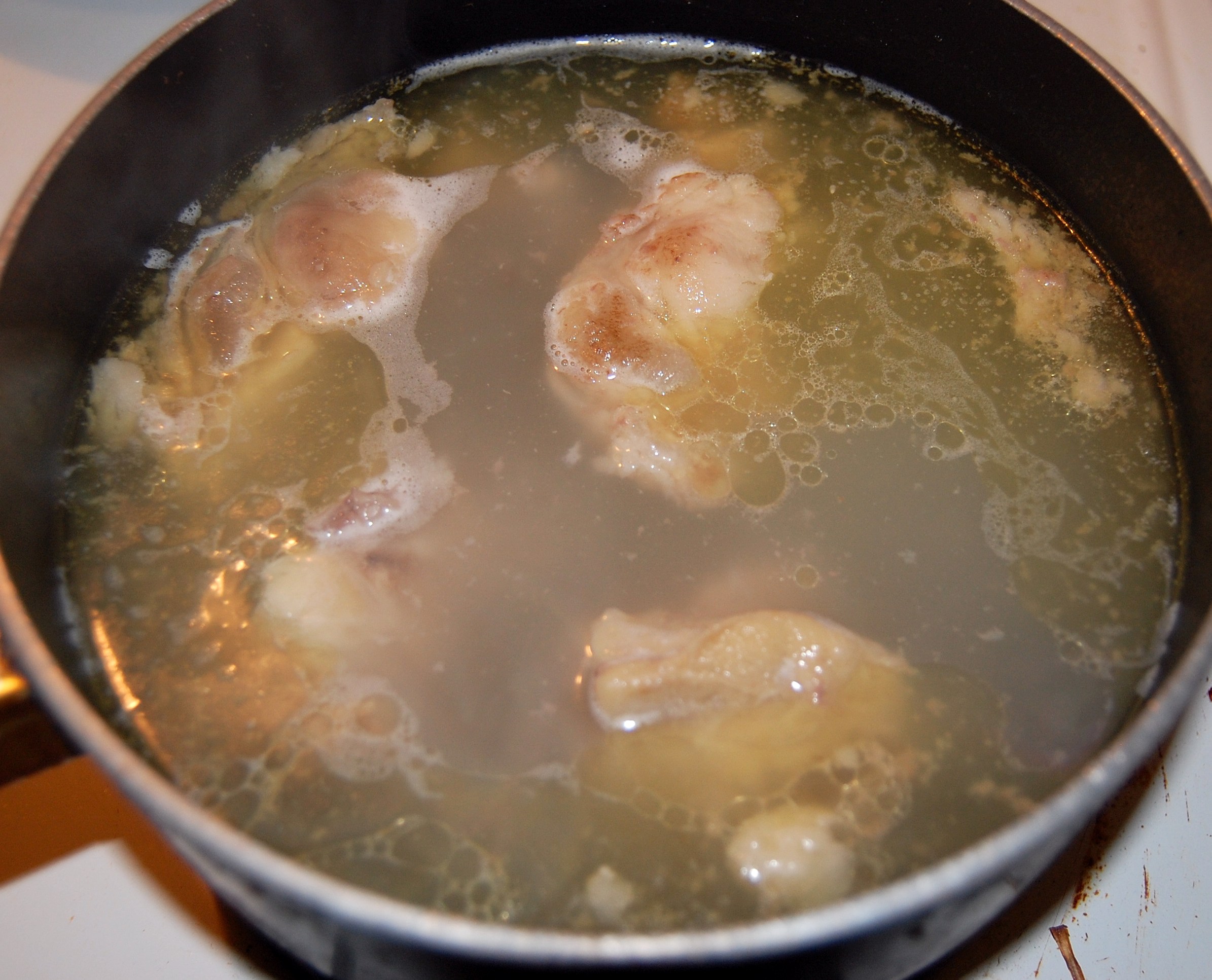
Beef bones are available at a wide range of stores these days. To make our broth, we picked up $3 of beef bones at BJ’s Wholesale Club yesterday and cooked them in water for 3 hours. Today, before dinner, we warmed up a portion. Here’s what it looks like:

Rice Noodles

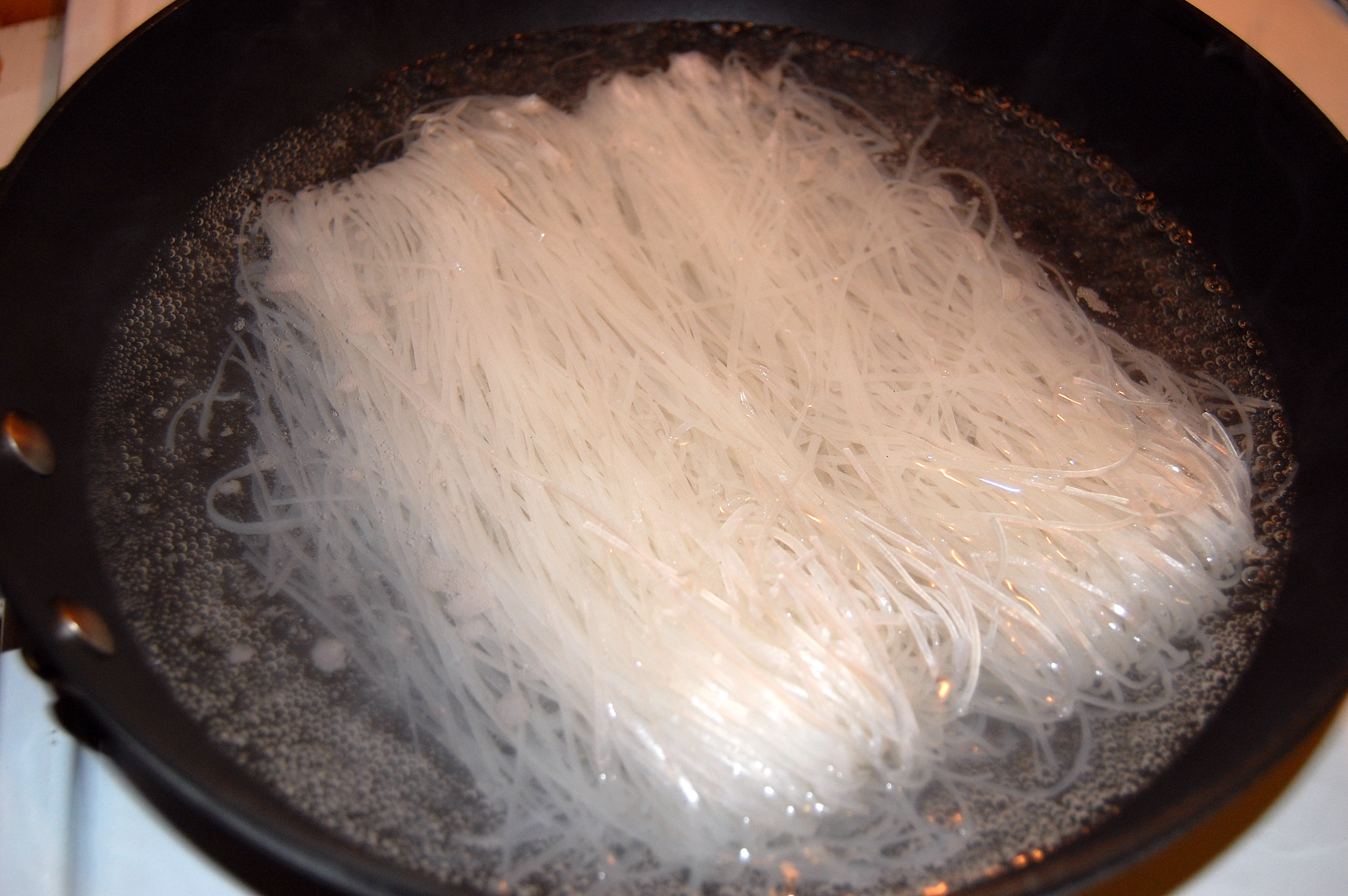
You’ll also need some rice noodles. We discussed rice noodles in this post: Cranky Grouch’s Spaghetti. The chief difference from that recipe is that we used thinner noodles, so it took less than 3 minutes to cook the noodles. As before, it’s important to have the water reach a boil before adding the noodles, cook briefly, and then drain the water and cool the noodles in cold water to stop them from cooking further. Another difference is that we didn’t add olive oil at the end.

Here’s a picture of today’s rice noodles cooking:

Other Ingredients

The essential ingredients are thin-sliced beef, fish sauce, a lime, and basil leaves. (You can substitute cooked shredded chicken or shrimp for beef.)

Other standard ingredients are bean sprouts (which are legumes, but low in toxicity and more like a vegetable) and cilantro. We think red onions complement the other flavors.

Some spices may also be desired, but are not necessary. Chili sauce for those who like it hot, plum sauce for those who like it sweet. Black bean sauce, garlic, ginger, salt, and pepper are also commonly used.

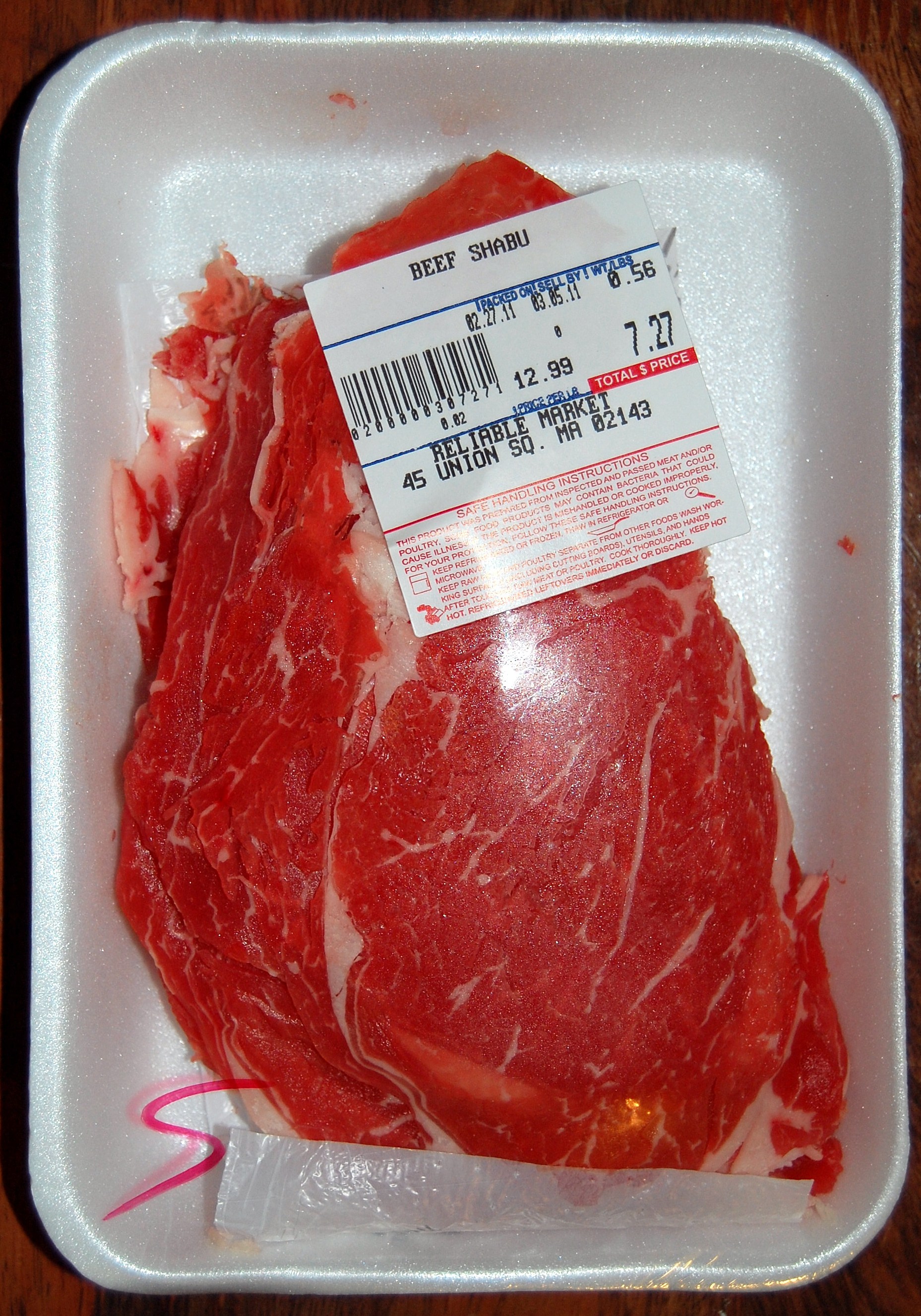
Thin-sliced beef is readily available at Asian markets. It’s often labeled as beef for shabu-shabu, the Japanese version of hot pot:

Here is the fish sauce and chili sauce we used. We prefer lighter fish sauces, which are translucent in the bottle; stronger fish sauces are opaque.

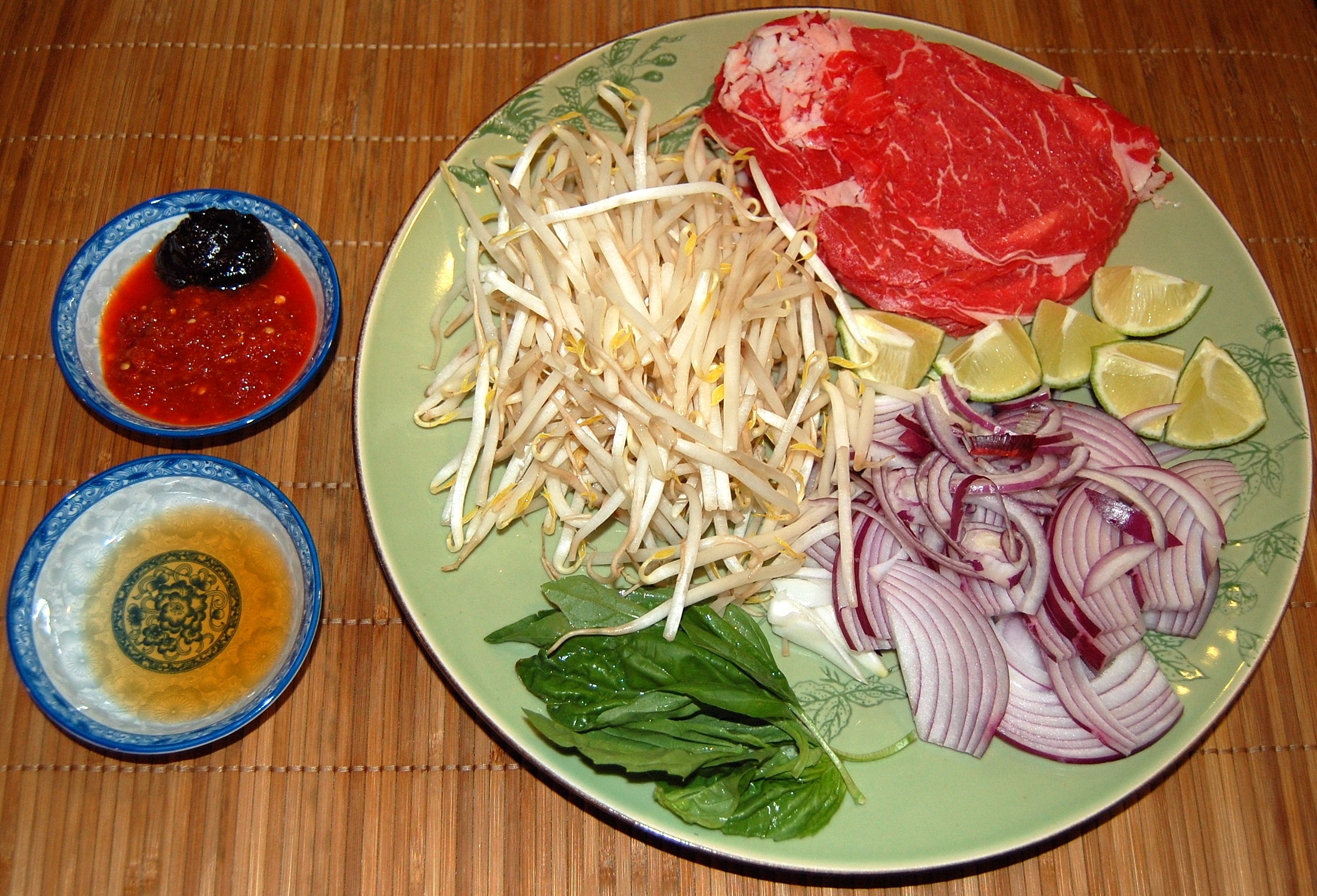
Here are the ingredients we used:

The lime is cut into eighths, the beef thawed; that is fish sauce on the lower left.

Making Your Pho

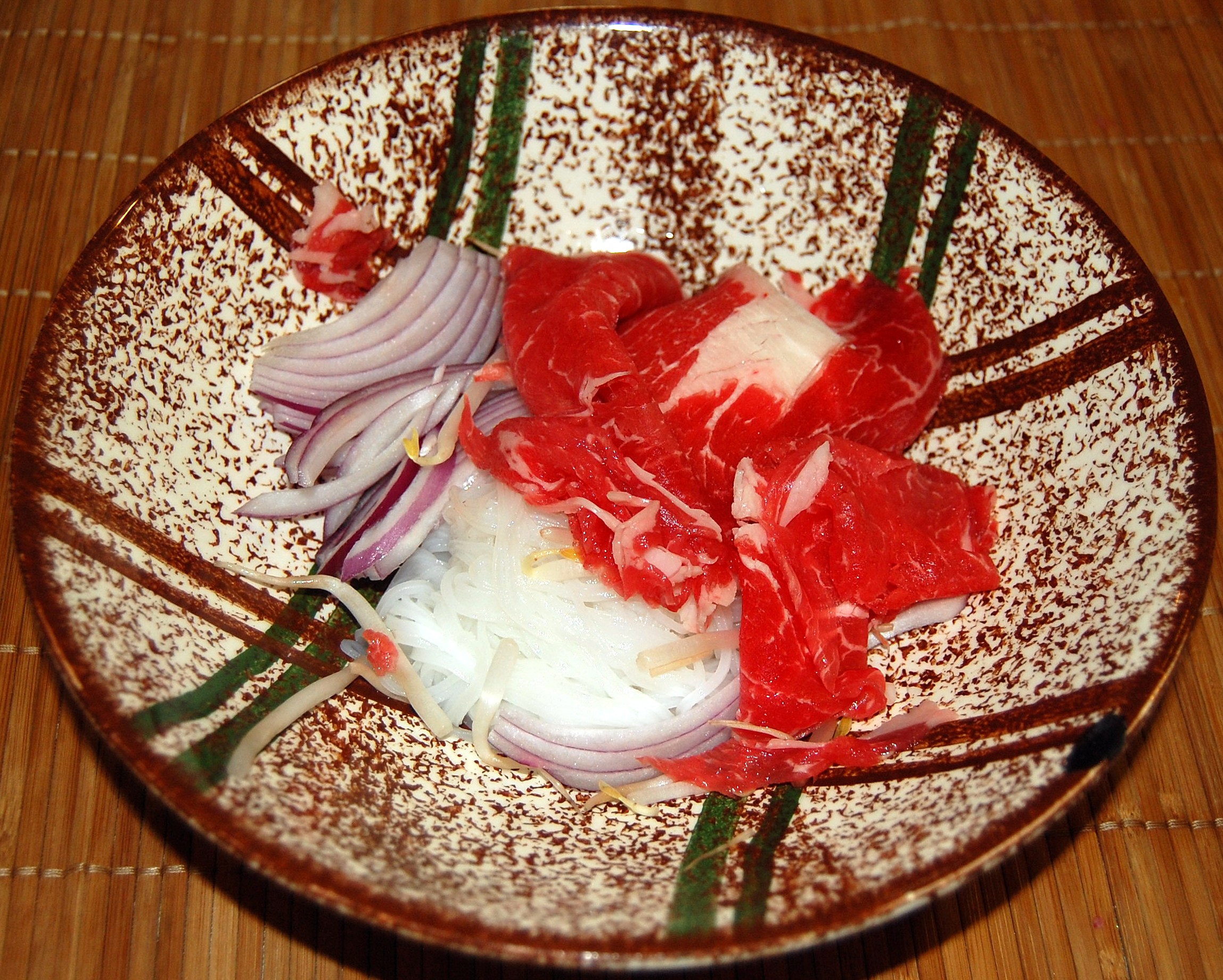
You can arrange the ingredients to your taste in your own soup bowl. Paul starts with some noodles, onions, and thin-sliced beef:

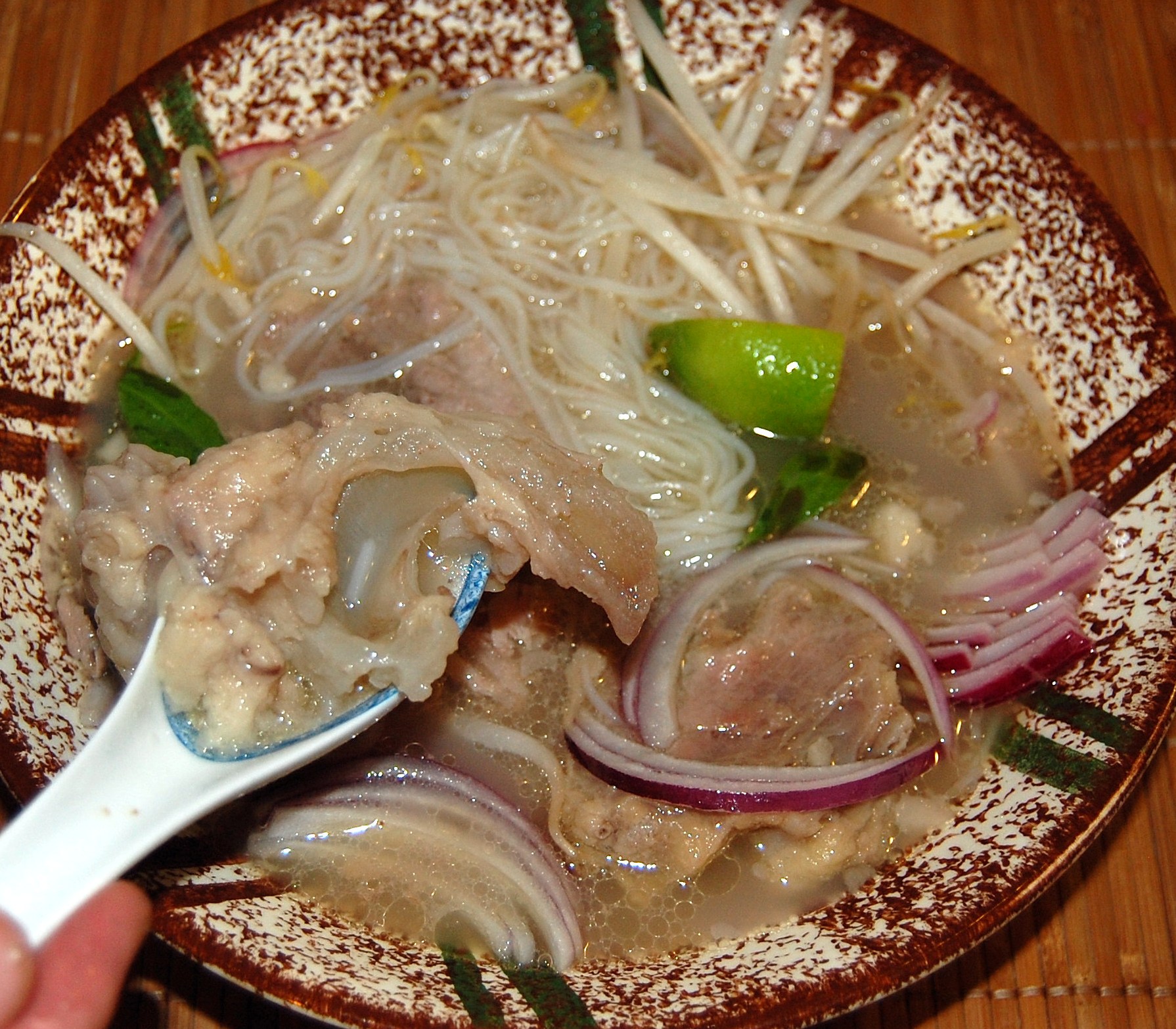
The broth is added hot from the pot, and the thin beef slices change color to brown within seconds. Top with sprouts and basil, and it looks like this:

Add lime, fish sauce, and spices to taste, and you’re ready to go. Here Paul has lifted out a piece of collagen and fat from the broth – this adds great richness to the soup:

It was delicious! The lime and fish sauce flavor is unique to Vietnamese cuisine and makes a great change of pace from our regular cooking.

If Chef Anthony Bourdain had come to dinner with us tonight, he might have been even more delighted than he was in this video:

Around the Web; and Is There a Fat Mass Setpoint?

[1] CoQ10 and niacin not good for Top Gun pilots: You don’t get useful supplement information like this at other Paleo sites.

The case presented here details a Naval Aviator who experienced reduced G tolerance over two successive flights with a temporal relationship of starting a new supplement. Two components of the supplement, coenzyme Q10 and niacin, are highlighted here for their hemodynamic effects. After stopping the supplement the aviator regained his normal G tolerance and had no further issues in flight.

Barker PD. Reduced G tolerance associated with supplement use. Aviat Space Environ Med. 2011 Feb;82(2):140-3. http://pmid.us/21329031.

[2] Thank you, science, this is helpful:

[3] N-acetylcysteine and choline reverse insulin resistance in rats. This is for biology junkies. How does physiological insulin resistance get reversed? Feeding signals do it, and cysteine and choline may be primary signals. Also, there is liver and brain involvement, since denervation of the liver causes insulin resistance. A hypothesis: there is a “hepatic insulin sensitizing substance” (HISS).

Lautt WW et al. Bethanechol and N-acetylcysteine mimic feeding signals and reverse insulin resistance in fasted and sucrose-induced diabetic rats. Can J Physiol Pharmacol. 2011 Feb;89(2):135-42. http://pmid.us/21326345.

[4] Do eggs eliminate need for carbohydrates? Seth Roberts recounts an interesting n=1 experience:

Joseph Buchignani … discovered that a meat-only diet eliminated his IBS. However, it also caused craving for carbs. Because carbs caused IBS, he couldn’t simply eat carbs. He tried many ways of getting rid of the craving for carbs: eating more animal fat, eating less animal fat, eating oil, eating lard, and eating different kinds of animals and cuts of meat. He varied how he cooked the meat, eating especially fresh meat, and eating fresh whole fish. All of these attempts failed. He did not try taking a multivitamin pill.

Finally he tried adding egg to the meat. That eliminated his craving for carbs…

Sure, some cravings reflect nutrient deficiencies. (Not all cravings: An alcoholic craves alcohol.) But in the cases I know about, there is an obvious or semi-obvious connection between the craving and the deficiency. For example, people who chew too much ice (pagophagia) crave ice to chew. They are iron-deficient. Eating iron eliminates the pagophagia. Long ago, a craving to eat something crunchy would have led you to eat bones. Bone marrow is high in iron. So the craving makes sense. In contrast, there is no obvious or semi-obvious connection between carbs and eggs.

The explanation for Mr. Buchignani’s experience is not obvious to me either. However, here’s a hypothesis:  Eggs are rich in cysteine and choline, so maybe they give an especially strong feeding signal that over-rides the appetite signal generated by carbohydrate deficiency.

[5] We need a good mucus barrier to prevent self-digestion. Every once in a while I assert in the comments that we need a good mucus barrier to protect our own cells from digestive enzymes, and so people with bowel problems (hence a deficient mucus barrier) should be cautious about taking protease or lipase enzymes. Then somebody asks for a reference (tough crowd!).

Well, here’s a paper that came out this week. It’s about proteases. The new part to me was that NAC is mucolytic and aggravates the injury. So reversing your insulin resistance with NAC might damage your gut … trade-offs, trade-offs.

Qin X et al. The Mucus Layer is Critical in Protecting Against Ischemia-Reperfusion-Mediated Gut Injury and in the Restitution of Gut Barrier Function. Shock. 2011 Mar;35(3):275-281. http://pmid.us/20856173.

[6] Most pesticide-contaminated vegetable? Celery. “This stalky vegetable tops the dirty list. Research showed that a single celery stalk had 13 pesticides, while, on the whole, celery contained as many as 67 pesticides.”

[7] Paleo cavities and chronic infections: Rhodesian Man, dated to between 125,000 and 300,000 BC, had cavities in ten upper teeth and pitting in his skull indicates he was probably killed by a chronic dental or ear infection. Paleo diets were not a cure-all for infectious disease. Via Melissa McEwen.

[8] Love in nature:

(Via Yves Smith)

[9] Vegan recovers health by eating animal foods: That’s not news. But she wrote a beautiful essay:

I wanted desperately for it to be right, for my ethics to outweigh my physiology.

Then she got death threats.

(Via Newmark’s Door)

[10] Shows how out of touch I am: If Richard Nikoley hadn’t blogged about it, I wouldn’t have known he has detractors. Whatever for? Has he been teasing the vegans again?

[11] Does the body have a fat mass setpoint? Pål Jåbekk of Ramblings of a Carnivore has a discussion of why the word “setpoint” may mislead. I agree – fat mass “equilibrium” or leptin “target” would probably be better words.

Pål objects to the setpoint language because he thinks it has encouraged a simple fat in / fat out mechanistic view of weight gain, and promotes a therapy of “starve and do insane amounts of exercise.” Pål suggests instead a lake metaphor:

When it comes to the body fat setpoint, I rather like the lake comparison. A lake can for those less informed seem to have a set point of water level. Despite rather large fluctuations in temperature, evaporation and water going into and out of the lake, the lake maintains it water level because the factors mostly responsible for the level influence each other. This does not mean that it is difficult to change the level, nor does it mean the lake “attempts to defend against change.” Build a damn dam and the water level will go up. Drain it, and the level goes down. It’s not very hard, you just have to push the right buttons.

I like this metaphor because it expresses the equilibrium concept – fat mass is in equilibrium the way water in the lake is in equilibrium; the equilibrium can change. On the other hand, the way to adjust water level is to reduce water in and increase water out. Doesn’t this metaphor promote the calories in / calories out view? And isn’t that the view that suggested the failed “starve and do insane amounts of exercise” weight loss regimen?

My conclusion: Semantic disagreements can be hard to resolve!

(Note to readers: For our thoughts on how to lose weight, peruse the “Weight Loss” category).

[12] Weekly video: The Cleveland zoo discovers that gorillas get healthier when they eat natural foods instead of sugary biscuits. This is a revelation to zoology:

(Via John Durant)

Ketogenic Diets, I: Ways to Make a Diet Ketogenic

I was going to write a single post about how to implement a therapeutic ketogenic (ketone-generating) diet.

But then I thought it was worth spelling out issues in some detail. There are various ways to make a diet ketogenic, and different ways are appropriate in different diseases. Also, different diseases may call for a different balance between three criteria:

1)      Safety. Does the diet generate side effects?

2)      Therapy. Is the diet as curative as it can be?

3)      Pleasurability and practicality. Is the diet unnecessarily expensive, unpalatable, or boring?

I soon realized that with so many factors affecting diet design, it would be hard to fit everything into a single post. So I’m going to split up the discussion into parts. Today I’ll look at the various ways to make a diet ketogenic. On Tuesday I’ll look at how to design a diet for Kindy’s NBIA kids. We’ll look at what they’re eating now, and consider ways they might be able to improve their diets further – and, hopefully, get further improvements in health, longevity, and function.

Maybe we’ll look at some other diseases after that, or maybe I’ll just move on to the lemon juice series I’ve been planning. The lemon juice and acid-base balance issues will fit in nicely since kidney stones and acidosis are risks of ketogenic diets and lemon juice relieves those risks.

So: how can we make a diet ketogenic?

What Is a Ketone?

The liver is responsible for making sure that the body (but especially the brain and heart) have access to a sufficient supply of energy from the blood. To fulfill that responsibility, it manufactures two energy substrates – glucose and ketones – and exports them into the blood as needed.

The most important ketones are acetoacetic acid and beta-hydroxybutyric acid.

Ketones are water-soluble small molecules. They diffuse throughout the body into cells, and are taken up by mitochondria and oxidized for energy.

Ketones are especially important to neurons, which can only consume glucose or ketones. So if something is wrong with glucose metabolism, ketones can be the sole usable energy source of neurons. (Other cell types, but not neurons, burn fats.)

Manufacture of Glucose and Ketones During Starvation

While preparing this post, I was surprised at how long it took for doctors to appreciate that ketones are an acceptable alternative energy source for the brain. The realization that the brain doesn’t perpetually rely on glucose during starvation apparently didn’t sink in until 1967!

The use of prolonged starvation for the treatment of obesity has posed a fascinating problem; namely, that man is capable of fasting for periods of time beyond which he would have utilized all of his carbohydrate resources and all of his proteins for gluconeogenesis in order to provide adequate calories as glucose for the central nervous system.

This study was designed to clarify the apparent paradox, and it was found that beta-hydroxybutyrate and acetoacetate replace glucose as the brain’s primary fuel during starvation. [1]

This makes it a bit easier to understand why ketogenic diets have not yet become standard therapies for neurological diseases. Epileptics caught a lucky break – the ketogenic diet was already in use for epilepsy in the 1920s. The ketogenic diet’s therapeutic potential for other neurological disorders probably couldn’t have been appreciated until after 1967, and by then medicine had turned its back on dietary therapy.

But back to ketones. During starvation, glucose and ketones have to be manufactured from body parts. The body’s resources include:

  • Glycogen – a storage form of glucose. However, glycogen supplies are minimal.
  • “Complete” protein – a mix of amino acids similar to that found in animal meats.
  • Long-chain fats – fatty acids 14-carbons or longer in length, attached to a glycerol backbone as either triglycerides or phospholipids.

During starvation, different raw materials end up as different energy substrates:

  • Glycogen can be used to make glucose but not ketones. So glycogen converts 100% to glucose.
  • Protein is broken down into its constituent amino acids. Some amino acids can become glucose but never ketones; some can become either; some can become ketones but glucose. “Complete” protein usually found in the body typically converts 46% to ketones, 54% to glucose. [UPDATE: Actually, this is incorrect. As Tony Mach points out in the comments, complete protein converts 20% to ketones, 80% to glucose. The 46-54 ratio is the contribution to Wilder’s ketogenic ratio, see below.]
  • Triglycerides and phospholipids are broken up into their constituent parts. The fatty acids can make ketones but not glucose; the glycerol backbones can make glucose but not ketones. Typically, 10-12% of energy from a triglyceride is in the form of glycerol (which has the potential to become glucose) and 88-90% is in the form of fatty acids (which have the potential to become ketones).

As we note in the book, during starvation the body is cannibalizing tissues that are roughly 74% fat, 26% protein by calories. Due to the preponderance of fat, starvation is highly “ketogenic” (ketone generating). The 26% of calories that are protein generate roughly equal amounts of ketones and glucose, but the 74% of calories that are fat generate only ketones.

This doesn’t mean that during starvation ketones are 87% of energy and glucose 13% of energy. Most of the fats are burnt directly for energy without conversion to ketones. But a fair amount of fats are diverted into ketone production, and ketones are abundant during starvation.

A Ketogenic Diet Using “Body Part Foods”

If your diet could include only compounds found in the body – glucose, complete protein, and long-chain fats stored as triglycerides or phospholipids – then we can use the above numbers to estimate the “ketogenic potential” of the diet.

I have to credit commenter “Cathy” at the PaNu Forum for this next part. Kindy posted a question about the ketogenic diet for NBIA on the PaNu Forum in October 2010, and Cathy left an informative comment:

The ketogenic formula was originally developed by Wilder at the Mayo clinic in the 1920’s. By googling WILDER KETOGENIC FORMULA, I found a link to the book “The Ketogenic Diet: A Treatment for Epilepsy” published in 2000. Quite a bit of the book is available for reading online; here is the URL

.

On page 36 of this book is Wilder’s formula for the ketogenic potential of a diet:

This formula basically treats all fats as triglycerides of long-chain fatty acids, and protein as “complete” protein with a typical mix of amino acids. It makes a ratio of the ketone precursors to the glucose precursors.

Wilder’s “ketogenic ratio” was used by Dr. Richard Bernstein in his Diabetes Solution to help people appraise the ketogenicity of a diet. A ratio below 1.5 signifies a minimally ketogenic diet; the higher the ratio goes above 1.5, the more ketones will be generated.

Other Dietary Ketone Precursors

If you’re not starving, you have the opportunity to eat foods that are not components of the body, and that are more ketogenic than “body part foods.”

Specifically, you can eat:

  • Short-chain fats such as are found in coconut oil.
  • A mix of amino acids that is not “complete,” but is biased toward the ketogenic amino acids.

If you do this then your diet will be more ketogenic than Wilder’s formula would suggest.

Eating these foods may be advantageous. For instance, suppose you want to eat enough carbs to avoid “zero-carb dangers” such as mucus deficiency. At the same time, you want to generate abundant ketones to nourish the brain. You can achieve both by eating carbs for glucose, but also eating short-chain fats and ketogenic amino acids to make ketones.

So let’s look at why these foods are so effective at producing ketones.

Amino Acids

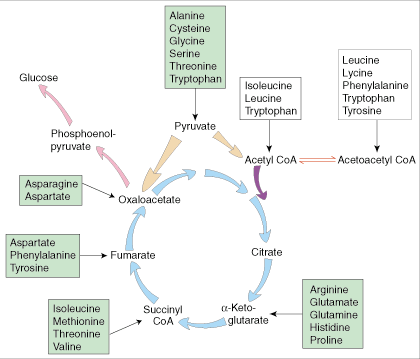
The main metabolic process which converts one metabolic substrate into another is called the citric acid cycle, tricarboxylic acid (TCA) cycle, or Krebs cycle.

The TCA cycle looks like this (blue arrows):

The passage from succinyl CoA to fumarate is where ATP is made. The cycle can be fed in several ways:

  • By pyruvate which is an intermediate produced in glucose metabolism;
  • By acetyl CoA which is an intermediate produced by ketones or fatty acid oxidation;
  • By amino acids which can enter the TCA cycle at various points.

The green boxes show glucogenic amino acids entering the cycle. The white boxes show ketogenic amino acids that are made into either acetyl CoA or acetoacetyl CoA and thence can either leave as ketones (via HMG-CoA) or enter the cycle by conversion of acetyl CoA to citrate.

The crucial takeaway, as far as this post is concerned, is the distribution of amino acids among green and white boxes:

  • Leucine and lysine appear only in white boxes, not in green boxes. They are purely ketogenic.
  • Isoleucine, tryptophan, phenylalanine, and tyrosine appear in both green and white boxes. They can be either ketogenic or glucogenic.
  • The other amino acids appear only in green boxes and are purely glucogenic.

So if the diet is rich in leucine and lysine, but poor in glucogenic amino acids, then it will be highly ketogenic.

Short-Chain Fats

Fats are made into acetyl CoA. Acetyl CoA can either enter the TCA cycle or be converted to ketones. What decides which way it goes?

One important factor is whether the cell has enough ATP. If the cell has plenty of ATP then it won’t allow the TCA cycle to make any more, and the TCA cycle gets stuffed with succinyl CoA and then with all the other intermediates in the pipeline behind it.

Once the TCA cycle is full, acetyl CoA no longer enters the cycle and instead leaves as ketones.

Long-chain fats can follow this route, but not terribly easily. They have alternatives:

  • Long-chain fats can serve as structural molecules in cell membranes throughout the body.
  • Long-chain fats can be stored in adipose cells.
  • Long-chain fats can be burned by cells throughout the body, and transported to cells that need them.

These factors mean that you have to eat a very large amount of long-chain fats before you produce substantial ketones.

Short-chain fats (12 carbons or less in length; often called medium-chain) are different. Short-chain fats do not appear in cell membranes and are not stored in adipose tissue (except for a little 12-carbon fatty acids). Rather than being transported throughout the body, they are shunted to the liver for disposal.

This means that if you eat a lot of coconut oil (which is 58% short-chain fats), you deliver a lot of fat to the liver for disposal. The disposal process for fat is conversion to acetyl CoA followed by either burning in the TCA cycle or conversion to ketones.

After a big cup of coconut oil is delivered to the liver, the liver’s ATP levels are quickly saturated. The TCA cycle is stuffed and the liver will dispose of the coconut oil by making ketones.

It will do this whether the rest of the body needs the ketones or not. The liver wants to get rid of the coconut oil, and it does it by making ketones whether the rest of the body wants them or not.

Summary

So we have three ways to make the diet ketogenic:

1)      Make Wilder’s “ketogenic ratio” high by eating a lot of fat, very few carbs, and not too much protein.

2)      Supplement with the ketogenic amino acids lysine and leucine.

3)      Supplement with coconut oil or another source of short-chain fats.

If we do (2) or (3), then the diet can be ketogenic even if it has a fair number of carbs.

So now we have an arsenal of ways to generate ketones. We have to look at diseases and diet risks to figure out which way of making the diet ketogenic is optimal.

I’ll look at that next week.

References

[1] Owen OE et al. Brain metabolism during fasting. J Clin Invest. 1967 Oct;46(10):1589-95. http://pmid.us/6061736.