



Around the Web; Snowy Halloween Edition

A storm today is supposed to turn to snow tonight – one of the earliest snowstorms in memory. Luckily trick-or-treating weather Monday should be perfect.

A few events are coming up. First, I’ll be speaking on Saturday Nov 12 at the Wise Traditions Conference in Dallas, doing the “Wellness Track” from 9:00 am until 12:15 am. The conference will be full of great speakers, including Sally Fallon, Chris Masterjohn, Dr. Joseph Mercola, Natasha Campbell-McBride, Denise Minger, Stephanie Seneff, Dr. Ritchie Shoemaker, Harvey Ussery (Harvey’s wife Ellen is one of our most frequent commenters), and many others. Please consider attending:

Wise Traditions Conference ~ Dallas, TX ~ November 11-14 2010

The following Saturday, Nov 19, I’ll be speaking at CrossFit NYC. I’ll have details about that next week.

Finally, on Sunday, December 4 at 3 pm I’ll be giving a talk and book signing at Green Meadows Farm in Hamilton, MA.

[1] The “Safe Starch Symposium” continues:

Jimmy Moore is graciously continuing the conversation about safe starches on his blog, with the latest installment coming from Dr. Ron Rosedale. For those keeping score, here’s how the discussion has gone:

On Tuesday I’ll explain why Dr Rosedale almost persuaded me to eat a high-carb diet.

Due to personal health considerations, Jimmy won’t be trying an n=1 experiment with safe starches. However, we’ll still develop a 7-day meal plan for those who want to give our diet a try, and Jimmy will invite his readers to try it and share their experiences. That will happen in December, and Shou-Ching and I are looking forward to it.

[2] Music to read by:

[3] Interesting posts this week:

Is radioactive cobalt improving the health of the Japanese?

Stephan Guyenet discusses the brain’s ability to regulate peripheral glucose utilization and lipolysis from fat cells. It makes sense that this would be the case: Apart from the brain’s advantage as a coordinating organ due to its access to signals from nerves, it is also the highest priority destination for glucose, and so the organ best informed about when glucose utilization should be suppressed elsewhere.

Dr Oz has a “Prehistoric Diet Plan”. I think of it as Loren Cordain merged with T. Colin Campbell, and then acquired by the US Department of Agriculture.

Dr Steve Parker reports that intentional weight loss doesn’t reduce risk of death … but it does prevent progression to type 2 diabetes.

Eating a fatty meal causes pythons to grow bigger hearts. Even more interesting, giving mice a transfusion of fed-python blood causes them to grow bigger hearts. Will Tour de France riders be adopting pet pythons?

Another mummy gets diagnosed with prostate cancer. The cancer has to have metastasized to bone to be visible in skeletal evidence. I have not heard of any Paleolithic skeletons containing metastases, but a paleopathologist states that bone cancer has been found in Paleolithic skeletons.

Can going Paleo strain a marriage? It did for Peggy the Primal Parent.

Aaron Blaisdell is teaching UCLA students to eat primally. What’s that illustration on the table?

CarbSane has been chipping in to the safe starches debate (Wednesday, Thursday, and Friday).

Melissa McEwen says, “The no-starch camp is in its death throes” … I prefer to think of it as “the pro-starch camp is in its prime of life”.

Lucas Tafur gives us a reason to put vinegar in our foods: gut bacteria can convert acetate to butyrate.

Chris Kresser warns of the dangers of estrogens in plastic containers.

Emily Deans considers whether ketogenic diets may help bipolar disorder. By the way, Emily is visiting Harvard Law School on Halloween. No word yet on her costume.

Danny Roddy defends fructose against charges it is emaciating.

Do you have heightened formation of fear memories? Randall Parker says you may be hypothyroid.

Bats are being decimated by a fungal infection: millions have died, and “mortality rates are staggering.” Bat physicians, however, insist the fatalities cannot be happening, because their patients do not have compromised immune systems.

We are Heroes, They are Villains”: a must-read tribute to his students from Seth Roberts. Also, Seth tells us that bees make more honey with kombucha. I wonder how much they would make if given other fermented beverages?

NPR invites a vegetarian to critique the Paleo diet, and Paleo dieters dominate the comment thread.

Australian researchers published an interesting study on the lasting hormonal changes that occur in obesity, even if weight is lost. Weight loss in the obese triggered an immediate 2/3 drop in leptin levels, and a full year after weight loss leptin levels were still depressed by 1/3.

Richard Nikoley … rods … cat o’ nine tails … and a temptress who should have been named “Eve.”

Paul Halliday enters the Mesolithic.

[4] Cute animal photo:

From Oak0y via Meredith Harbour Yetter.

[5] Ah, romance:

[6] The Waterfall of Gulfoss:

Alone at the Raging Waterfall of Gulfoss

[7] Is this a CrossFit exercise?:

[8] Shou-Ching’s Photo-Art:

[9] Weekly video: A new font for dyslexics:

Via Tom Smith.

Local Farming and The Fight for Quality Food

Unhealthy animals make for unhealthy food. Poor health is usually caused by missing nutrients, toxins, and infections. Naturally, food from an unhealthy animal has a higher chance of being malnourishing, toxic, or infectious.

Our industrial food production system relies on genetically disturbed animals raised in crowded conditions and fed unnatural diets.

Fortunately the movement to healthier food production has been gathering steam recently. In most cities, it’s possible to meet local farmers at farmers markets and obtain naturally raised meat and vegetables.

We’ve been meaning to learn more about local farms and their food production methods. On Saturday, we joined the Livin’ Paleo in Boston group on a visit to Green Meadows Farm in Hamilton, Massachusetts. Green Meadows Farm was founded by General George S. Patton and is still owned by one of his heirs. It is managed by Andrew and Diana Rodgers. We were delighted to meet Diana at the Ancestral Health Symposium, and have looked forward to visiting her farm. I thought I’d share some photos and information from our visit.

Chickens

The Rodgers keep a pen of Cornish Rock chickens as an educational exhibit. Cornish Rocks supply the great majority of the chicken consumed in the United States; yet they are a genetically disturbed breed that develops arthritis by age 10 weeks and commonly dies young or fails to reproduce.

They are characterized by extraordinarily rapid growth and large breasts – so large that they have difficulty maintaining their balance and walk awkwardly. The breed doesn’t like to walk and if given food and water and if their poop is removed, they will happily live their whole lives in one spot.

The Rodgers force their Cornish Rock hens to walk by placing their feed a short distance from their coop:

Virtually all supermarket chicken meat is obtained from this breed, and even though their unaided growth is extremely rapid, producing a full-size chicken in 6 to 8 weeks, I have read that growth hormones are sometimes injected to accelerate growth further.

The Rodgers keep other, healthier breeds of chicken:

These are working animals. The farm is actually an organic vegetable farm, and the animals are used to clear and fertilize vegetable plots. They do sell their chickens in the fall, but apparently the healthier breeds of chicken produce a stringier meat that most Americans don’t care for.

Pigs

Currently only 20 acres of the 230 acre farm are in cultivation. The rest has been occupied by forest, or is too wet to farm. The Rodgers are steadily trying to clear woodland to create new vegetable plots, but it is a slow process.

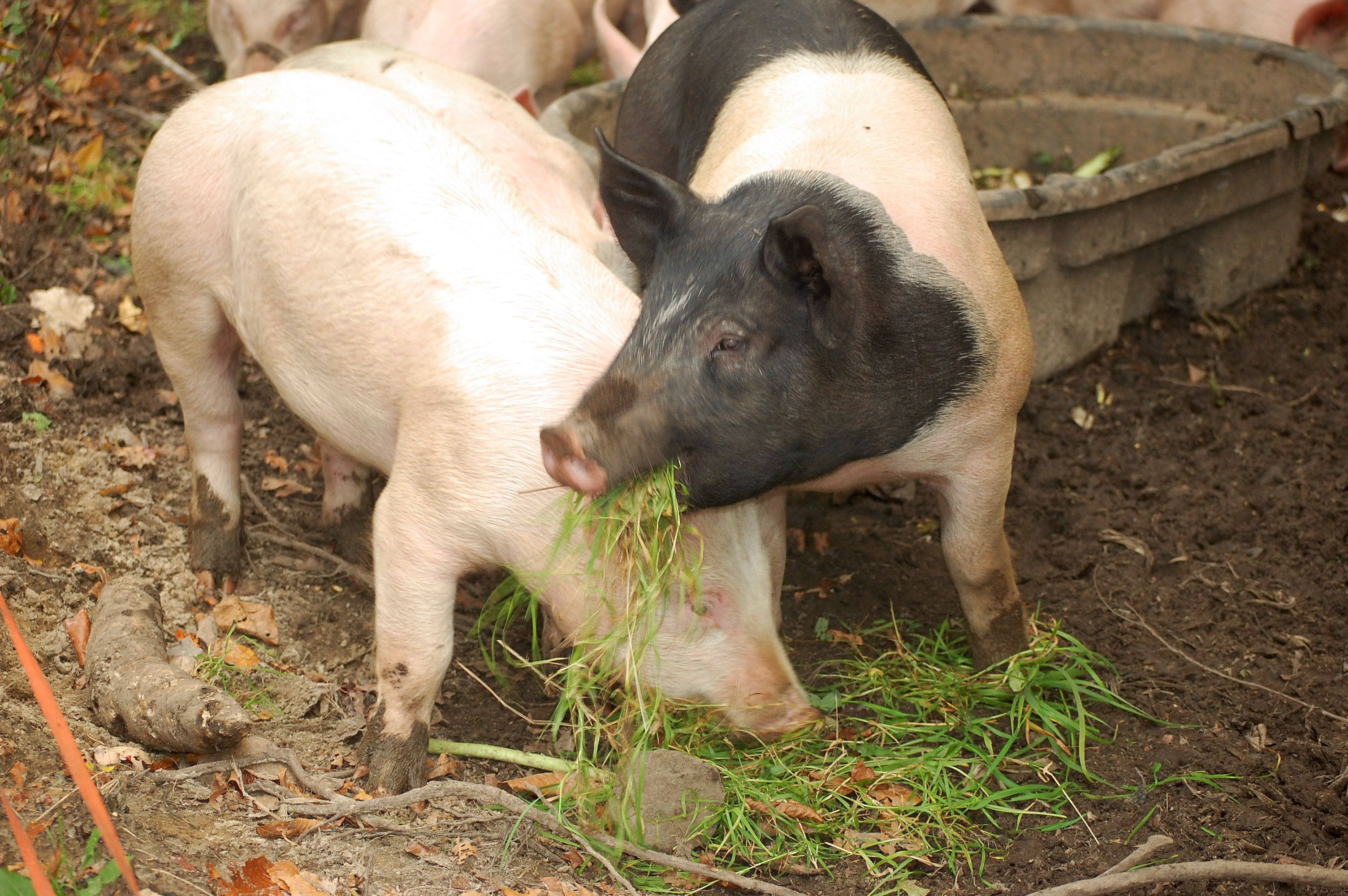
They begin by confining pigs to a wooded area using electrical fences. The pigs root around, clearing underbrush and weakening the root systems of the trees. After a season of pig exposure, the trees can be cut down more easily.

Here you can see some pigs:

The orange electrical fence is on the left.

Sheep

After the trees have been cut down, it still takes at least a year – generally more – to naturally break down roots and prepare the field for plowing. Sheep and chickens are the animals that effectively turn a former woodland into a fertile, root-free vegetable field.

Here are some sheep in a plot that is currently occupied by clover, a legume that restores nitrogen to the soil:

Here is a sheepdog in training:

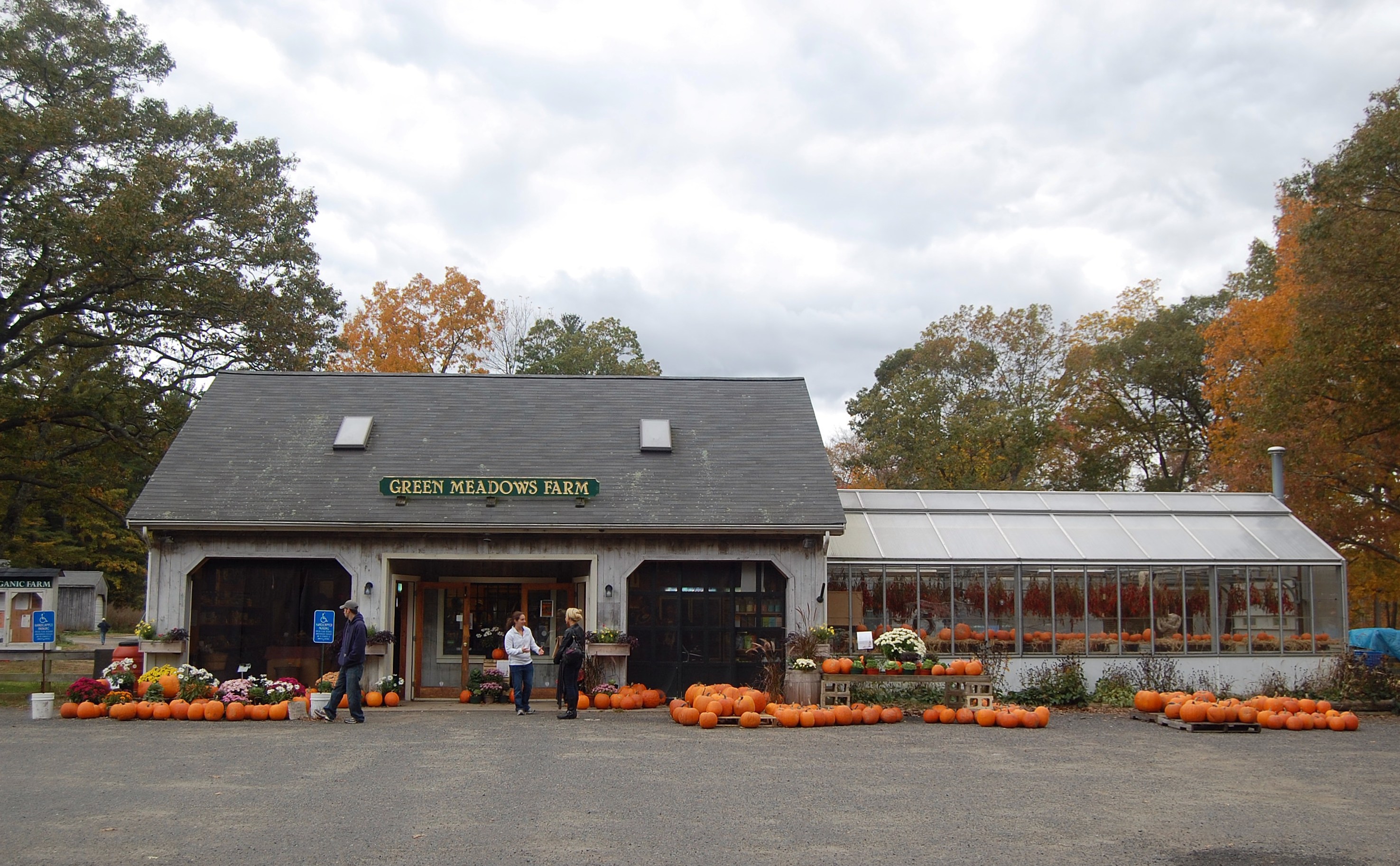
If you ever find yourself on Asbury Street in South Hamilton, Mass., here’s the farmstand to look for:

Livin’ Paleo in Boston Group

Here is a photo of our tour group:

Diana Rodgers is on the far right, Andrew Rodgers (fifth from the left) is visible only as a head. I’m in the red shirt and green shorts sixth from the right; Shou-Ching was the photographer. I won’t try to name everyone but the organizers of the tour, Shilpi and Amit Mehta, deserve special thanks; they are in the back row slightly left of center.

Joel Salatin, Michael Pollan, and Farmageddon

Joel Salatin is a hugely entertaining family farmer in Virginia who has deservedly become famous. Here’s a short video introducing him – this is from the documentary “Fresh”:

For a description of how Salatin’s Polyface farm operates, there may be no better source than Michael Pollan:

Unfortunately, the regulatory and legal climate is actively hostile to local farms. Here is the trailer to the documentary “Farmaggedon”:

Farmageddon – Movie Trailer from Kristin Canty on Vimeo.

A Canadian dairy farmer is currently on a hunger strike protesting laws restricting the sale of milk, and in a similar Wisconsin case Judge Patrick J. Fiedler recently ruled that “Plaintiffs do not have a fundamental right to produce and consume the foods of their choice.” So these are active issues.

Shou-Ching and I strongly support the liberation of food production and consumption from repressive regulations, and recommend checking out your local farms. In our experience, the food is better than that at Whole Foods, and often cheaper. I know we have a number of farmers among our readers; please, let us know if there is anything we can do to promote your businesses.

Around the Web; Green Meadows Farm Edition

We had a delightful tour today at Green Meadows Farm in Hamilton, Massachusetts; I’ll write more about it tomorrow. Thanks to Andrew and Diana Rodgers for showing us around.

Also on Sunday October 23, Paul will be on Cary Nosler’s Wide World of Health radio show at 4 pm Eastern / 1 pm Pacific. It’s possible to listen live on the Talk 650 KSTE web site.

[1] Perfect Ego-Gratifying Book Review: Over at Health Correlator, Ned Kock has reviewed our book. Ned is one of the smartest and most interesting bloggers in the Paleosphere, so we were delighted that he liked our book. In his first paragraph, he links “Perfect Health Diet” to “Facebook”, and later he speaks of Shou-Ching and me in the same breath with well-known scientists:

Their main PhD disciplines are somewhat similar to Einstein’s and Curie’s; which is an interesting coincidence. What the Jaminets have written about nutrition is probably analogous, in broad terms, to what Einstein and Curie would have written about nutrition if they were alive today.

If they were alive today, they’d be 132 and 144 years old respectively, and everyone would be intensely interested in their nutitional tips!  So we take that as high praise indeed.

Ned’s wasn’t the only pleasing review we got this week; Dr. Srdjan Andrei Ostric wrote a generous endorsement of our book. I was also pleased that one of Dr Ostric’s readers did NOT directly compare me to her emotionally abusive ex.

[2] Interesting posts this week:

Andrew Badenoch of Evolvify downgrades potatoes and rice to “sneaky untrustworthy bastards” and bok choy to “I’m not making out with you if you eat that.” This was in response to that interesting miRNA study I mentioned in a previous Around the Web. Richard Nikoley offered his thoughts.

One of Richard’s commenters hopes we’ll critique the study. It’s not an easy study to critique because it’s the first of its kind; everything about it is interesting, but very likely not all the results will be reproducible. Also, it’s premature to draw any conclusions about how it affects diet, since all plant and animal cells contain microRNA, and there’s nothing special about the miRNAs of rice or potato. If rice miRNAs can survive cooking and digestion and cross cellular membranes and affect gene expression, so will miRNAs from every other plant and animal food. That would imply that we evolved with a background level of dietary miRNAs in our cells. The implications for diet are hard to fathom, except that it probably strengthens the case for eating in an ancestral manner, since an ancestral diet would deliver a mix of miRNAs we evolved to handle.

Emily Deans summarized yesterday’s talks at TEDx Cambridge. A line that caught my eye:

Lustig seems to feel that fructose, MCTs, and BCAAs are damaging to the mitochondria and lead to insulin resistance (thus he is anti-corn fed beef, as corn-fed beef is higher in BCAAs than grassfed, apparently.)

I’m pro BCAAs. Is that a reason to favor corn-fed beef?

Two PaleoHackers, Kamal and Aravind, tried to reduce food reward and lost weight. Stephan Guyenet recounts their story.

J Stanton has another blockbuster exposition on food reward, which contains a challenge to Stephan’s recommendations for weight loss: eating food you like decreases quantity of food consumed more than eating bland food.

Lucas Tafur reports that some mouth bacteria can digest gluten, making wheat safer for their hosts.

Mike Gruber’s triglycerides went down after he added starches and supplements in line with Perfect Health Diet recommendations. Was it the starch, or the micronutrients?

Melissa McEwen compares overeating to porn addiction and discusses Paleomedicine.

Oetzi the Iceman had Lyme disease. Folks with Lyme infections are more likely to be diagnosed with psychiatric disease. Oetzi was discovered in a reclining posture. Coincidence?

Dr Steve Parker links to Vitruvius at The Sagacious Iconoclast, who explains how Paleolithic man might have made cheese: “transport milk in mammal stomach vessels containing natural rennet, in the heat, thousands of years ago, and voila: curds and whey.”

In the New York Times, a woman has survived a dangerous cancer by retreating to national parks. She’s not the only one; the combination of sunshine, exercise, and nature seems to have a strong anti-cancer effect.

Darrin Carlson wrote on The Five Failings of Paleo. You might have seen the piece reprinted at Free the Animal.

John Durant is manly, in a Jack Sparrow Dances with Wolves kind of way.

Jamie Scott says: Make your own antioxidants.

Mark Sisson says: For healthy mitochondria, eat fat.

Dr BG fostered a kitty, and reflects on human evolution.

Nourished Kitchen has tips for a healthier Halloween.

Let’s see, there was the Permian-Triassic Extinction, the Cretaceous-Tertiary Extinction – the 1883 Extinction?

[3] Cute animal photo:

Via Yves Smith.

[4] A mini-debate on protein and longevity:  In the comment thread to Ned Kock’s review of our book, Ned has an excellent counterargument about protein and longevity:

Here is another counterpoint to the notion that increased protein intake leads to decreased longevity. A BMI of 25 is generally associated with the lowest mortality: http://bit.ly/fWdsPC

Now, we know that as people age they generally tend to lose body mass (contrary to popular opinion), primarily due to loss of lean body mass, which seems to outpace body fat gain.

Increased protein consumption seems to counter that, and this appears to be related to both bone and muscle retention, contributing to a higher BMI.

So it is not unreasonable to conclude that the relatively high BMI of 25 is associated with retention of lean body mass with age, even as body fat gradually increases as well, leading to the perception that the fat are the ones living the longest.

Of course I am not talking about 600 g/d of protein. These seniors seem to have done quite well in terms of bone retention at around 85-90 g/d: http://bit.ly/f1Pi3T

In another comment Ned mentions receiving from O Primitivo a link to a paper that looks fascinating.

[5] The End of Human Progress: Via Joshua Newman, an aphorism from Ben Franklin:

I have always thought that one man of tolerable abilities may work great changes, and accomplish great affairs among mankind, if he first forms a good plan, and, cutting off all amusements or other employments that would divert his attention, make the execution of that same plan his sole study and business.

A corollary from Paul Jaminet:

Humanity will stagnate until the Internet becomes boring.

[6] Autism Updates:

Weston A Price might have something to say about possible nutritional factors behind this finding: Autistic children have an altered facial structure, characterized by wider eyes, a broader upper face, wider mouth and philtrum, but shorter middle region of the face including cheeks and nose.

There seems to be a connection between maternal gestational diabetes and autism. A Rice University professor discusses the link:

[7] Not the Weekly Video: Why Paleolithic man didn’t bicycle:

[8] Shou-Ching’s Photo Art:

[9] Weekly video: Never trust an animal that wears a tuxedo!

Via Bix.

How to Minimize Hyperglycemic Toxicity

In my reply to Jimmy Moore’s safe starches symposium (see Jimmy Moore’s seminar on “safe starches”: My reply, Oct 12), I didn’t quite have time to fully address the issue of hyperglycemic toxicity.

As J Stanton commented, it would have been good to note that we recommend consuming “safe starches” as parts of meals, not as isolated snacks, and to discuss how meal design mitigates risk of hyperglycemic toxicity:

I’ve written entire articles on the fact that fat content is the primary driver of glycemic index. It’s silly to demonize white potatoes due to high GI when a couple pats of butter – or simply consuming it as part of a PHD-compliant high-fat meal – will drop it far more than substituting a sweet potato.

I thought I’d delve into the factors affecting blood glucose response to meals, and how to minimize the rise in blood sugar. It’s a topic of general interest, since hyperglycemia might have a mild detrimental health effect in nearly everyone; but of special importance to diabetics, since controlling blood sugar is so crucial to their health.

Glycemic Index of Safe Starches

The glycemic index (GI) is “defined as the area under the two hour blood glucose response curve (AUC) following the ingestion of a fixed portion of carbohydrate (usually 50 g).” Pure glucose in water is used as the reference and defines a GI of 100.

Our recommended “safe starches” are significantly lower in GI than glucose.

White rice is typically listed with a GI of 70 or 72, but it varies by strain: Bangladeshi rice has a GI of 37, American brown rice of 50, Japonica (a white short-grained rice) of 48, Basmati rice of 58, Chinese vermicelli of 58, American long-grain rice of 61, risotto rice of 69, American white rice is 72, short-grain white rice is 83, and jasmine rice 89 (source).

Potatoes are a high-GI food but again the GI is highly variable. Baked white potatoes with the skin have a GI of 69, peeled their GI is 98. Yams have GI of 35 to 77 depending on how they are prepared, sweet potatoes of 44 to 94 (source).

With some foods the GI varies strongly with ripeness. Plaintains when unripe have a GI of 40 but when ripe the GI can reach 90 (source).

Taro has a GI of 48 to 56. That’s similar to many fruits, such as bananas which have a GI of 47 to 62. Tapioca has a GI of 70 if steamed, but can exceed 80 if boiled (source).

Gentle Cooking Lowers the Glycemic Index

As a rule, gentle cooking of starchy plants leads to a lower glycemic index and high cooking temperatures lead to a higher glycemic index.

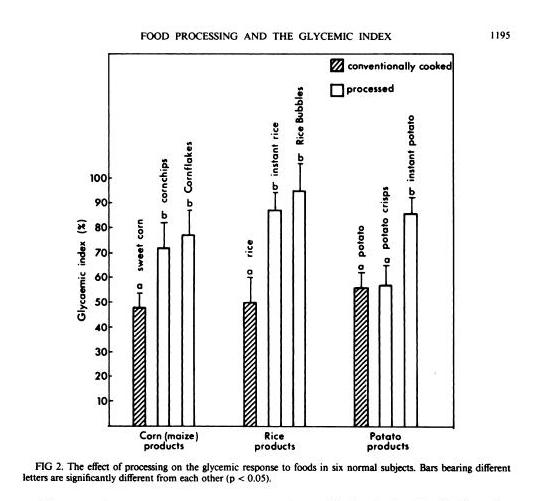
In general, industrially processed foods, which are often processed at very high temperatures to speed them through factories, have high GIs. A study in the American Journal of Clinical Nutrition [1] compared home-cooked corn, rice, and potato with processed foods based on them (instant rice, Rice Bubbles, corn chips, Cornflakes, instant potato, and potato crisps), and the processed foods had consistently higher GIs:

Another study in the British Journal of Nutrition [2] looked at 14 starchy plants prepared in different ways and found that roasting and baking raised the GI:

GI value of some of the roasted and baked foods were significantly higher than foods boiled or fried (P<0.05). The results indicate that foods processed by roasting or baking may result in higher GI. Conversely, boiling of foods may contribute to a lower GI diet.

Perhaps cooking methods that dry out the plant increase the GI.

Meals Have Lower GI

GI is calculated by eating a single food and only that food.

But what happens when you eat a meal? You’re no longer eating one food, but a mixture of foods. The baked potato may come with meat and vegetables, and with butter on top.

You might think that a weighted average of the GI of the various foods might give a good indication of the GI of the meal. Then, since fat, meat, and vegetables have a low GI, you’d expect GI of the meal to be much lower.

It turns out that the GI of meals is low – in fact, it is even lower than the average GI of the foods composing the meal.

That is the result of a new study in the American Journal of Clinical Nutrition [3]. Three meals were prepared combining a starch (potato, rice, or spaghetti) that digested to 50 g (200 calories) glucose with vegetables, sauce, and pan-fried chicken. The GIs of the meals were consistently lower than the values predicted using a weighted average of GIs of the meal components:

Meal Actual GI Predicted GI
Potato 53 63
Rice 38 51
Spaghetti 38 54

So eating a starch as part of a meal reduces GI to the range 38 to 53 – below the levels of many fruits and berries.

Fat Reduces GI

J Stanton has noted that adding a little fat to a starch is very effective in lowering its GI. In a post titled “Fat and Glycemic Index: The Myth of Complex Carbohydrates,” JS states that:

  • Flour tortillas have a GI of 30, compared to a GI of 72 for wheat bread, because tortillas are made with lard.
  • Butter reduces the glycemic index of French bread from 95 to 65.
  • A Pizza Hut Super Supreme Pizza has a GI of 30, whereas a Vegetarian Supreme has a GI of 49.

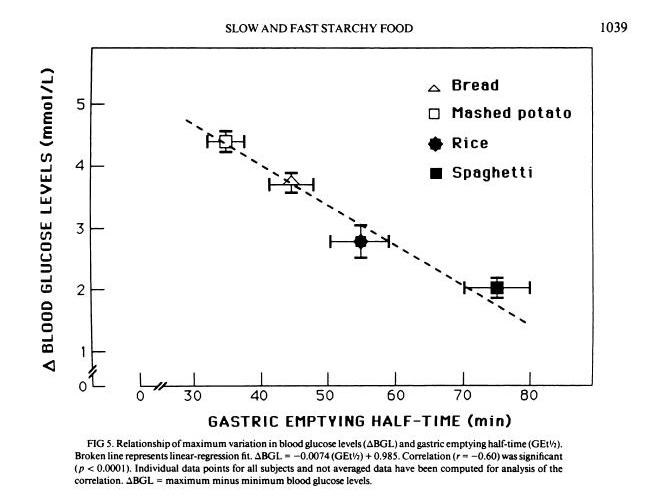
JS suggests that the reason fat does this is that it lowers the gastric emptying rate, and cites a study which showed that adding fat to starches could increase the gastric emptying time – the time for food to leave the stomach – by 50%. [4]

What’s interesting to me here is that what we really care about is not the glycemic index, but the peak blood glucose level attained after a meal. It is blood glucose levels above 140 mg/dl only that are harmful, and the harm is proportional to how high blood glucose levels rise above 140 mg/dl. So it’s the spikes we want to avoid.

But another paper shows that gastric emptying rate is even more closely tied to peak blood glucose level than it is to glycemic index. From [5]:

So combining a starch with fat may reduce peak blood glucose levels even more than it reduces the glycemic index; which is a good thing.

Dairy reduces GI

Dairy is effective at reducing GI:

[D]airy products significantly reduced the GI of white rice when consumed together, prior to or after a carbohydrate meal. [6]

It is not likely that dairy fat alone was responsible, because whole milk worked better than butter. However, low-fat milk only reduced the GI of rice by 16%, while whole milk reduced it by 41%. So clearly dairy fats are part of the recipe, but not the whole story; whey protein may also matter.

Fiber Reduces GI

Fiber is another meal element that reduces the rise in blood sugar after eating.

Removing fiber from starchy foods increases their glycemic index [7]; adding fiber decreases it. For instance, adding a polysaccharide fiber to cornstarch reduced its GI from 83 to 58; to rice reduced its GI from 82 to 45; to yogurt from 44 to 38. [8]

So it’s good to eat starches with vegetables – the foods richest in fiber.

Acids, Especially Vinegar, Reduce GI

Traditional cuisines usually make sauces by combining a fat with an acid. Frequently used sauce acids are vinegars and citric acid from lemons, limes, or other citrus fruits.

It turns that sauce acids can substantially reduce the GI of meals. The best attested is vinegar. From a study in the European Journal of Clinical Nutrition [6]:

In the current study, the addition of vinegar and vinegared foods to white rice reduced the GI of white rice. The acetic acid in vinegar was thought to be responsible for the antihyperglycemic effect. The amount of acetic acid to be effective could be as low as that found in sushi (estimated to be about 0.2–1.5 g/100 g). The antihyperglycemic effect of vinegar is consistent with other studies performed earlier (Brighenti et al, 1995; Liljeberg & Bjorck, 1998). Although vinegar could lower GI vales, the mechanism has rarely been reported. Most studies accounted the mechanism to be due to a delay in gastric emptying. In animal studies, Fushimi (Fushimi et al, 2001) showed that acetic acid could activate gluconeogenesis and induce glycogenesis in the liver after a fasting state. It could also inhibit glycolysis in muscles. [6]

Other acids also work. Pickled foods, which are sour due to lactic acid released by bacteria, reduce the glycemic index of rice by 27% if eaten before the rice and by 25% if eaten alongside the rice [6].

Wines, especially red wines, are somewhat acidic. I haven’t seen a study of how drinking wine with a meal affects glycemic index, but it is known observationally that wine drinkers have better glycemic control and, often, long lives. [9]

So What’s the Healthiest Way to Eat “Safe Starches”?

One way to limit the likelihood of reaching dangerous blood sugar levels after a meal is by eating a relatively “low carb” diet. We recommend that sedentary people eat about 400 to 600 carb calories per day. This limits the amount eaten at any one sitting to about 200 calories / 50 g, which is the amount of a typical glucose tolerance test. It is an amount the body is well able to handle.

But the manner in which carbs are eaten may be just as important as the amount.

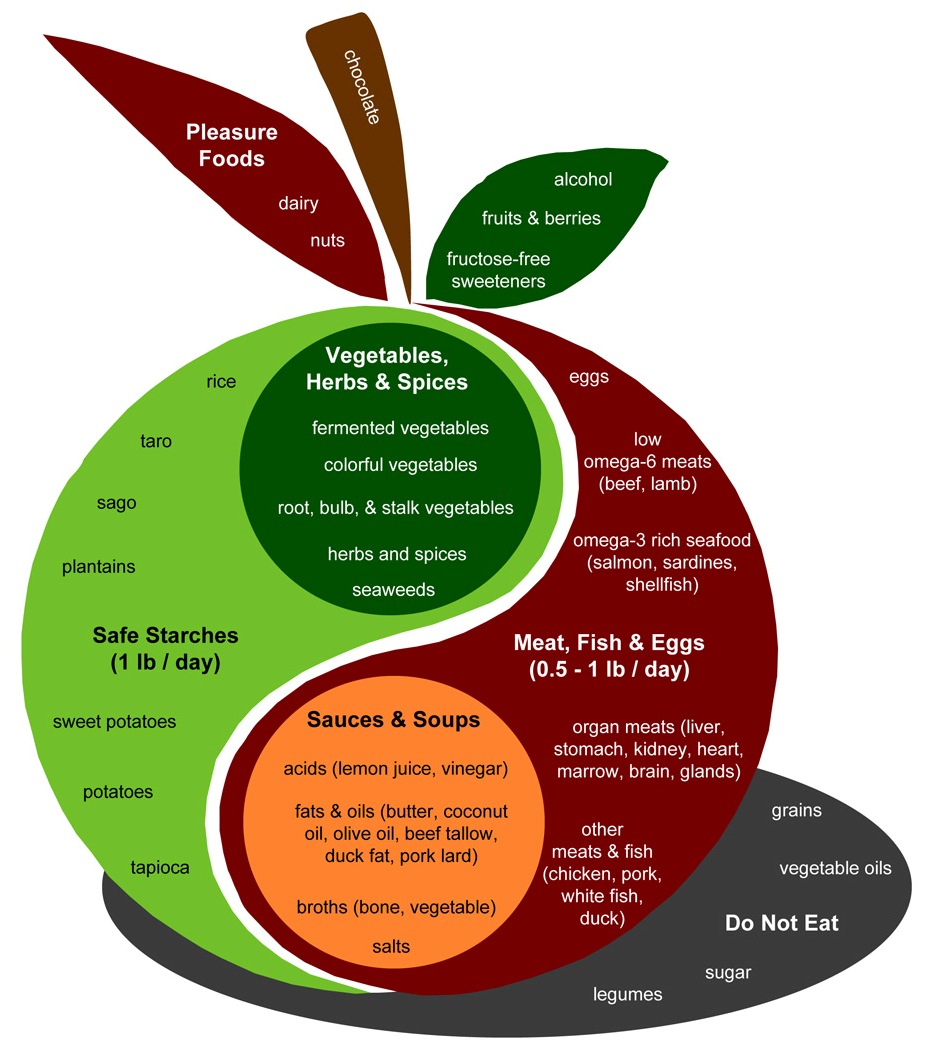
Let’s look again at the Perfect Health Diet Food Plate:

The design of a PHD meal is found in the body of the apple. Assuming two meals a day, the recipe is to combine:

  • A safe starch (roughly ½ pound, which translates to 150 to 300 carb calories);
  • A meat, fish, or egg (¼ to ½ pound);
  • A sauce made up of fats and acids such as lemon juice or vinegar;
  • Vegetables, preferably including fermented vegetables with their healthy acids;
  • (Optionally) some dairy or a glass of wine.

This is precisely the recipe which science has found minimizes the elevation of blood glucose after meals.

It seems reasonable to expect that a meal designed in this fashion will have a glycemic index around 30. The odds of 200 carb calories with a glycemic index of 30 generating blood sugar levels that are dangerous – 140 mg/dl or higher – in healthy people is very low. Even in diabetics, it may be uncommon.

So, yes, Virginia. There is a Santa Claus, and you can eat safe starches and avoid hyperglycemia too!

References

[1] Brand JC et al. Food processing and the glycemic index. Am J Clin Nutr. 1985 Dec;42(6):1192-6. http://pmid.us/4072954.

[2] Bahado-Singh PS et al. Food processing methods influence the glycaemic indices of some commonly eaten West Indian carbohydrate-rich foods. Br J Nutr. 2006 Sep;96(3):476-81. http://pmid.us/16925852.

[3] Dodd H et al. Calculating meal glycemic index by using measured and published food values compared with directly measured meal glycemic index. Am J Clin Nutr. 2011 Oct;94(4):992-6. http://pmid.us/21831990.

[4] Thouvenot P et al. Fat and starch gastric emptying rate in humans: a reproducibility study of a double-isotopic technique. Am J Clin Nutr 1994;59(suppl):781S.

[5] Mourot J et al. Relationship between the rate of gastric emptying and glucose and insulin responses to starchy foods in young healthy adults. Am J Clin Nutr. 1988 Oct;48(4):1035-40. http://pmid.us/3048076.

[6] Sugiyama M et al. Glycemic index of single and mixed meal foods among common Japanese foods with white rice as a reference food. Eur J Clin Nutr. 2003 Jun;57(6):743-52. http://pmid.us/12792658. Full text: http://www.nature.com/ejcn/journal/v57/n6/full/1601606a.html.

[7] Benini L et al. Gastric emptying of a solid meal is accelerated by the removal of dietary fibre naturally present in food. Gut. 1995 Jun;36(6):825-30. http://pmid.us/7615267.

[8] Jenkins AL et al. Effect of adding the novel fiber, PGX®, to commonly consumed foods on glycemic response, glycemic index and GRIP: a simple and effective strategy for reducing post prandial blood glucose levels–a randomized, controlled trial. Nutr J. 2010 Nov 22;9:58. http://pmid.us/21092221.

[9] Perissinotto E et al. Alcohol consumption and cardiovascular risk factors in older lifelong wine drinkers: the Italian Longitudinal Study on Aging. Nutr Metab Cardiovasc Dis. 2010 Nov;20(9):647-55. http://pmid.us/19695851.