



The “Color Companion”

We’ve made available for download (in a sidebar box) a PDF file we call the “Color Companion.” It has all the color images from the book, with some commentary. If you want to see the book pictures as they were meant to be seen, please download the Color Companion.

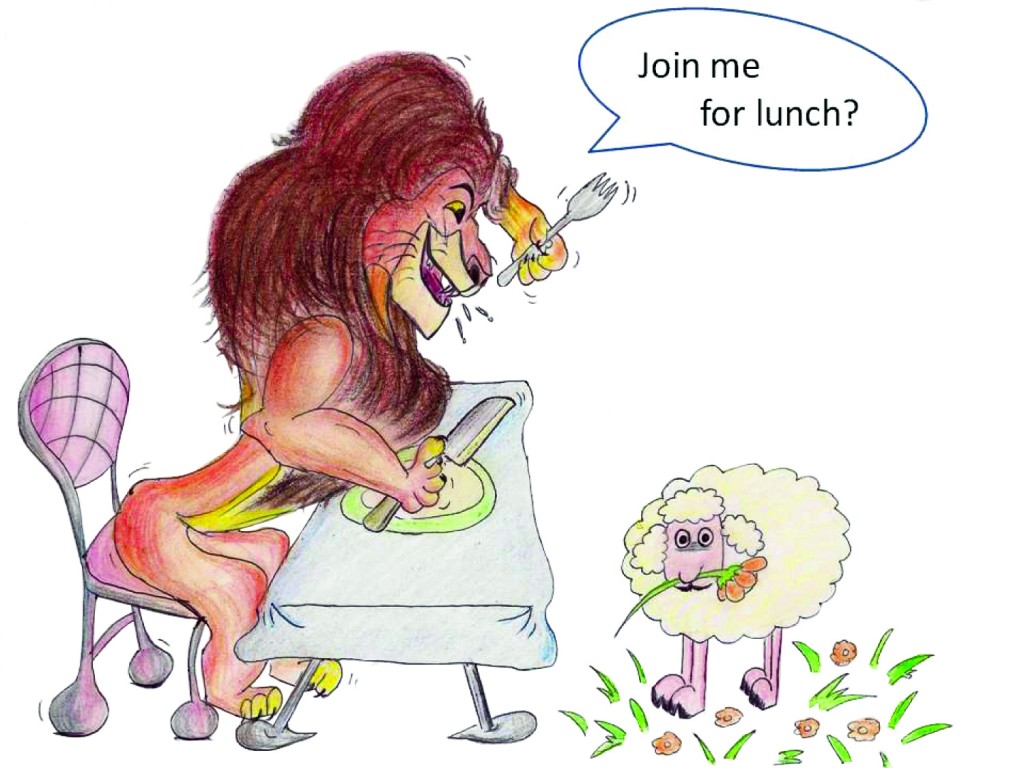
You can also learn the identity and career preferences of the cartoonist who drew this:
A Few Administrative Matters

Most e-book buyers in the US have probably received their books by now. Most e-book buyers in Australia and Europe will probably get their books next week or early the following week.

Now that the book is widely available through online sites, we’ve taken down the links for buying through the site. We’ve created a “Buy the Book” page with information on how to purchase the book; this will be the place where we add information about bulk purchases, e-books, buying from remote parts of the world, and such things.


Modern Paleo Living

A few rare souls have gone off to the wilderness to live a hunter-gatherer lifestyle. Of course, Paleo bands were highly sociable, and it would be impossible to replicate Paleo society today; but in the wilderness one naturally eats a Paleo diet.

Such a soul was Dick Proenneke, a carpenter, mechanic, and naturalist who retired at age 51 to live alone in Alaska’s Lake Clark National Preserve. He remained in the wilderness until age 82, when he returned to civilization. He died at age 86 in 2003.

Proenneke kept a journal and took video footage of himself, some of which appeared on US public television as the film Alone in the Wilderness.  Youtube has a collection of this video. Here is Disc 1 Part 1:

P.S.: If you do live a Paleo lifestyle, don’t do your hunting on the Hanford nuclear reservation.

Two From the Web

A few interesting posts elsewhere caught my eye.

First, Dr. Emily Deans reports that people who have experienced influenza or coronavirus infections are much more likely to suffer mood disorders such as depression.

We believe that most diseases result from the interaction of a bad diet with pathogens, so we’re not surprised to see more evidence associating pathogens with depression.

As Dr. Deans says, make sure your vitamin D levels are optimized for protection against these viruses.

Second, Dr. BG offers something tangentially related to our last post on fecal transplant therapies. She links to a post by Richard Nikoley explaining that while in ruminants vitamin B12 is made in the rumen and can be absorbed in the intestine, in carnivores and omnivores like humans vitamin B12 is made in the colon and is not absorbed well, but rather exits in the feces.

This is why animals, in addition to eating a lot of liver if they are carnivores, also eat feces (coprophagia). It gives them vitamin B12. (Perhaps it also cures their colitis, but we’ll await clinical trials to be sure.)

Always eager to provide visual evidence, Dr BG managed to find this video of gorilla coprophagia. Do not watch if you are squeamish, eating dinner, or dislike the sound of children squealing!

More on Fecal Transplants

We’ve had ongoing interest in the topic of fecal transplants from readers of our bowel disease series, and we’ve recently had comments from two biomedical professionals reminding us that it is desirable to have fecal transplants performed by doctors after screening of the stool for pathogens.

Coincidentally, The Scientist ran a nice story today on fecal transplants. [1]

Fecal transplants are effective against C. difficile, ulcerative colitis, and probably other inflammatory bowel disorders:

By producing sturdy spores that can linger in the intestinal tract even after repeated antibiotic treatment, C. difficile can continually give rise to new toxin-producing colonies that wreak havoc on the colon. But these colonies prove no match for fecal transplants, which boast a cure rate of up to 95 percent….

Borody did his first fecal transplant back in the mid 1980s, when he was confronted with one of the most difficult cases he had seen at the time: a woman who had vacationed at Fiji and had developed an incurable colitis through an unknown pathogen.

While searching the literature for alternative treatments, he stumbled upon a paper published in 1958 in the journal Surgery that described four cases in which a similar condition was cured by infusing the inflamed guts of the patients with fecal samples from healthy donors. “So I looked at the method and I kind of made up the rest of it,” Borody said.…

The stool, now turned into slush, was administered to the patient — who had her gastrointestinal tract previously flushed — via two enemas over the course of two days.

The results were nothing short of surprising, Borody said. Within days her colitis was gone, never to return.

It’s a well-proven procedure in animals. Veterinarians don’t bother to screen rumen fluid for pathogens, and yet the procedure is almost always healthful for the recipient:

The procedure, which has deep roots in veterinary science, has been tried and tested in animals for centuries. Farmers handling livestock have long realized, for example, that indigestion following a change in diet in grazing animals, such as cows, can be treated by feeding the sick cow rumen fluid that has been sucked out of a healthy cow’s stomach.

Yet it’s hard to find doctors who will perform the procedure for any ailment except C. difficile infections:

Currently, while most fecal transplants in the U.S. are performed exclusively to treat C. difficile, a growing list of doctors, such as Lawrence Brandt, chief of Gastroenterology at Montefiore Medical Center in New York, are beginning to expand to other gut disorders such as inflammatory bowel diseases….

“It is currently considered a last resort,” he said. But he hopes that will soon change. “It’s relatively simple, relatively inexpensive, and it’s very rapid in its actions.”

Conclusion

In chronic infections of the colon, fecal transplants should be among the first treatments resorted to, not the last resort.

This is one treatment where experience with animals and human patients, demonstrating that fecal transplants are fairly safe and often highly effective in colonic disorders, should trump the normal regulatory barriers to new procedures.

However, given the cautious nature of regulators and most doctors, it seems unlikely that the therapy will be widely available any time soon.

It’s good to hear that there is a “growing list” of doctors who will perform a fecal transplant. Anyone with a seemingly incurable colonic disease should seek one of them out.

References

[1] Cristina Luiggi, “Same Poop, Different Gut,” The Scientist, Nov 3, 2010, http://www.the-scientist.com/news/display/57795/.