



The Ancestral Health Symposium

We’re back from the California and the Ancestral Health Symposium, which was a fantastic meeting – the most enjoyable symposium I’ve attended. Brent Pottenger, Aaron Blaisdell, and the host of volunteers who assisted them deserve tremendous credit for organizing it. Bravo!

It had the feel of a Paleo Woodstock: the leading names in the movement were gathered in one place for the first time, and there was a festive atmosphere, especially on the first day and at a pre-event party hosted by Aaron Blaisdell. For Shou-Ching and I, it was a delight to meet in person friends we had come to know through the Internet. We were pleased to meet some of our commenters – and had lunch with one, Mia.

Those who didn’t attend will be able to catch up on it later: presentation slides may be found here; videos of the talks and interviews will be posted here.

People and Pictures

Already there’s a great deal of information about the meeting online. Some participants were active twitterers – check out the Twitter tag #AHS11 for a blow-by-blow account of the meeting. I’m sure many attendees will be posting their own appreciations in coming days, but here are links to some of the early birds:

Richard Nikoley took a lot of pictures at Aaron’s Thursday night party and has more photos in his appreciation of the symposium. PaleoHacks has a thread for pictures from the meeting and a thread for recommendations about talks. Emily Deans has posts about talks and people.

Melissa McEwen, Stephan Guyenet, Chris Masterjohn, Jamie Scott, Andreas Eenfeldt, and Matt Metzgar have posts.

Many at the meeting remarked on how good looking the attendees were. You can find appreciations of looks from Melissa (“the conference was full of beautiful people”), Jamie (“I have never been around so many beautiful people in one room as I have been this past weekend.”), and Stephan (“I was very impressed by the appearance of the attendees”).

I was equally impressed, but that observation leads me to one more. Nearly everyone at the meeting had at one time been following bad diets and had to seek out Paleo. In Denise Minger’s talk, she asked how many people had been vegetarians at one time, and a startlingly large number raised their hands. To discover a healthy way of living, in a world full of mistaken information and unhealthy foods, is possible only for inquisitive, intelligent, discerning people. This was not only a beautiful, but a smart, crowd.

And so very friendly and cheerful. Good health, I believe, leads to good spirits. It was a pleasure to be around everyone, both during the meeting and after hours.

The Talks

A brief summary of the the most notable talks I saw:

S. Boyd Eaton kicked off the conference as the only speaker without a competitor in the parallel track; a well-deserved honor in light of his pioneering role in the Paleo movement. He spent only ten minutes on diet and moved on to expressing a quixotic hope for decreases in the global population in order to restore a more Paleo-like environment. Among the highlights was a picture from the Korean DMZ, a 400-square mile depopulated area that has apparently regained a flourishing wildlife.

Loren Cordain followed with an excellent talk, most of which will be familiar to his fans. I liked his talk a lot, in part because his slides on hunter-gatherer food intakes support our macronutrient ratios.

Staffan Lindeberg gave an excellent talk that also revisited material from his work. A few factoids: blame for the invention of vegetable oils goes to David Wesson, who figured out how to detoxify cotton seeds in 1899, thus giving us “Wesson oil”; and autopsy studies show that at age 40 most people already have atherosclerosis, a disease that is non-existent in wild animals and thus is presumably caused by industrial diets.

Robb Wolf finished the morning session and was his usual dynamic self. Shou-Ching, who hadn’t yet listened to one of his podcasts, was impressed.

If Friday morning felt like a celebrity fest, Friday afternoon was the meat of the symposium. Two Friday afternoon talks were among the best of the meeting.

Emily Deans’s talk was magnificent, pulling together a rich thread of material. Jamie Scott gave an inside look at the practical side of improving health in a corporate setting.

Dr. BG and Dr Tim Gerstner gave an outstanding talk, one of the best of the meeting. Dr BG’s story was fascinating and fast-paced. She and her sister are writing a book, “Jillian’s story,” about Dr BG’s autistic niece who has seen great improvements from chelation therapy. Heavy metal toxicity is an important subject and it looks like Dr BG and her collaborators are going to make an important contribution. We went to dinner Friday night with Dr BG, her sister, Dr Gerstmar, and J. Stanton of gnolls.org, and had a wonderful time.

In attending these two great talks, I missed two of the star attractions of the meeting – Stephan Guyenet, whose talk I would dearly love to have seen, and Gary Taubes. The buzz of the main ballroom when we got back was that Gary had, in the question session, cut to the front of the question line in order to challenge Stephan in some fashion. I expect this video will be the most downloaded one of the conference. UPDATE: Video of Gary’s questioning is here and a detailed account here.

Curious to hear about Stephan’s talk, we had returned to the main ballroom during the break, and stayed to watch Michael Eades. He gave a very nice talk focusing on the pre-history of the Paleo diet – going back to some early clinicians, one of whom was a friend of Vilhjalmur Stefansson, who had tried low-carb Paleo diets on their patients with success.

Again, I was torn between two great speakers as I very much wish I could have heard the talk of anthropologist Craig Stanford, who was opposite Eades. I had a pleasant chat with Dr. Stanford at Aaron’s pre-meeting party and it turns out our professional paths seem to be criss-crossing: I am working on a book on evolutionary biology, applying my economics ideas to the problem, and he is considering writing a book on diet. Small world!

Friday’s last talk was by Chris Masterjohn, who gave a superb exposition on LDL receptors, how LDL-R status can influence LDL time in the blood and oxidation status and, therefore, health. I had read most of the material on Chris’s blog, but still took copious notes. Chris is a most impressive and well-organized speaker.

On Saturday I started with Seth Roberts and Tucker Max. Seth’s talk was excellent – the gist can be found in recent blog posts, such as the one on butter reducing his coronary calcium score.

Tucker Max’s talk was fascinating in light of Todd Hargrove’s recent guest post here (How to Do Joint Mobility Drills, July 26, 2011). Tucker’s idea was that violence, both against animals (hunting) and people (warfare, homicide), must have been a critical factor shaping Paleolithic culture, and that this had important implications: Paleolithic peoples must have spent a lot of time play fighting as practice and as a fitness technique; and they must have developed philosophies, like those associated with all modern martial arts, to develop calmness and serenity in the face of violence – since the natural human reaction, panic, is unhelpful. It sounds as though mobility and serenity practices such as Tai Chi or yoga, which Todd endorsed, and components of religions such as Zen Buddhism may be modern descendants of Paleolithic martial arts. I liked this talk because it reminds us that “ancestral health” encompasses more than diet.

Mat Lalonde’s talk was outstanding. The subject of food toxins is extremely important for health, under-researched by scientists, and lacking in good overviews. (Step Two of our book is among the best, but only scratches the surface.) Mat reviewed research on a number of major food toxins, and discussed the ability of these toxins to survive cooking, enter the body, and contribute to disease. The talk had only one disappointment: Mat dis-associated himself from what he called “your movement.”

Mark Sisson and Denise Minger gave two of the most pleasant, fun talks at the meeting, as befits their super-positive personalities. Luckily on Saturday the two sessions were in neighboring rooms and it was possible to see some of each.

Nora Gedgaudas gave an excellent talk on the use of diet as a clinical approach to mental health disorders. It had plenty of citations that I’m eager to track down. We are fans of ketogenic dieting for neurological diseases, and Nora obviously is too – indeed she promotes a diet that verges on zero-carb. I think this will work well as a fast-acting therapy until she meets a patient with toxoplasmosis or some similar protozoal brain infection, but that the benefits of ketosis have to be balanced against long-term risks of glucose deficiency.

Melissa McEwen gave a fantastic talk about the evolution of the gut. It was fact-filled, science-rich, and entertaining. Interesting part: there is significant human variability in, for instance, colon size and structure. This is important because the digestive tract is really the only part of the body that evolves in response to changing diets. There has been some talk about different populations needing different diets; Melissa’s work suggests that instead of “metabolic typing” we may some day do “gut typing” to determine an optimal personal diet.

John Durant gave an entertaining and informative talk on the history and future of zoos. We had just visited San Diego Zoo and the San Diego Zoo Safari Park (formerly Wild Animal Park) earlier that week, and the Bronx, Washington DC, and Cleveland zoos fairly recently, so I enjoyed John’s take.

Andreas Eenfeldt and Richard Nikoley were another duo that were hard to choose between. Richard is entertaining at all times, and Andreas had an interesting story about the low-carb diet revolution in Sweden. I tried to catch both talks as best as I could.

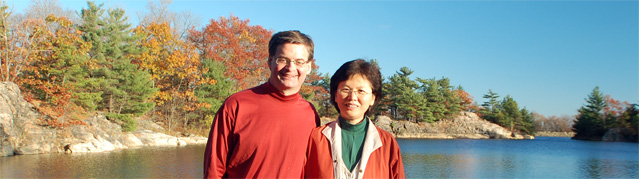
After fitness talks from Doug McGuff, Frank Forencich, and Erwan LeCorre we chatted with friends new and old before leaving for the airport for our redeye flight back home. Shou-Ching pulled out her camera for a few photos. Here’s one:

All in all, a fabulous meeting. I think the Ancestral Health Society is going to have a big impact, and can’t wait for AHS 2012. Thanks, Aaron, Brent, and everyone else responsible for this enjoyable event!


Going to California

We’ll be on vacation for the next week-plus. We’re flying to San Diego early tomorrow morning to visit my brother and his family; then we’ll be vacationing in southern California and attending the Ancestral Health Symposium the following weekend.

I don’t expect to reply to comments or emails until we return.

Our best wishes to all!

Mobility and Health: Some Thoughts

I’d like to thank Todd Hargrove for his guest post (How to Do Joint Mobility Drills, July 26, 2011). It was thought-provoking, and I thought I’d share my reflections on it.

What Is the Goal of Exercise?

When it comes to fitness, the blogosphere tends to emphasize strength and athleticism. This is great, but there are other dimensions to health and fitness that are maybe a bit under-discussed.

As a 48-year-old recovering chronic disease patient, I am not looking to become a competitive athlete, enjoyable though that might be. Rather, I want to maximize health and longevity, and be able to freely and pleasurably move through all the challenges and opportunities life may present. I’ll be happy if I can:

  1. Be strong enough to freely manipulate my body plus a heavy load.
  2. Be fit enough to run 3-4 miles with pleasure, play an hour of tennis without getting sore, and sprint faster than common criminals.
  3. Be mobile enough to move freely and gracefully through the full natural range of motion of all joints without crackling, stiffness, or soreness.
  4. Develop good posture, circulation, and neurological function, so that my body naturally arranges itself in healthy positions.

The first three goals are not too different from Jamie Scott’s prescription for surviving a natural disaster. He asks: Could you lift yourself over a wall or up to a balcony to escape a tsunami? Sprint-jog 3-4 miles over shattered ground and obstacles to escape the liquefaction zone of an earthquake? Walk 3-4 hours over hills daily when roads are impassable? Get into a low squat to fit in a small shelter, or squeeze through a small opening?

But I have a special interest in neurological health. I had chronic ear infections as an infant, culminating in surgery, and ever since have had poor balance. My central nervous system infection made it much worse. Three years ago I had to sit down to put pants on or take them off; walked into doors; and fumbled and dropped things, as the complete loss of our former collection of wine glasses can attest. With diet and antibiotics I’ve recovered; my balance is now similar to what it was in my 20s – which is to say, poor.  I can now stand on one foot for about 20 seconds before I have to put down the other foot to balance myself; that would have been 1 or 2 seconds three years ago, but Shou-Ching can do it indefinitely. When we go hiking in the mountains, Shou-Ching clambers up or down steep rocky slopes like a mountain goat; I have to move with care.

Falls are a major cause of health impairment, broken bones, and mortality in the elderly. It would be great if I can improve nervous system function and balance before I get old and falls become dangerous.

I’m very pleased to start this blog’s discussion of fitness with Todd’s post, because mobility and neurological function are critically important to fitness at all ages – and may be crucial to good health as we age.

The Concept of Body Maps

Let me paraphrase one of the key points of Todd’s post this way:

The brain maintains “maps” of the body … These maps may become inaccurate, out of synch with the physical body … As a result the brain may believe a movement is impossible or dangerous and block its performance, even if the body is fully capable of performing the movement … With training the brain can learn the true movement capabilities of the body and revise its maps to more accurately reflect reality, thus increasing the body’s ability to move freely.

The idea that brain “maps” of the physical body, rather than the actual body, are what sets the limits to motion reminded me of a TED video I had seen by Dr. Vilayanur Ramachandran. He is a neuroscientist who investigated the problem of “phantom pain” in the lost limbs of amputation victims, and showed that the pain could be cured by “mirror box” therapies that fooled the brain into manipulating the lost arm and thereby re-drawing the brain’s body maps. Here is his fascinating TED talk:

Todd explains how improper brain maps can lead to chronic pain, and how repairing the brain maps can end the pain. This is an important idea for those suffering from chronic pain.

Use It Or Lose It

Todd observes that

While movement will clarify maps, lack of movement will tend to blur them. In a famous experiment, researchers found that sewing a monkey’s fingers together for a few weeks caused its brain to map the fingers as one unit, not as two separate parts capable of individual movements.

So if I want my brain to remember what my body is capable of, I need to regularly take my body through a diversity of movements.

This is an important reminder for someone who spends 12 hours per day at a desk. Get away from the desk, even if only for a few minutes a day, and move!

The Strategy of Slow, Mindful Movement

When I was young I wanted to do everything fast. (Shou-Ching complains that when I’m behind the wheel of a car, I think I’m still young.) But now I’m starting to appreciate the benefits of slow motion.

Todd’s list of ways to “maximize the benefit of mobility exercise” emphasizes slow, mindful movements. A few thoughts on each:

Avoid pain and threat.” Since the purpose of the brain’s body maps is to prevent dangerous movements from happening, to re-draw the maps we have to teach the brain that “dangerous” movements are actually safe. For this to be persuasive, they must actually be safe. But this corollary may be less obvious:

Make sure the movement does not … create other signs of threat such as holding the breath, grimacing, collapsing your posture, or using unnecessary tension.

I’m a fan of the mobility videos of Kelly Starrett at mobilitywod.com, and he frequently advises one never to make a “pain face” or grimace, but rather to maintain a cheerful “Zen face.” A grimace during a challenging stretch or movement may be enjoyable, but it might detract from the value of the exercise. Interesting!

Be mindful and attentive.” This one comes easily to me: I am introspective and enjoy listening to my body and paying attention to muscles, breath, and blood flow during exercise. It’s good to know that’s beneficial.

Use novel movements.” I like routine, but routine mobility drills are unproductive. Movements need to explore new capabilities.

Easy does it.” Move slowly and gently. This calls to mind the classic Chinese exercise forms, like Qi Gong and Tai Chi; they are characterized by slow, flowing, graceful movements.

Be curious, exploratory, and playful.” I like the evolutionary inference Todd makes here:

All animals engage in the most play during the times of their lives when the educational demands are the highest. This means that play is the best solution to difficult education problems that evolution has found.

I think we sometimes fall into the trap of thinking that adulthood implies seriousness and sobriety. No! Rather, good health implies lifelong playfulness.

In Boswell’s Life of Johnson, in the Dedication, Boswell writes:

It is related of the great Dr. Clarke, that when in one of his leisure hours he was unbending himself with a few friends in the most playful and frolicksome manner, he observed Beau Nash approaching; upon which he suddenly stopped. “My boys,” said he, “let us be grave – here comes a fool.”

Let us not be fools, and play!

Can Rhythmic Movement Be an Ultradian Therapy?

I’ve done several posts on the subject of circadian (day-night) rhythms, and how enhancing these rhythms with diet, light, sleep, and exercise may be therapeutic for many diseases. See, for instance, Intermittent Fasting as a Therapy for Hypothyroidism (Dec 1, 2010) and Seth Roberts and Circadian Therapy (Mar 22, 2011).

But humans have other natural biorhythms that cycle more frequently. These “ultradian rhythms” can be quite short. For instance, some hormones are released in pulses – I believe insulin and thyroid hormone may operate this way – and I believe a common interval between pulses is 6 seconds.

Many classic movement forms, like yoga or qi gong, emphasize that movement should be synchronized with breathing, and that breathing should be slow and rhythmic – often with about ten breaths per minute, or six seconds per breath.

The coincidence between these numbers intrigues me. If enhancing circadian rhythms is therapeutic for disease, might enhancing ultradian rhythms by mindful “synching” of the breath to their period be therapeutic for hormonal dysfunction?

It’s just a thought. Many people with glucose regulation issues have disrupted ultradian rhythms for insulin secretion. The ultradian clocks in their pancreatic beta cells aren’t working properly. Wouldn’t it be interesting if mindful breathing, as in yoga, could improve insulin secretion and glucose regulation?

This is not such a far out idea. Consider these quotations from recently published papers:

Mind-body modalities based on Eastern philosophy, such as yoga, tai chi, qigong, and meditation … have many reported benefits for improving symptoms and physiological measures associated with the metabolic syndrome…. Findings from the studies reviewed support the potential clinical effectiveness of mind-body practices in improving indices of the metabolic syndrome. [1]

Participation of subjects with T2DM in yoga practice for 40 days resulted in reduced BMI, improved well-being, and reduced anxiety. [2]

Yoga-nidra practiced for 30 minutes daily up to 90 days, parameters were recorded every. 30th day. Results of this study showed that most of the symptoms were subsided (P < 0.004, significant), and fall of mean blood glucose level was significant after 3-month of Yoga-nidra. This fall was 21.3 mg/dl, P < 0.0007, (from 159 +/- 12.27 to 137.7 +/- 23.15,) in fasting and 17.95 mg/dl, P = 0.02, (from 255.45 +/- 16.85 to 237.5 +/- 30.54) in post prandial glucose level. Results of this study suggest that subjects on Yoga-nidra with drug regimen had better control in their fluctuating blood glucose and symptoms associated with diabetes, compared to those were on oral hypoglycaemics alone. [3]

[F]asting plasma insulin was significantly lower in the yoga group. The yoga group was also more insulin sensitive (yoga 7.82 [2.29] v. control 4.86 [11.97] (mg/[kg.min])/(microU/ml), p < 0.001). [4]

There are fifty-six papers in Pubmed on “yoga diabetes”, and only four of them date before 2002. Most were published after 2008. This is an emerging area of research, but it would be interesting if slow, mindful movement proves to be an effective therapy for metabolic disorders. Maybe exercise doesn’t need to be vigorous to heal disorders like diabetes and obesity!

The Best Exercises for Mobility

I asked Todd what traditional movement forms he would most recommend. He replied:

In my blog I made some lists of exercises styles, traditional and modern, which are in line with what I recommend: the Feldenkrais Method, Z-Health, Alexander Technique, and tai chi are at the top of the list.

My favorite is the Feldenkrais method, but I think for purposes of your blog, some tai chi videos would be perfect, because they really provide a picture of what I’m talking about. You can’t do tai chi without observing all of the guidelines I provide at the end. And it looks cool.

You might include a point that the magic of tai chi is not so much in the specific forms they use, but in the WAY they move – smooth and slow. And the mind state while moving – mindful, relaxed, attention to small details and subtleties. You could apply this tai chi style to anything and get benefit – sitting, standing, walking, lifting weights or doing joint mobility drills.

All of these movement disciplines are extremely interesting, and I hope to get help exploring them in future blog posts. I know that a number of Z-Health Master Trainers have read our book, and hopefully one of them will teach us about Z-Health.

In closing, here are some videos of Qi Gong and Tai Chi movements. With videos available on DVD or on YouTube, there’s no need to join a class to learn mobility drills. You can play a video in your TV and practice slow, mindful, relaxed movements at home.

Perhaps the most valuable movements, in my view, are those used as “warm-up” exercises in Tai Chi or beginning movements in Qi Gong. Here is a well-made introductory video:

Here is a beautiful exhibition of Tai Chi:

Thanks, Todd. I very much appreciate the opportunity to learn about fitness from an expert!

References

[1] Anderson JG, Taylor AG. The metabolic syndrome and mind-body therapies: a systematic review. J Nutr Metab. 2011;2011:276419. http://pmid.us/21773016.

[2] Kosuri M, Sridhar GR. Yoga practice in diabetes improves physical and psychological outcomes. Metab Syndr Relat Disord. 2009 Dec;7(6):515-7. http://pmid.us/19900155.

[3] Amita S et al. Effect of yoga-nidra on blood glucose level in diabetic patients. Indian J Physiol Pharmacol. 2009 Jan-Mar;53(1):97-101. http://pmid.us/19810584.

[4] Chaya MS et al. Insulin sensitivity and cardiac autonomic function in young male practitioners of yoga. Natl Med J India. 2008 Sep-Oct;21(5):217-21. http://pmid.us/19320319.

How to Do Joint Mobility Drills

Todd Hargrove is probably familiar to many readers as a highly intelligent and good-humored commenter on Paleo blogs. He has a fantastic blog, Better Movement, which Mark Sisson calls one of the “18 Underrated Blogs You Should Be Reading”. Todd began his career as an attorney, but dealing with a chronic pain issue led him to become a therapist with “an obsessive interest in learning about how the body works and a strong empathy for others going through chronic pain”. He is now a rolfer and teacher of The Feldenkrais Method in Seattle.

I’ve noticed that the most sophisticated health and fitness practitioners place a heavy emphasis on brain and nerve function. Todd is one of these; as you’ll see, he offers a brain centered perspective on physical performance, pain and exercise.

Mobility is an extremely important part of good health, whatever one’s age or degree of athleticism. I’m therefore delighted to present this guest post by Todd on “How to Do Joint Mobility Drills.”

Mobility work is about the brain

Dynamic joint mobility drills are becoming very popular, and are starting to replace static stretching as a way to warm up, train healthy movement patterns, and (p)rehab injuries. Mobility work can be defined as deliberate movement through a defined pathway, done repetitively, usually without resistance. Examples include wall slides or arm swings for the shoulders, clam shells or leg circles for the hips, and cat/cows or rotations for the spine.

Joint mobility drills have several advantages over static stretching. First, they involve movement, which is good, because you probably want to get better at moving, not just staying still with your limbs splayed out. Second, most of the work in a static stretch is done at end ranges of motion that don’t get used very often. By contrast, joint mobility drills usually involve movements through the middle ranges of motion where most of life and sport occur. So they promise to have more applicability to real world tasks. Healthy athletic movement at most joints has far more to do with quality of motion than quantity of motion.

So the trend toward mobility drills is a very positive development. However, I believe that people often fail to obtain the full benefit of mobility exercises, mostly because they do not appreciate the neural mechanisms by which they work. The mainstream idea is that joint mobility drills work by making changes to the local muscular and connective tissues involved in the movement. In my opinion, mobility work has only a limited ability to cause significant adaptations in the mesoderm. Instead, it works by making changes to the virtual representations of those structures in the brain. In other words, mobility work is about function not structure, the brain not the body, the software not the hardware, the ectoderm not the mesoderm, the driver not the car.

OK, enough with the metaphorical distinctions. Here’s a detailed explanation what I mean.

Joint mobility drills are a weak stimulus to the mesoderm

There is little reason to believe that joint mobility drills have any notable effects on the local mesodermal tissues that are being mobilized.

Unlike weight training or endurance training, mobility work does not provide enough resistance or energetic demand to cause adaptations in the size or endurance of muscle cells. Unlike stretching, it does not involve enough time at the end ranges of motion to permanently add more muscle or connective tissue length. Unlike sports or other habitual physical activities, it does not create enough mechanical stress to the tendons and ligaments and joint capsules to cause any significant connective tissue remodeling (unless you did thousands of repetitions at a pretty good speed.) Joint mobility drills will provide circulation and warmth to the local tissues and synovial fluids, which is great and totally necessary for health. However, we would expect similar benefits from almost any repetitive motion in the same area.

So why would the specific form of a mobility exercise matter? Why not just move all your joints through all their ranges of motion in any old way? My answer is that mobility exercises work by communicating with the brain, and it will only communicate effectively when it sends the correct signals. Here is a discussion of some neural mechanisms by which mobility drills could improve coordination and reduce pain.

Joint mobility drills improve coordination by clarifying movement maps

Coordination happens in the brain not the body. Some key networks in the brain that sense and coordinate the muscles are called the body maps. The body maps are discrete parts of the brain that are organized in such a way as to represent the different body parts, just as lines on a map represent roads. Each part of the body has a separate area of the brain dedicated to moving and sensing that body part.[1]

Body parts that have greater sensory motor demands have bigger maps. Not surprisingly, the map for the hand is significantly larger than the map for the elbow. Thus, larger and more detailed maps means better coordination. The information necessary to maintain and build the maps is provided by proprioceptive signals from the body. Proprioception occurs when movement or touch stimulates nerve mechanoreceptors, which are located all over the body and primarily in joints.

You can sense the effects of mechanoreception on your maps instantly by doing a simple experiment. Try to imagine or sense the exact shape and position of your ears. Now rub just the left ear for a few seconds and then compare your ability to sense the left ear and the right. You will note that it is much easier to form a clear picture of the left ear. The simple reason is that touching the ear activated its mechanoreceptors, which sent a signal to the brain, which excited the neurons in the map for that area. Of course, the additional clarity in the map is only temporary, and after a minute your ears will feel the same.

In order to make long term changes in the maps, you need to place demands on them consistently over a long period of time. When a certain movement is used repeatedly in a coordinated and mindful fashion, there are actual physical and observable changes in the part of the brain that controls that movement. For example, the finger maps in a braille reader’s brain are observably larger than the counterpart of the average person.[2]

While movement will clarify maps, lack of movement will tend to blur them. In a famous experiment, researchers found that sewing a monkey’s fingers together for a few weeks caused its brain to map the fingers as one unit, not as two separate parts capable of individual movements.[3] We would expect similar map blurring to occur when any joint movement is neglected for a certain period of time. This loss of control over previously accessible movements is the neural version of the “use it or lose it” principle, and is sometimes called sensory motor amnesia.

A common area for sensory motor amnesia is the thoracic vertebrae. Most people probably have one or two vertebrae in their upper back that haven’t moved in a certain direction with respect to its neighbor in years. The movement isn’t physically impossible, it’s just not part of the brain’s current movement programs due to neglect. A good analogy might be a language that you could once speak fluently that you haven’t spoken for years. The knowledge is in there somewhere, but a good portion of it is not readily accessible without some brushing up.

The right mobility drill would be structured to require the brain to brush up on its thoracic movement skills and reactivate some rusty movement programs. If the brain remembers how to move a currently static vertebra, the result is an immediate qualitative change in the movement of the entire spine. The decisive change is not to the physical tissues of the vertebral joint, but to the way that the brain maps the vertebrae for sensation and movement.

Blurred maps can create pain

Accurate maps also have important consequences for how we feel. Phantom limb pain is a dramatic example. Many people with an amputated limb experience pain in the missing body part. This is because even though the arm is gone, the virtual arm in the brain lives on, and can be stimulated by cross talk from nearby neural activity. When this occurs, the brain creates a sensation of the missing arm that is incredibly realistic and often excruciatingly painful.

Some pain researchers believe that less severe instances of mapping errors may be involved in many chronic pain conditions. Numerous studies have shown that sensory motor illusions caused by mirrors or other tricks can cause pain. For example, if you immerse your index and ring fingers in warm water and the middle finger in cold water, this will often cause your middle finger to feel painfully hot. Other studies have shown that pain from these illusions can be alleviated with proprioceptive input that corrects distortions in the maps.[4] For example, an amazing treatment for phantom limb pain involves placing the remaining limb in a mirror box in such a way that it fools the brain into thinking the missing limb is alive and well! Based on these and other studies, many pain researchers believe that clarifying the maps is a promising treatment for many forms of chronic pain.[5]

Movement creates sensory gating

Mobility drills can also reduce pain by sensory gating. Sensory gating means that the processing and perception of sense information is reduced by the presence of competing sense information. If your nervous system is busy trying to process signals resulting from movement or touching, it has less ability process signals caused by tissue damage (nociception). Most people will instinctively take advantage of sensory gating by rubbing an area that has just been injured. The rubbing sends sensory signals to the brain which compete with the damage signals. If you feel temporarily better after a massage, exercise, or yoga, sensory gating is probably a major reason why.

How to maximize the benefit of mobility exercises

Based on the foregoing, there is good reason to believe that the brain should be the primary target for joint mobility work. With this in mind, here is a quick list of rules to keep in mind when doing mobility work.

1. Avoid pain and threat. If you create pain while doing joint mobility drills, the brain will attend to the pain and ignore the potentially interesting proprioceptive information.  Further, the brain is not interested in adopting a new movement pattern that is threatening. Make sure the movement does not cause too much discomfort or create other signs of threat such as holding the breath, grimacing, collapsing your posture, or using unnecessary tension.

2. Be mindful and attentive to what you are doing. Attention enables neuroplasticity, which is the goal. The brain receives massive amounts of sensory information each second and will ignore any inputs it deems irrelevant, uninteresting or redundant. If you pay careful attention to what you are doing during mobility drills, the brain will place a higher value on the resulting proprioceptive information and be far more likely to make changes to your movement maps.

3. Use novel movements. The brain is more likely to pay attention to a stimulus that is novel. Most joint mobility drills incorporate novelty already and that is why they work. However, endlessly repeating the same drill will have diminishing returns. So you might want to change things up from time to time to keep the brain interested.

4. Easy does it. The benefits of moving slowly and gently to improve coordination have been recognized by martial artists, elite athletes and musicians for a long time. The scientific explanation for why slow and easy works requires a post of its own, but here is a start. Slow and easy movement works because it: is inherently non threatening; is less likely to cause pain; allows you to find movement angles that would be missed at higher speeds; improves the proprioceptive signal to noise ratio; allows greater opportunity to focus on the subtle differences in joint movements; and, under the Weber Fechner rule, less force equals greater ability to discriminate in the amount of force used.[6]

5. Be curious, exploratory and playful. Motor learning is greatly facilitated by a curious playful attitude. All animals engage in the most play during the times of their lives when the educational demands are the highest. This means that play is the best solution to difficult education problems that evolution has found. With this in mind, use mobility work as a way to experiment with subtle variations of how to move and figure out which ones work best.

Conclusion

Next time you do some joint mobility drills, move slowly and carefully, completely avoiding any discomfort. Reduce speed and range of motion as necessary. Use the minimum amount of force and effort to get the job done. Pay careful attention to exactly what you are doing and play with subtle variations to assess which are most efficient and comfortable. Try a few repetitions at the slowest speed you can possibly move. Then see how you are moving. I think you will see some improvements. Good luck!

Endnotes

1. http://en.wikipedia.org/wiki/Cortical_homunculus

2. http://www.sciencedirect.com/science/article/pii/S1364661398011723

3. http://jn.physiology.org/content/66/3/1048.abstract

4. http://www.cell.com/current-biology/abstract/S0960-9822%2810%2901060-2

5. http://www.ncbi.nlm.nih.gov/pubmed/12909433.

6. http://en.wikipedia.org/wiki/Weber%E2%80%93Fechner_law