






Many of us try to eat an ancestrally-influenced diet, which brings up a question: should we also drink similar types of water as our ancestors? There are a few practical reasons why mineral water makes for an interesting source of nutrients. Unlike food, water is calorie-free. And unlike supplements, you don’t have to remember to take water each day. Plus some people really enjoy the taste of mineral water.
So let’s take a peek into the world of mineral waters and health. The reason we’re focusing on mineral water is that it’s a type of water that contains measurable nutrients, and is thus somewhat less susceptible to pseudoscientific claims (yes, I’m looking at you “alkaline water”).
What does mineral water have that you want?
Minerals, duh! Which ones though? The Cadillac of mineral waters, Gerolsteiner, tested as having 112 mg of magnesium per liter of water and 368 mg of calcium, along with 134 mg of sodium.
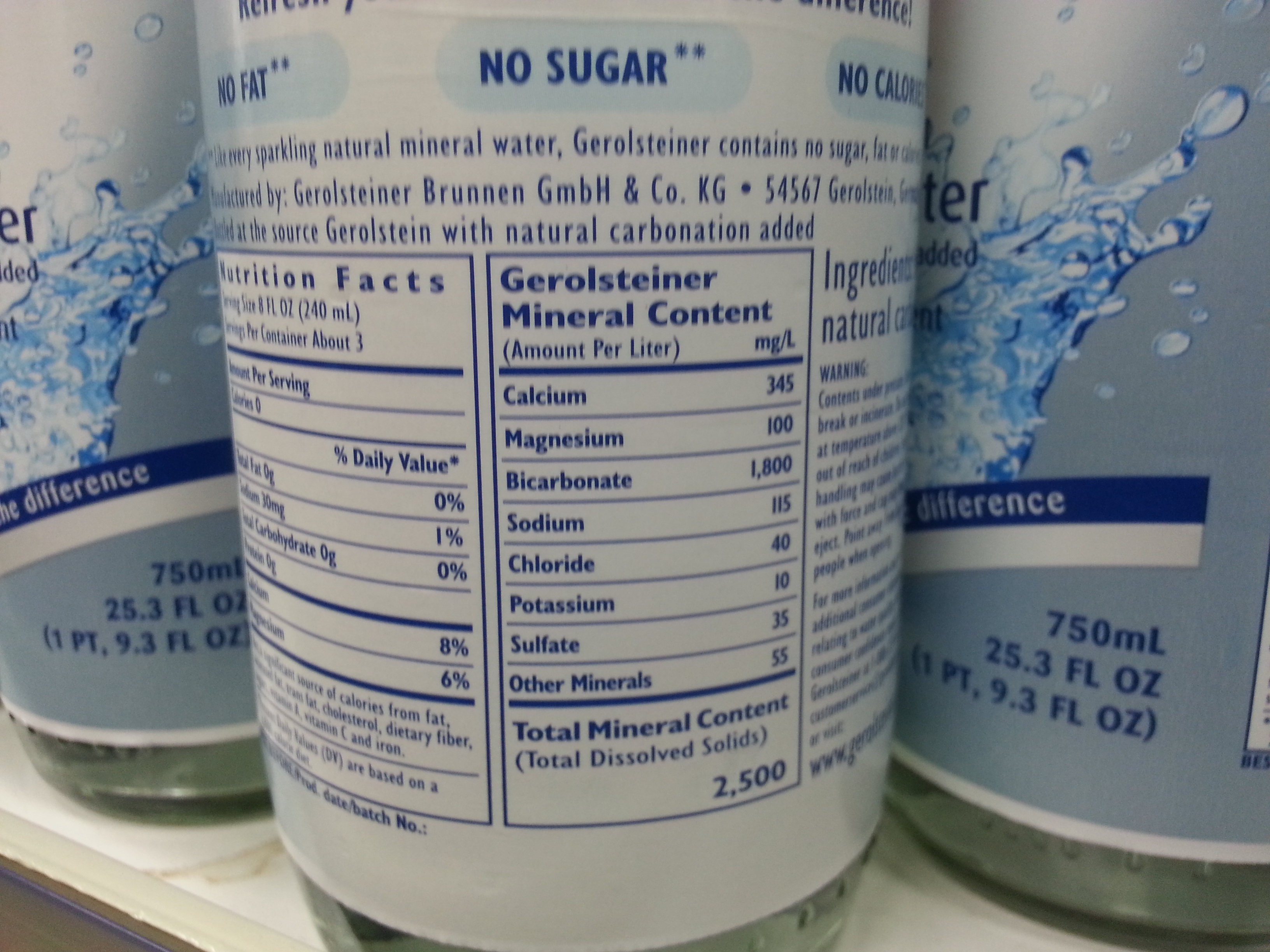
The Ford Focus of mineral waters, Poland Spring, has just one milligram of magnesium and calcium per liter, and four times that much sodium! (meaning four milligrams…just showing the power of ratios to deceive) So what do these numbers mean in terms of health benefits or detriments?
Let’s start with magnesium. Magnesium is a PHD-recommended daily supplement, unless you get enough from food. Rather than choking down two horse pills, some people prefer powder, epsom salt baths, or spray. Magnesium has oodles of therapeutic functions outside of its commonly known roles in heart and bone health, extending to bowel disease, migraines, anti-aging effects, and reducing chronic inflammation. Unfortunately magnesium levels have taken a hit from routine municipal water softening as well as lower concentrations in crops.
Most tap water contains negligible amounts of magnesium. So unless you live in Lubbock, Texas (where the tap water has 60 mg/L of magnesium, almost twice as much as any other major US city), bottled waters are the best option for liquid magnesium replenishment. My local Trader Joe’s sells Gerolsteiner and San Pellegrino, and other grocery stores sell Perrier and Evian. The latter two contain very little magnesium, while San Pellegrino has half as much as Gerolsteiner.
Sodium and calcium…eh
High-sodium mineral waters sometimes get a bad rap, even though low salt intake is associated with higher mortality rates. Plus the sodium in mineral water is usually in the form of sodium bicarbonate, which has been shown to actually decrease blood pressure in hypertensive patients.
If you’ve read the Perfect Health Diet book then you know the potential dangers of supplementing calcium. On the other hand, for those who lack leafy greens or dairy in their diets, mineral waters could be a good option. European mineral waters, that is. As might be expected of the land of higher life expectancy, finer wines, longer maternity leaves, and smellier cheeses, European mineral waters tend to have far more calcium (and magnesium) than their American counterparts. Popular European waters such as the aforementioned Gerolsteiner, San Pellegrino, Perrier, and Apollinaris all have between around 100-370 mg of calcium per liter. The higher end of this range would bring a calcium-deficient diet close to optimal levels when drinking 1-2 liters a day.
“Trace” Minerals sound so insignificant
…but they’re not! One of the most important trace minerals is lithium. While high-dose supplementation of lithium may impair immune and thyroid function (these doses are prescribed for psychiatric disorders), an optimal lower dose (but higher than what Americans typically take in through food) is linked to longer lifespans and lower rates of mental illness. Areas where tap water has the lowest lithium levels have higher suicide and homicide rates.
Rather than splitting lithium supplement pills to get small enough doses, one could get low doses of lithium through mineral water. “Lithia waters”, mineral waters high in lithium, were a craze in the late 1800s and early 1900s due to numerous testimonials on their miraculous health benefits. But most mineral waters actually have quite low lithium levels, so you have to look hard to find a water that provides enough to equal very low-dose supplements.
If you can find a brand that has somewhere between 0.1-0.3 mg per liter (or more) of lithium, it may produce some beneficial effects. Gerolsteiner, for example, contains 0.13 mg per liter. It might not take much to produce benefit — microdoses of lithium as small as 0.3 mg per day have been shown to improve cognitive impairment in Alzheimer’s patients. Note that diets low in plants and seafoods typically have lower lithium levels, and lithium concentrations in plants varies widely (Texas and western states have much higher lithium levels in soil and water than the rest of the country)
To sparkle or not to sparkle, that is the question
Some people love sparkling water. But in an informal survey (me surveying myself), sparkling water has been found to be difficult to drink in large quantities because it doesn’t go down as smoothly while gulping and makes you burp. That mitigates the ease of using water as a supplement. There’s an obvious way to get around this — just let the water go flat.
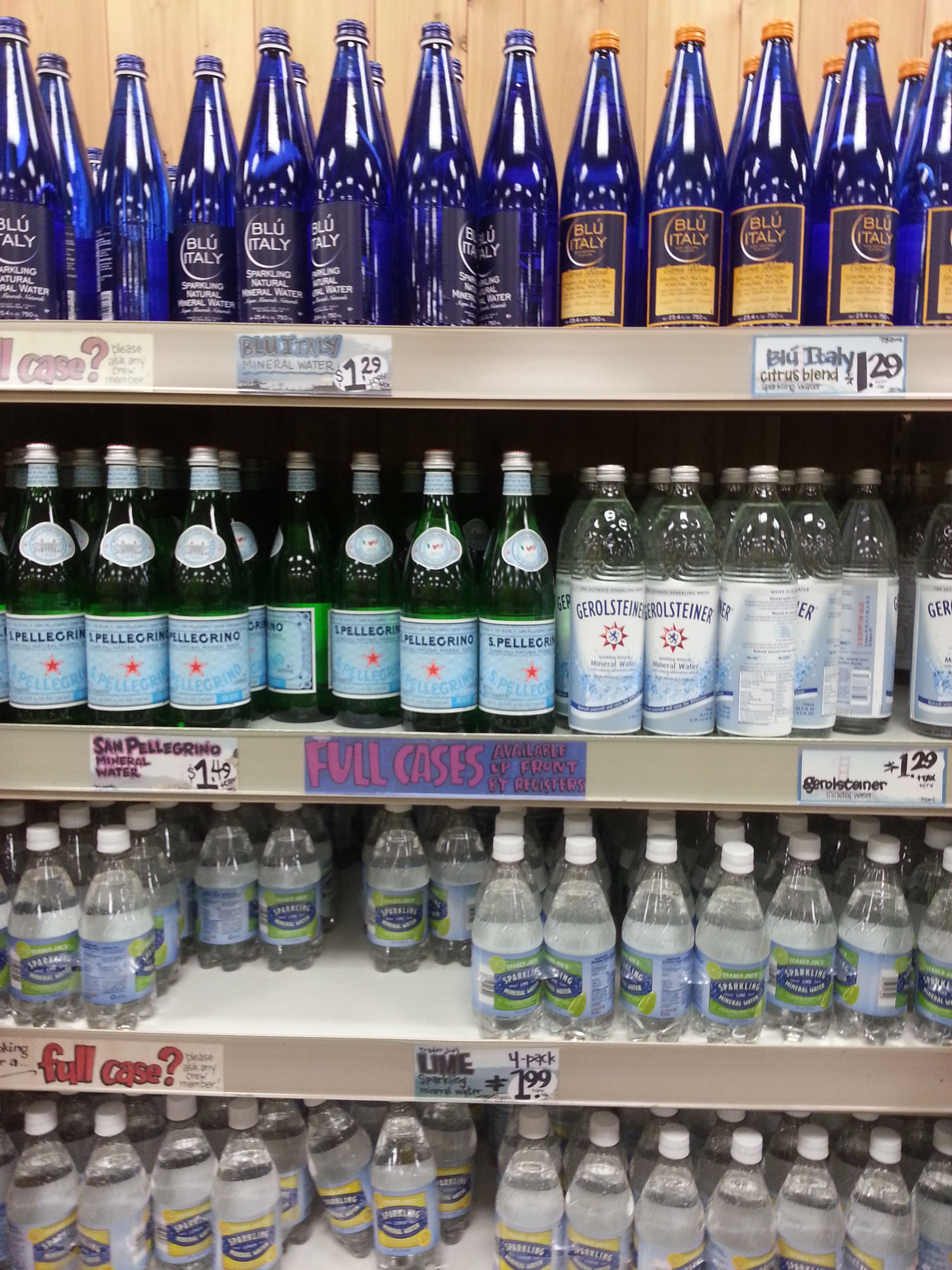 Alternately, you can choose a water that is not carbonated (aka “still water”). The problem is that still waters typically have much lower mineral levels than naturally carbonated waters. For example, Gerolsteiner offers a still water that has less than half as much magnesium as its popular sparkling water. Gerolsteiner’s website explains why this is:
“Gerolsteiner takes its mineral water from various sources in the depths of the Volcanic Eifel…It is the natural carbonic acid that allows the water to absorb the valuable minerals and trace elements from the rock.”
Note that a couple California-sourced still mineral waters such as Adobe Springs (also sold as “Noah’s Spring Water”) have magnesium levels comparable to fancy European sparkling waters, and also have that distinctive mineral water taste. But while some people love the taste of mineral water, others find hard water off-putting. To counter this, you can add lemon or let some cut berries infuse throughout it. Classy!
What does mineral water have that you don’t want?
One notable effect of drinking mineral water is a reduction in mean weight of your wallet. To reduce the cost and help with portability, you could try Concentrace, a concentrated little bottle of dried minerals from the Great Salt Lake that has the salt removed. I’m torn between the ease of using Concentrace and the possible dangers of using it. First the good part: you just put a few drops of Concentrace in your water, and it becomes highly mineralized with not just magnesium but a variety of trace minerals. Concentrace may improve joint pain, as shown in this trial of knee osteoarthritis (although this study doesn’t appear to be indexed by Pubmed…hmmm…).
However, be careful with the Concentrace. Tap water is not allowed to have more than 0.01 parts per million of arsenic. The Concentrace instructions say to use a total of 40-80 drops per day, so let’s say you use 20 drops in a glass of water. That comes out to right around 0.01 parts per million of arsenic. Uh-oh?
So is mineral water an underrated supplement?
There’s probably a reason why mineral water springs were highly prized by so many ancient cultures, with people traveling many miles to seek health benefits. In modern times, the World Health Organization has recognized magnesium levels in drinking water to be an important public health issue, due to the possible heart disease benefits of drinking hard water.
We didn’t even get into potential benefits from taking in higher amounts of other trace minerals. Nor did we discuss benefits from higher intake of bicarbonate, which is present in many minerals. Or how about skin hydration benefits, or the ability of hard water to avoid mineral leeching that happens when boiling foods in soft water?
The magnesium and calcium in mineral water is also typically highly bioavailable (even more so when consumed with a meal). All in all, mineral water may be a useful addition for those that can afford it, as it can provide a reliable daily boost to levels of important nutrients.




 via this link:

Recent Comments