



Pork Spare Ribs

The holidays are a great time for finger-food. There must be a reason why pigs have ribs: I think it was so that our fingers could hold that fatty rib meat at Christmas.

Our recipe for Pork Spare Ribs is essentially the same as the one for Chicken Wings (Sep 19, 2011) – another great recipe for buffet-style family gatherings. It goes like this.

Preparing the Spare Ribs

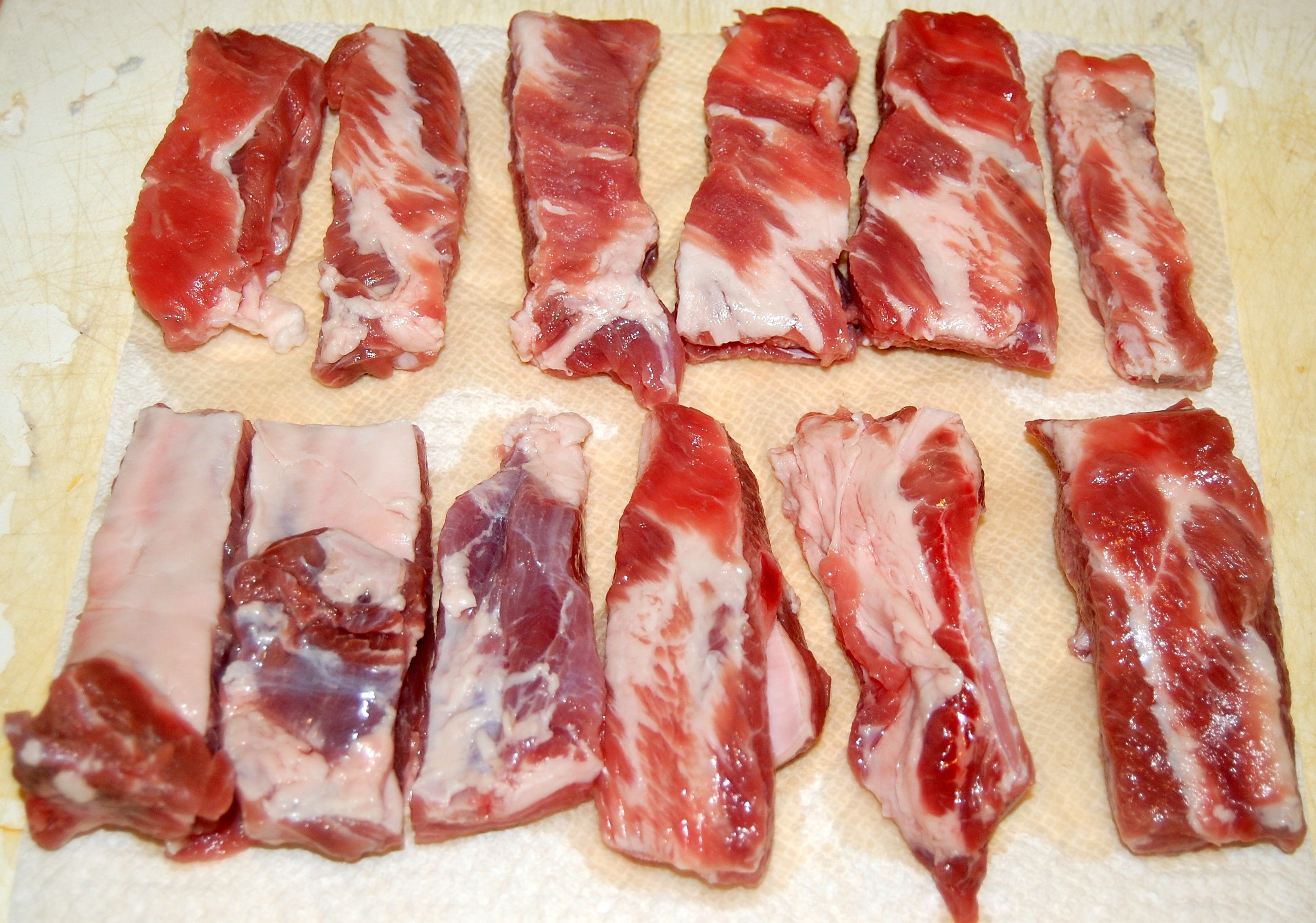
A rack of spare ribs looks like this:

Use a pair of kitchen shears or scissors to cut between the rib bones:
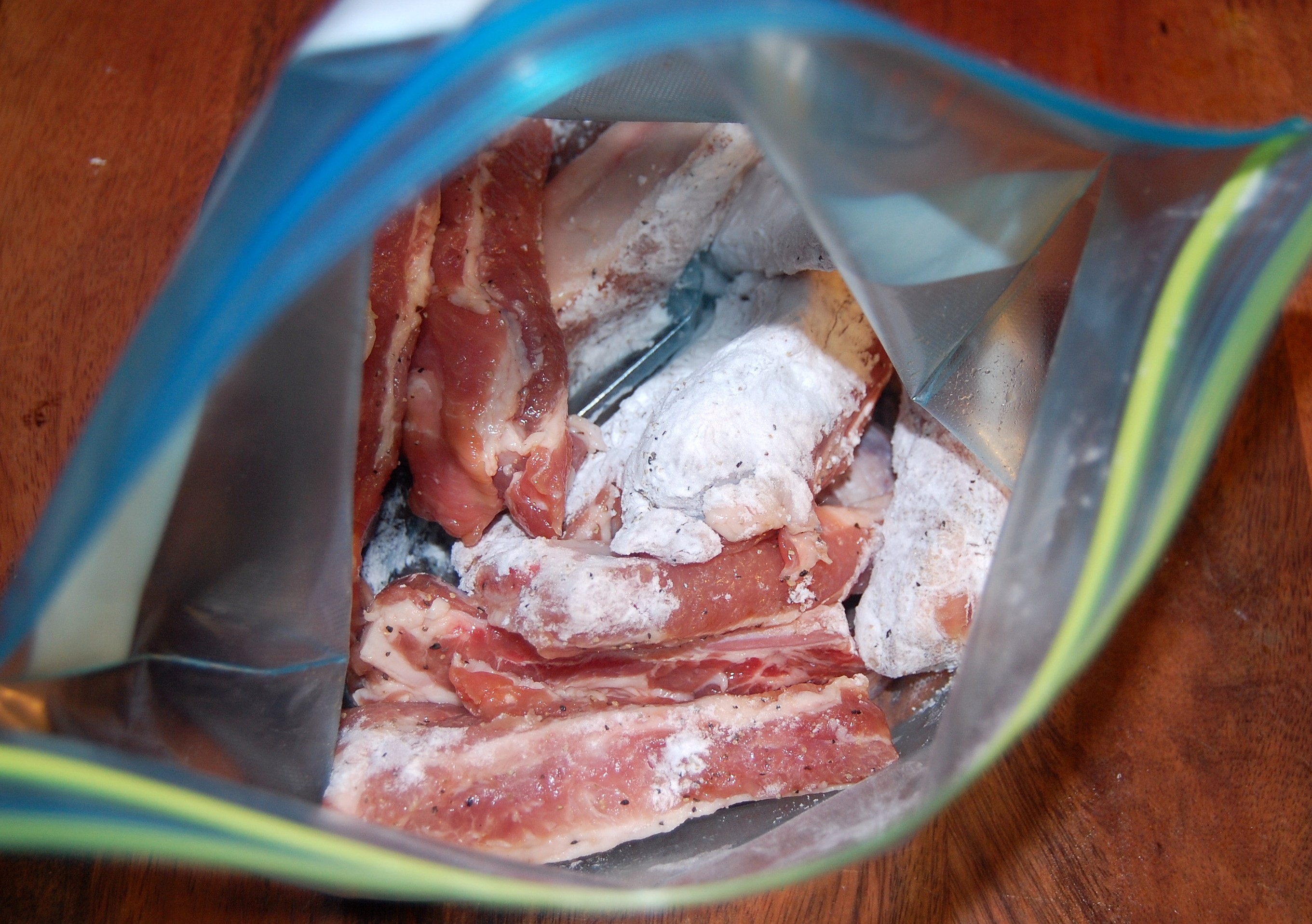
Wash the ribs and pat them dry. Just as in the Chicken Wings recipe, put ¼ cup potato starch in a plastic bag with salt and pepper, and shake the dried ribs until they’re evenly coated.
Lay them out in an oven-safe baking dish:
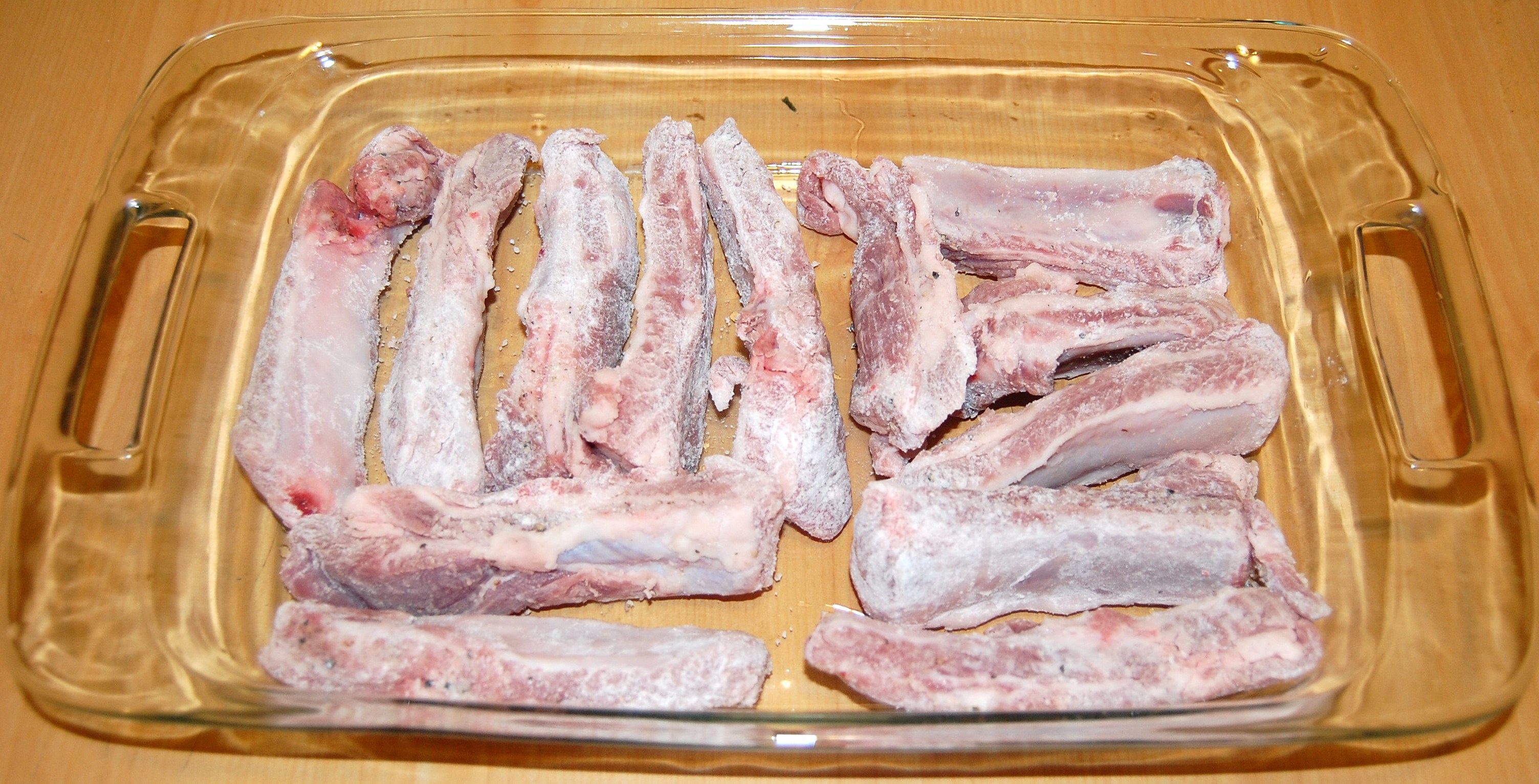
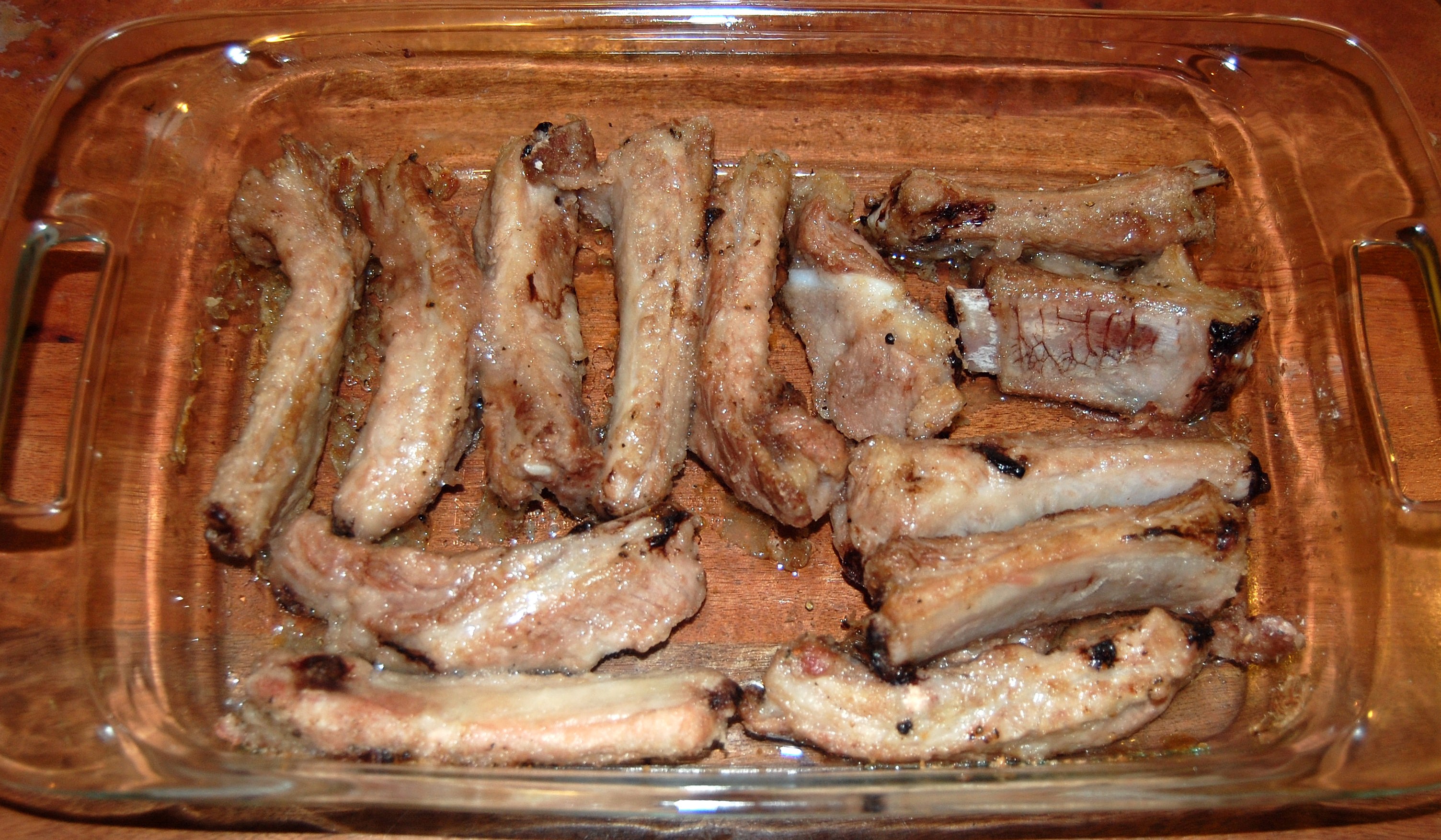
Cook for 20 minutes at 350ºF (177ºC), then turn the ribs over and cook for another 20 minutes. They’ll come out like this:
Preparing the Sauce

Many flavors of sauce are possible. The Chicken Wings post discusses Garlic, Parmesan and Mustard Sauce; Buffalo Style Spicy Sauce; and Pacific Sweet and Sour Sauce. Here’s a fourth sauce, an Asian style sauce.

Heat diced garlic, ginger, and scallions in a bit of beef tallow or other healthy cooking oil. Cook the garlic and ginger first for 2 minutes at medium heat, then add scallions:
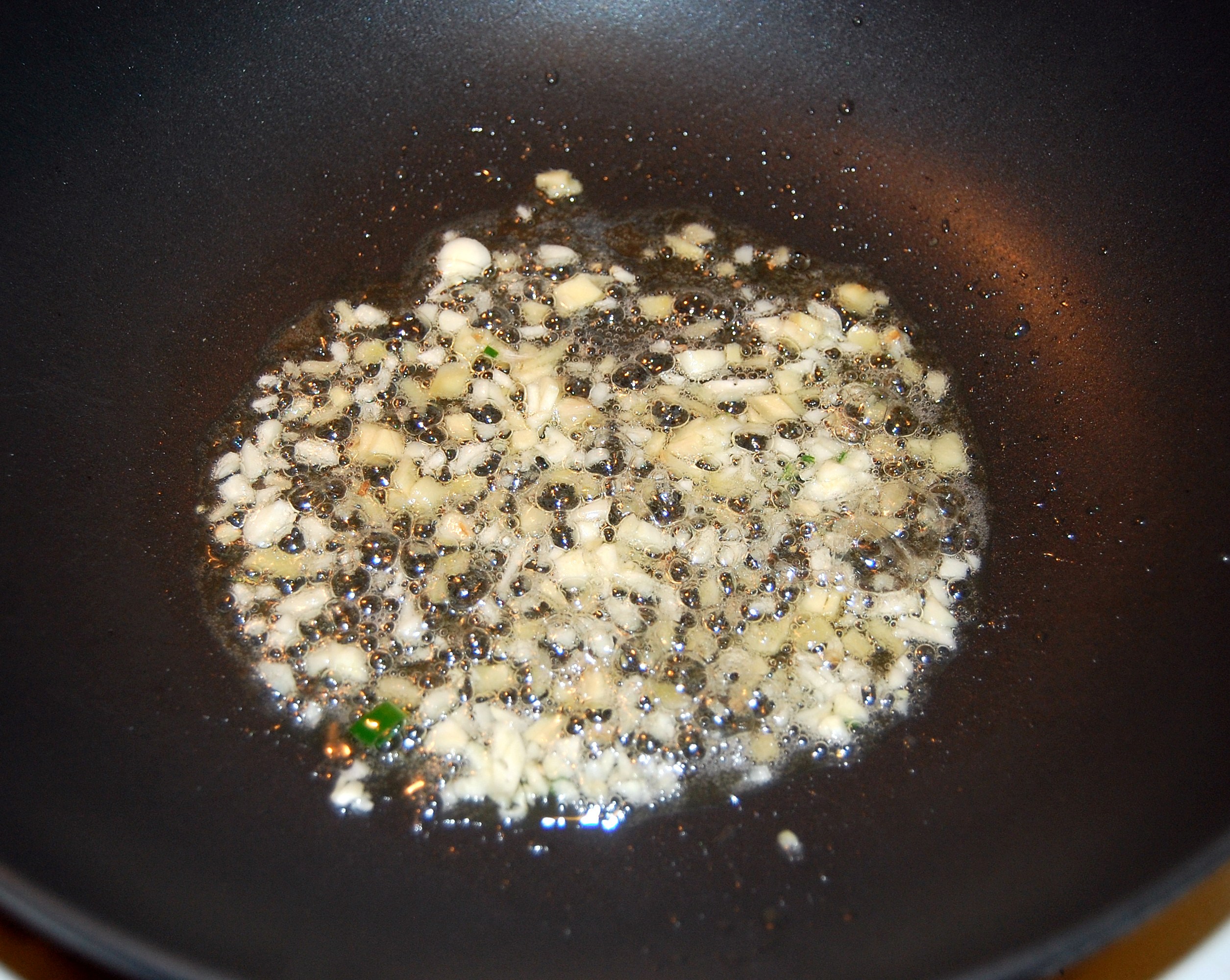
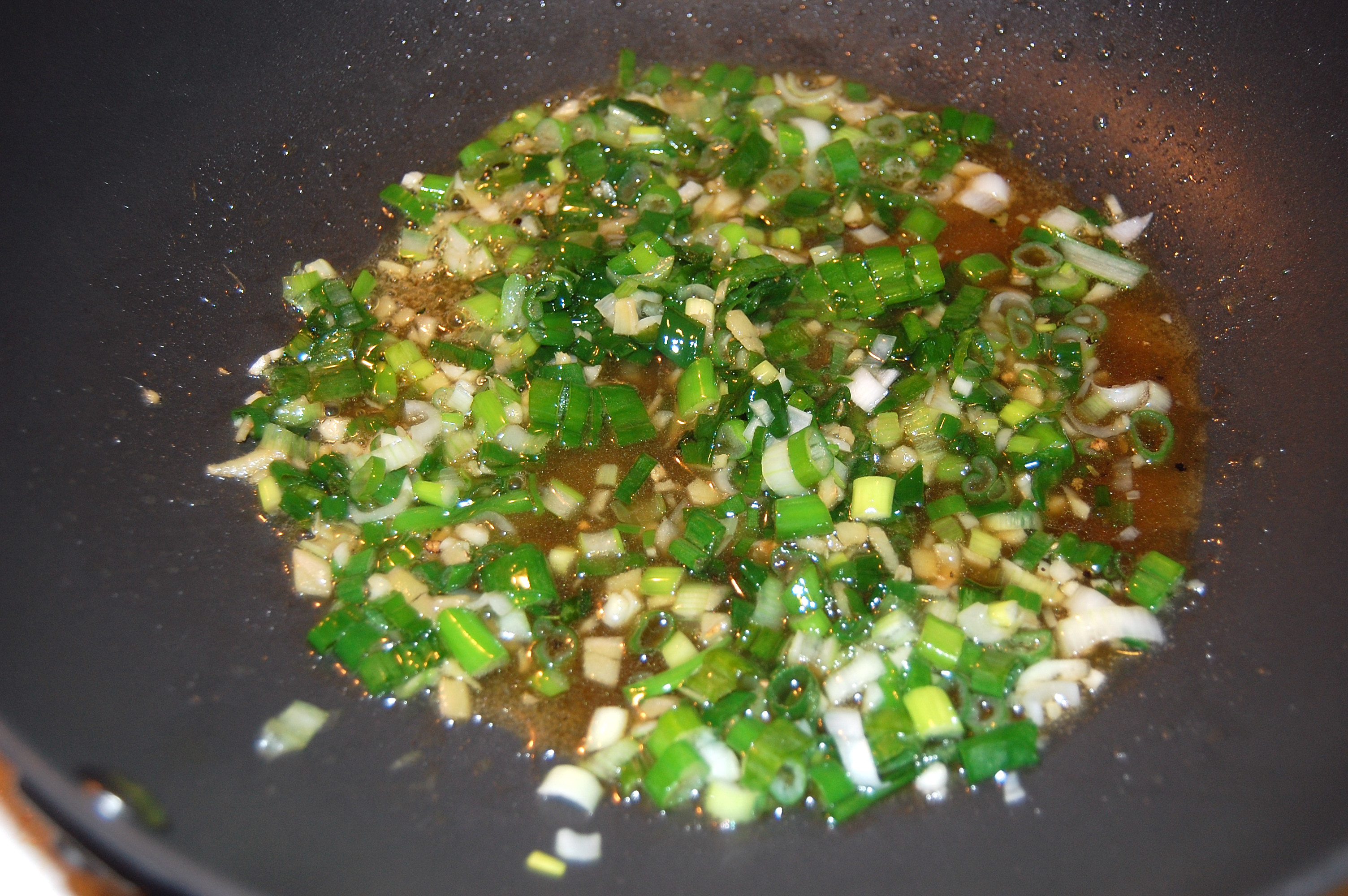
Quickly add the premixed wet ingredients: 2 tbsp rice vinegar, 1 tbsp brown rice syrup, 1 tsp gluten-free soy sauce, and salt and pepper to taste. (Don’t substitute other vinegars for the rice vinegar.) Then mix in the cooked ribs and stir until they’re thoroughly coated.

Set them on a serving plate:

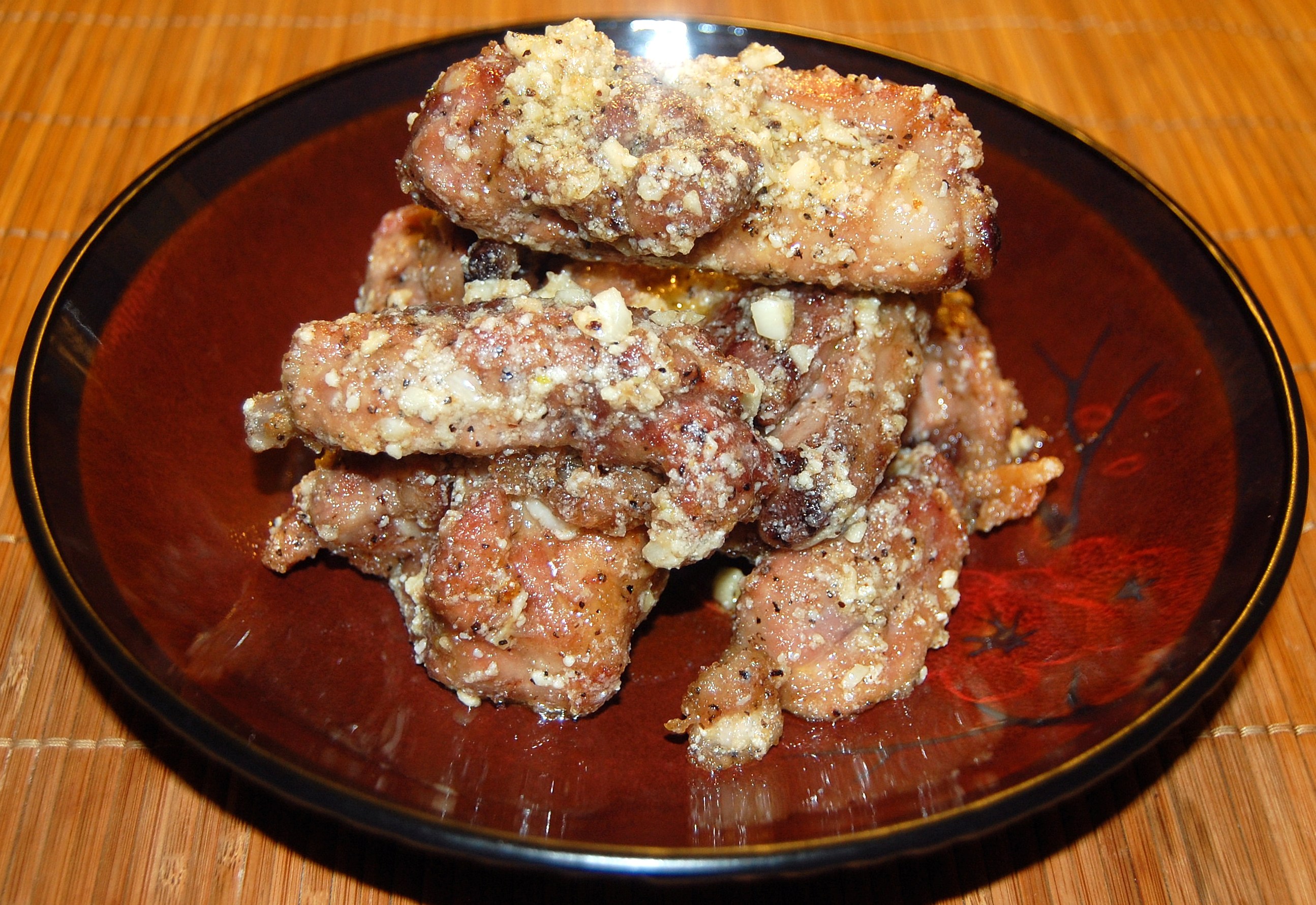
Here are ribs made with Garlic, Parmesan and Mustard sauce:
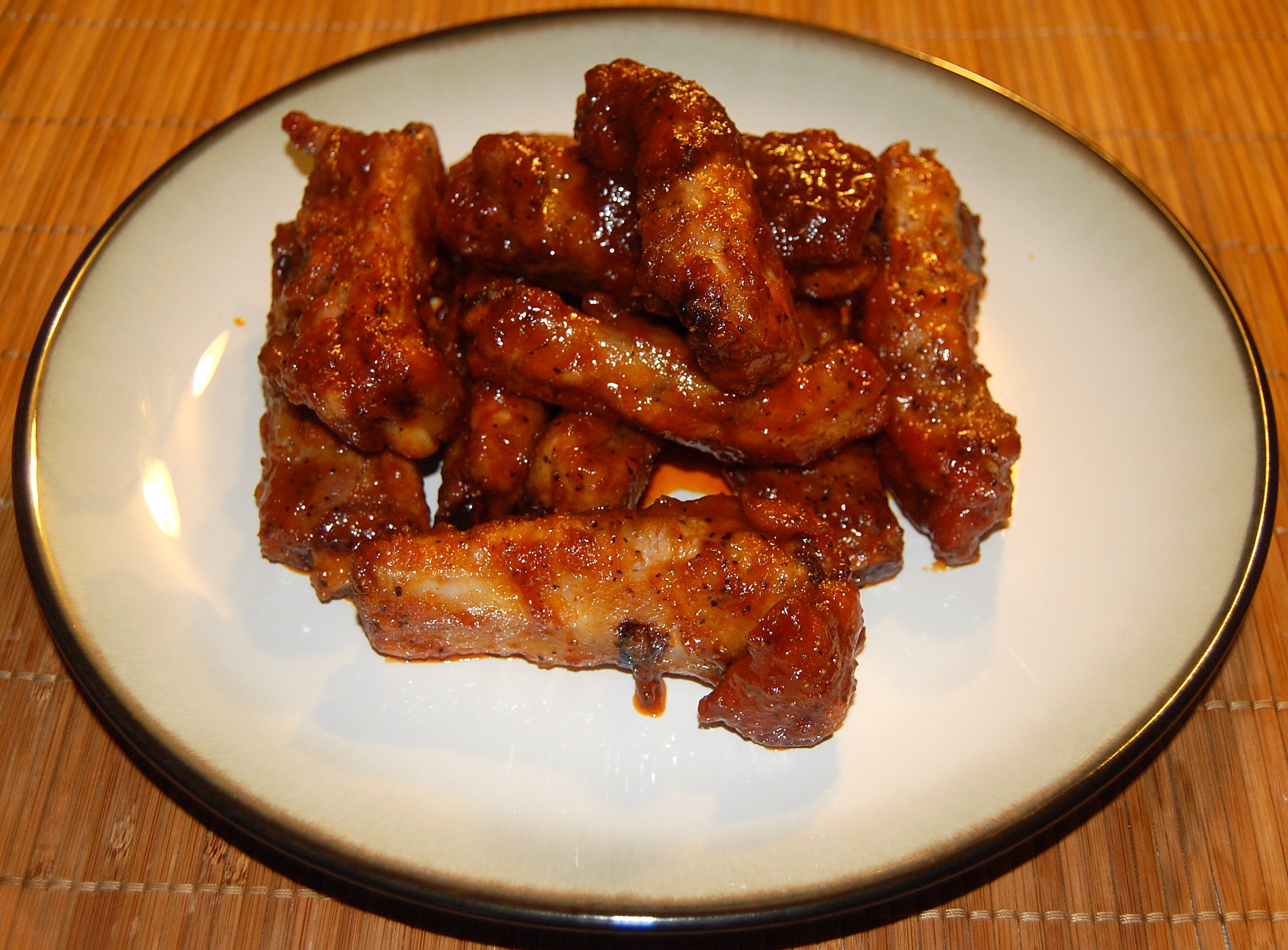
Here are ribs made with Buffalo Style Spicy Sauce:
Enjoy!

Around the Web; Revisiting Green Meadows Farm

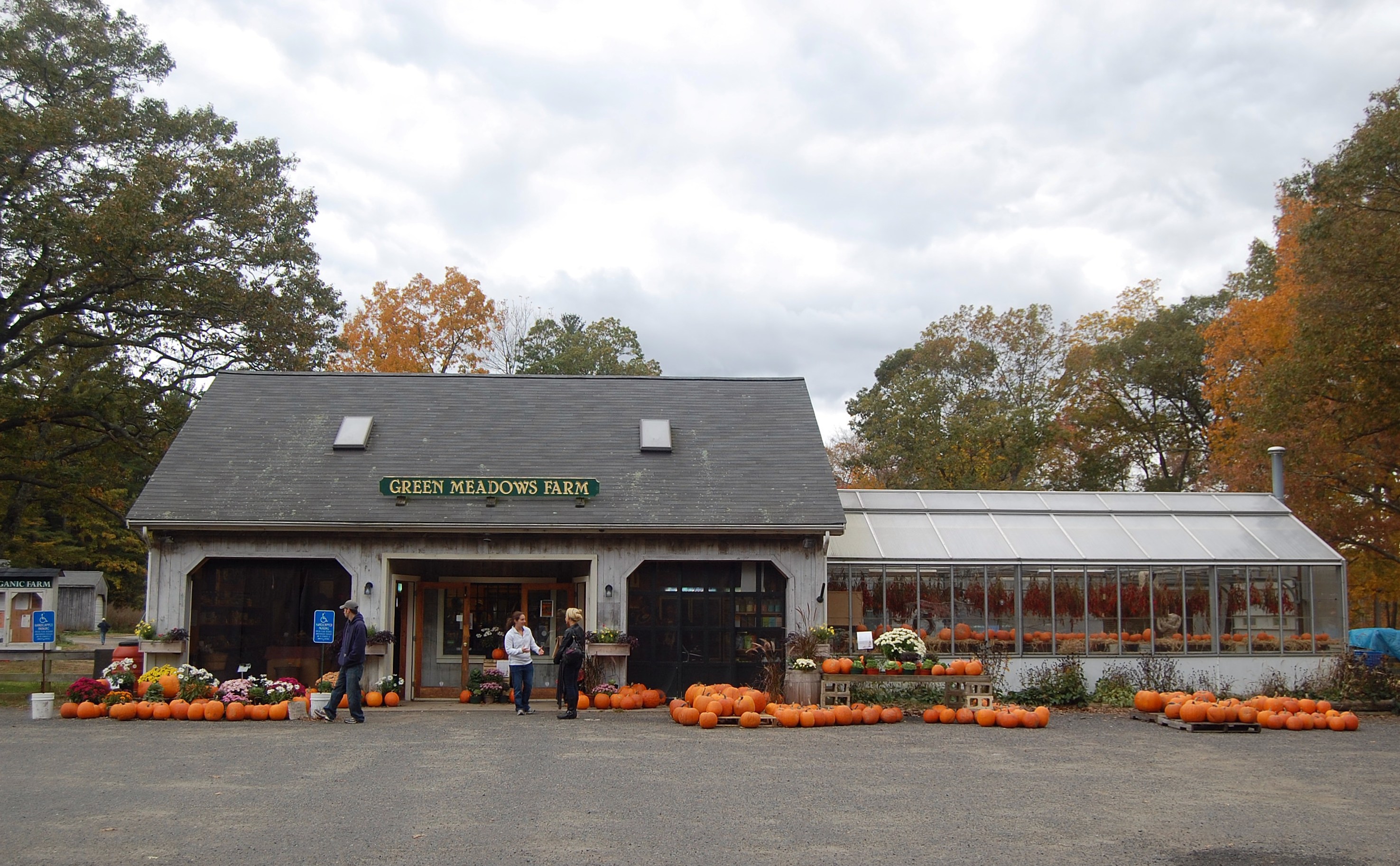
A few months ago we toured Green Meadows Farm; I wrote about it here. Tomorrow, Shou-Ching and I will be there at 3 pm for a casual talk, Q&A session, and book signing. We’ll discuss what evolution tells us about the optimal diet, and the PHD food plate; but mostly we’ll just be chatting with whoever shows up. Green Meadows Farm also has a great farmstand where you can buy organic food of all kinds.

Green Meadows Farm is located at 656 Asbury Street, South Hamilton, MA. Directions are available on their web site.

Also, Jimmy Moore has just informed me that I was voted #4 guest of the year by Livin’ La Vida Low-Carb readers and will be back for “Encore Week” in January. Thanks, LLVLC fans! I’m excited to talk to Jimmy again, this will be a fun interview.

Sometime this month we’re also going to put together a 7-day meal plan for anyone who wants to try our diet for weight loss. But Jay Wright beat us to the punch, sharing the meals that helped him lose 80 pounds in less than eight months.

[1] Music to read by: From Enya:

[2] Interesting posts this week:

Pal Jabekk explores what happens when you can’t utilize glycogen.

The possibility that XMRV, a new human retrovirus, might cause chronic fatigue syndrome has degenerated into a fiasco. Judy Miskovitz, the principal investigator, has been dismissed from the Whittemore Peterson Institute and arrested on charges of stealing her research notes, which WPI claims belong to them. Dr. Jamie Deckoff-Jones, a chronic fatigue sufferer herself, offers her view of the affair.

Emily Deans discusses mitochondrial dysfunction and depression.

NPR notes that the innate food reward system drives kids to eat more carbs than adults. No surprise there: breast milk is 40% carbs, and we know that’s optimal for infants; the optimum for adults is probably significantly lower.

Stephan Guyenet summarizes some new review papers on the food reward theory of obesity. Dr. Srdjan Ostric comments on the role of food reward in obesity.

Jamie Scott, That Paleo Guy, comments on the circadian variability of sun damage risk. What’s the best time of day to go to the beach?

Canadian political philosopher Colin Farrelly quotes Leonard Hayflick in Nature writing that “Prehistoric human remains have never revealed individuals older than about 50 years of age.” Can this be true? Can bones reveal the age of death so precisely?

The New York Times reports that exercise improves memory.

Seth Roberts reports on a rat who favors pate, salmon sashimi, and scrambled eggs. What a lucky rat!

Japan Times reports on Japanese research indicating that beef and pork consumption is associated with colon cancer risk.

Vitamin B12 deficiency can cause skin lesions.

Dienekes points out that African-Americans are losing the genes that give Africans resistance to malaria.

Dr Briffa reports that low-carb diets look good for cancer patients.

Barry Sears discusses how contestants on “The Biggest Loser” eat.

Wired asks if the obesity epidemic could be due in part to over-use of antibiotics.

Cheeseslave reports that intermittent fasting gave her insomnia and belly fat, perhaps because fasting led her to drink alcohol, and alcohol can induce zinc and magnesium deficiencies.

Steph at Midlife Makeover Year found that eliminating fructose, even from fruit, eliminated her eczema.

Dr David Brownstein argues that the optimal sodium intake is 4 to 6 g/day (1.8 to 2.7 tsp salt).

USA Today reports benefits from a ketogenic diet for Parkinson’s patients.

More pregnancies, more health? Reason at FightAging! reports that fetal stem cells can repair the mother during pregnancy.

[3] Cute animals: Odd couple:

Via Yves Smith.

[4] Me and the GAPS Diet at Wise Traditions: Foot in mouth disease?

Dr. Natasha Campbell-McBride, originator of the Gut and Psychology Syndrome (GAPS) diet, has done a tremendous job refining the Specific Carbohydrate Diet and helping a number of people recover from gut dysbiosis. She is also one of the most popular speakers at the Weston A Price Foundation Wise Traditions conferences – deservedly so, from what I was able to see of her talk.

There was a lot of interest among the Wise Traditions attendees in what I thought of GAPS. Many people came up to me to ask about it, and the first question posed in the question and answer session asked what I thought of GAPS. I tried to make the point that there are many pathogens that can afflict the gut and, while GAPS is great for many gut disorders, no single dietary prescription is going to be perfect for all of them. The GAPS prescription of eschewing starches and obtaining carbs from sugary sources like honey is one of those prescriptions: often beneficial in gut disorders, but not always.

A few PHD readers, whose cases are listed on our “Results” page (see Angie and Bella), had trouble on GAPS and were able to fix their problems by adding starches. I suspect their diets had been ketogenic without starches and the ketones were feeding eukaryotic infections; adding starches eliminated the ketone production and helped them overcome the infections.

Apparently I gave the impression – no doubt I mis-spoke in some fashion – that I thought GAPS was a ketogenic diet. Dr. Tom Cowan spoke to me about it soon afterward. Dr. Judy Tsafrir, who uses the GAPS diet in her psychiatry practice, heard about the episode and wrote about it. I wrote a comment on Judy’s post clarifying my perspective.

I’d like to reprint that comment here, so that my attitude toward GAPS can be placed more prominently into the public record. I have the utmost respect for GAPS; with lore derived both from the Specific Carbohydrate Diet and from years of clinical experience by Dr. Campbell-McBride herself and other nutritionists, it is arguably the leading methodology available today for dealing with gut dysbiosis.

Here is my comment from Judy’s site:

Hi Judy,

A few clarifications. It is not starches per se that are protective of the gut, but glucose; this is needed for mucus production, for preservation of the intestinal barrier, and for immune function. It is possible in very low-carb diets, especially if protein intake is limited, to significantly reduce mucus production and impair the integrity of the gut mucosa and barrier.

Both starches and sugars (such as are found in honey, squash, and carrots) are possible sources of glucose. In cases of gut dysbiosis, one wants to avoid foods that feed pathogens. Both starches and sugars can do this.

Some pathogens benefit from fructose, and fructose malabsorption is very common in bowel diseases.

Many pathogens can also benefit from resistant starch, or the branched structures in starch that humans cannot digest. Starchy foods tend to be fiber rich. As such, they are often problematic in bowel disorders.

I often recommend dextrose or rice syrup, which is readily digestible to glucose only, for bowel disorders. This seems to be the safest glucose source.

There is such a diversity of pathogens in bowel diseases, that no single dietary prescription is universally safe. Zero-carb diets are potentially problematic due to glucose deficiency or ketosis that favors certain pathogens; and for any given carb source, there is a pathogen that can flourish on it.

GAPS came up in my talk in response to a question someone asked. I had recently had two people on GAPS diets report that when they added starches, in line with our recommendations, their health improved and they were able to clear lingering gut problems, including fungal infections. Of course I have no idea how faithfully they were following Dr Campbell-McBride’s recommendations; but I think their cases illustrate the points you make in your final two paragraphs. Every pathology is unique, and diets have to be tailored to individual needs.

I am not quite sure what I said, since this was extemporaneous and I haven’t watched the video, but the symptoms those two readers had were ones that tend to develop on ketogenic diets. If they were excluding fructose because it gave them gut symptoms, then their diet could easily have become ketogenic. I do not think that GAPS is ketogenic in general, but in at least those two cases its attempted application seems to have been so.

I have the utmost respect for Dr Campbell-McBride and I am well aware of the many people her diet has helped. I hope no one thinks that I was in any way denigrating her diet or her very valuable work. I was able to attend part of her talk at Wise Traditions and thought it was the most valuable talk I saw at the conference.

Best, Paul

[5] Interesting comments this week:

[6] Not the Weekly Video: Samsung introduces a new sport: “Extreme Shepherding”

[7] Shou-Ching’s Photo-Art:

[8] Weekly Video: Dr Terry Wahls treats her multiple sclerosis effectively with a high-vegetable Paleo-type diet:

Jay Wright’s Weight Loss Journey

Jay Wright, who comments as “Jaybird,” has had a remarkably successful weight loss story. He adopted our diet in March at a weight of 250 pounds, and reached his normal weight of 170 pounds at Halloween, seven and a half months later.

I met Jay at Wise Traditions in November and can attest that he is now a handsome, slender man.

Jay’s weight loss was remarkably consistent at about 2.5 pounds per week. He agreed to describe his weight loss journey in a guest post; my questions are in italic, Jay wrote everything else. Welcome, Jay! – Paul

I would like to thank Dr. Paul Jaminet and Dr. Shou-Ching Jaminet for writing a great diet book and website!  You have been instrumental in helping me achieve the long elusive goal of great health and weight. For me, this truly is the Perfect Health Diet!

Before PHD

Paul: Jay, what do you think caused your overweight condition in the first place?

1. Ignorance and confusion. I believe I would have eaten the PHD way and remained at a healthy weight if I was taught to eat this way from the beginning. Instead, the government promotes the anti-saturated fat, pro-seed “vegetable” oil, and whole grains food pyramid. The belief formed from trusting the experts is a lot to overcome. I remember a decade ago during the Atkins’ hype that I thought that he must be crazy to recommend such a dangerous diet that would go against the “entire” medical establishment.  Then, even after I stopped believing the Lipid Hypothesis, I was still confused by all of the rest of the diet claims out there. While I was uncertain, I thought I might as well enjoy a “normal” diet until I can figure it all out.

2. Eating Habits. Besides the high carbs, food toxins, and malnourishment of the food pyramid diet, a few other factors may have affected my eating habits. I was a normal weight child growing up and I could eat anything and everything in sight and not get even pudgy in the slightest. When all foods have the same effect – none – you don’t worry about whether the food is healthy. Also, I spent my childhood playing one sport after another which might have actually worsened my eating habits. At least here with Texas football, we were constantly encouraged to stuff ourselves and put on more weight.  When sports ended for me after college, normal amounts of food looked like a starvation diet on a plate!

3. Carelessness toward health.  Was I careless because I was told “healthy” meant a yucky salad and “unhealthy” meant a yummy steak?  A young boy always chooses the steak especially when I was constantly hungry from 3 hour practices!  This all started to change after my dad was diagnosed with heart disease and started eating a “healthy” low-fat diet. However, the real wake-up call came when my mother was diagnosed and eventually died of breast cancer! To fight the cancer, she put up a courageous fight by being the most dedicated eater of an “alkalizing” vegetarian diet ever! Yet, even though I began to care more about health, I continued to allow myself to eat anything while I learned more and took breaks from trying different diets.

4. Lack of exercise because of a bad back.  I have had a herniated disc in my lower back for about 10 years now. When I changed careers and became even more sedentary, my back problem only worsened from bad posture while sitting. I should have at least continued to walk short amounts, but at the end of the day, I didn’t even feel like tolerating even a little pain after dealing with it so much during the day. The recliner offered relief.

5. Convenience.  As a single guy, I relied on eating out for convenience over the years and pre-made frozen dinners when I ate at home mostly. Starting a diet always meant making big changes to my routine and giving up a lot of time to cook.

6. Diets were Too Low in Food Reward.  Looking back, all the diets I tried were much lower in food reward than the “regular” American diet with lots of sweets that kept calling to me! All of the previous diets required a Herculean will power just to fight the temptations. It was mental torture being on a diet!

Paul: Jay, what were your experiences on the various diets you tried – and what caused you to give them up?

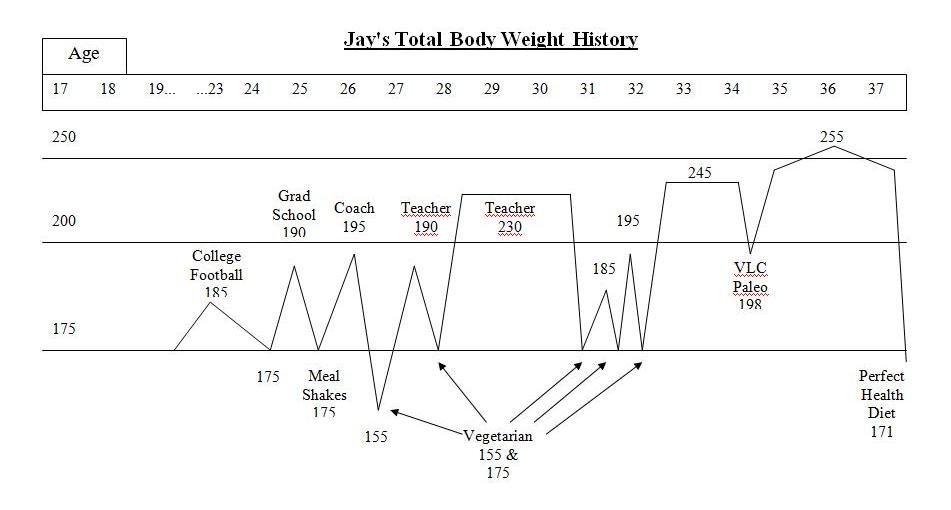
Here is my weight history:

After college sports, I struggled with my weight. I was a yo-yo dieter – I could lose weight but it always ended up even higher. I tried meal shake replacements, frozen dinners to limit calories, no meat/meat, no dairy/dairy, acid/alkaline, exercise/no exercise while dieting, no cash or credit cards in my wallet going to work so I wouldn’t stop at a fast food, punishment where I had to eat a raw tomato if I cheat (I hate raw tomatoes), and many other vegetarian leaning and mental tricks.  A pattern emerged with these diets.  I would starve with low energy for about a week or two until my will power ran out. Then, I would go eat something “bad.”  If I continued to repeat the pattern and managed to be “successful,” I stayed hungry even once I reached my goal weight.  I tried to transition to a “regular” amount of food to stop starving and just maintain but to no avail.  My weight went right back up even higher than before even without cheating on the diets.

Paleo was finally the exception to the starving rule, but only at first.  I felt great on a very low carb paleo for a couple of months.  I ate a pound of meat a day and mostly vegetables with a little fruit and nuts and a lot of coconut oil. The extra fat and meat seemed to enable me to lose weight and not be hungry. I lost nearly 40 lbs and halfway to my goal.  However, I started to not feel so well and hunger was returning, too. I had headaches and energy fluctuated throughout the day. I never liked the taste of vegetables and I began dreading the need to eat more vegetables than I had ever cared to eat in my life. Also, the sugar cravings never stopped just like on the vegetarian diets. Eventually, will power ran out eventually on paleo just like on the other diets.

Here’s what I looked like at 250 pounds. I’m the one on the left in the gray shirt; the one on the right is my brother Craig Wright:

I knew I had better find an answer when my family and friends would laugh each time I declared, “Diet starts tomorrow!”

Paul: Jay, it’s very interesting that on pre-Paleo diets you were always hungry, and when you ate to satisfy your hunger, your weight returned to as high or higher than when you began. That’s consistent with the set-point theory of obesity: your set-point hadn’t changed, and so when you reduced weight below the set-point, you got hungry; when you ate to satisfy your appetite, you were obese. The Paleo experience could also be said to be consistent with the set-point theory: it reduced the set-point so you lost 40 pounds without hunger, but weight was still above normal and hunger returned as your weight got below the new set-point.

An interesting data point, which I see as a challenge for the setpoint theory because it suggests an alternative view, is that on VLC Paleo your hunger returned at the same time you began to feel unwell. This suggests that hunger and setpoint are really an index of health, and when the body is not being properly maintained the brain manufactures hunger. When nutrients are abundant and the body has all it needs to establish good health, the setpoint is reduced to normal weight, hunger disappears, and weight loss resumes.

Perfect Health Diet

Paul: Jay, what was your experience on PHD? I’m especially interested in whether you experienced plateaus where weight loss stalled, and whether you experienced hunger as on other diets.

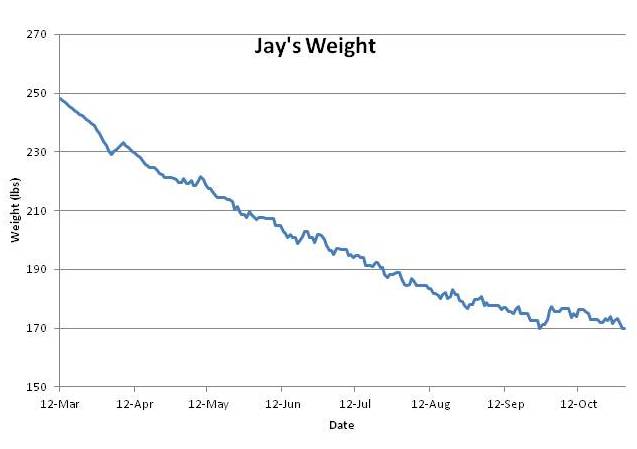
I recorded my weight every day from April 15 through November, and enough days in March and early April to give a clear picture. Here is what happened:

As you can see, there was no stall in weight loss until I hit my target weight of 170 pounds.

Here’s my after photo, again with my brother Craig. This time Craig is on the left in black, I’m on the right in green:

Interestingly Craig has eaten pretty much the same foods as I have throughout life, and always maintained a normal weight. On my recommendation he adopted PHD soon after I did, and he also experienced health improvements – psoriasis, which he’s had for 20 years and used to leave red scales over much of his body, is nearly gone.

Hunger

I followed the PHD weight loss protocols and felt virtually no hunger throughout the 7 months. Intermittent fasting with one meal a day worked best for my schedule; I coconut oil fasted earlier in the day and 1 day per week.  After the first month, I coconut oil fasted for an entire week since I figured I should clean out my system. Then I dropped the calories to only 1200 to get some faster results early on to help my back. I thought I would readjust the calories up or the eating schedule according to my hunger, but I did not experience any hunger and had great energy so I left the plan alone. What little hunger I did experience was very mild and just meant it was time to drink another bottle of water or swig a tablespoon of coconut oil before the evening dinner. Interestingly, I ate some birthday cakes toward the end and experienced stronger and more uncomfortable hunger the following days than the previous months. The lack of hunger was definitely a key to my weight loss success.

Food Reward

For me, PHD is a high food reward diet. It tastes great every meal! Even in the beginning of the diet, I enjoyed the PHD meal just as much mentally as thinking about eating my old food. Later, my taste buds changed and PHD became clearly the more rewarding food. However, at least part of the PHD was bland. The coconut oil provided calories with no taste and helped keep my calories low. Yet, I really believe I would not have lasted on the diet if the food was bland. Having a neutral taste reminds me of the very low carb paleo diet that didn’t allow the safe starches and even small amounts of dairy. The white rice and white potatoes enabled me to eat vegetables regularly by buffering the taste until my taste buds adjusted and I began to like them. Avoiding milk but having small amounts of other dairy also went a long way in the enjoyment of the food and menu options. The safe starches, dairy, and a little bit of fruit also seem to be responsible for satisfying my sweet tooth cravings. I’m not sure if the high food reward PHD would have controlled my calorie intake since I counted calories. Nonetheless, compared to the other past diets I dreaded to eat, I prefer the high food reward of PHD. I use to say, “Why does all of the food that’s good for you taste so bad and all of the food that’s bad for you taste so good?” I don’t say that anymore with PHD.

Plateau

My belief is that total calories do matter. I’ve always been able to lose the fat and get back to my original weight provided that I lower my calories enough to accomplish it. However, my will power usually ran out before I accomplished it many times. The constant hunger and low energy with lower calories exhausted my desire to lose the weight on previous diets. In contrast, I experienced the opposite on PHD. While the PHD food and supplements provided satiety and energy, I controlled my calories by exercising, counting calories, eating only a single meal, and having oil fast days. Even after only a month, I experienced such a surge in energy even on lower calories that I increased my exercise to 2 hours of walking. Having established such a low calorie amount in the beginning with a challenging exercise and eating plan, I simply had to maintain the routine until the goal was reached.

I believe the key was PHD enabled me to maintain low enough calories to not experience a plateau as on other diets.

Set Point

My experience might show some truth to the concept of a set point. For instance, prior to starting PHD my weight stayed consistently within a 5 lb range for about 2 years. During this period I was eating whatever I wanted. My experience on PHD could be construed as the resetting of my set point to my normal weight – 170 lb. I was never hungry on PHD as long as my weight was above 175 lb. I started feeling more hunger once I got close to my normal weight in the 170s.  Unlike previous diets, I was able to eliminate the hunger by eating a little bit more — just upping my calories slightly.

Although other diets could get me to this weight point before, I had to stay in a perpetual starving mode to remain at this level. Unlike on PHD, on other diets adding enough calories to stop hunger always led to a rebound of weight that leveled out at a higher level than before I started.

When I started PHD my intended target weight was 175 pounds. With PHD, I actually continued to lose a little more than the 175 down to 170 without planning on it. Then, my weight slightly increased with obvious cheats like some birthday cake. While eating the normal amount the following days without the cheats, the weight returned to previous levels without an effort to compensate. After the weight loss, my weight has become more stable. The last month I have had several repeating days on the weight scale with the same exact weight number to the tenth of a point. This occurred even though I ate more on a few of the previous days. My weight history shows a stair stepping up higher with each diet attempt until PHD stabilized my weight back to its original healthy level.

Closing Thought

During the middle of my weight loss, I was at a restaurant eating a salad with balsamic vinegar and olive oil dressing, 8 oz steak, and a baked potato with butter and sour cream and some water with lemon, but without a dinner roll.  I paused and proclaimed, “I can’t believe I’m eating this and still losing weight! This is the BEST DIET EVER!”

Fermented Mixed Vegetables

We’ve been eating a lot of fermented vegetables lately. We started with kimchi (Homemade Kimchi, Jun 26, 2011), but lately we’ve been fermenting our vegetables in a less spicy style that is normally used for sauerkraut.

Sauerkraut” means “sour cabbage.” We are not huge cabbage fans, so we often substitute other vegetables. We’ve had good results from Daikon radish, red radish, carrot, celery, and cabbage; the only vegetable we didn’t care for was parsnip.

This is a really simple procedure – mix salt, water, and vegetables with a few spices; leave in a cool, dark sealed container for 7-10 days; eat.

For safety, the key is to give enough time for the water to become acidic. Wikipedia explains the evolution of the bacterial population:

The fermentation process has three phases. In the first phase, anaerobic bacteria such as Klebsiella and Enterobacter lead the fermentation, and begin producing an acidic environment that favours later bacteria. The second phase starts as the acid levels become too high for many bacteria, and Leuconostoc mesenteroides and other Leuconostoc spp. take dominance. In the third phase, various Lactobacillus species, including L. brevis and L. plantarum, ferment any remaining sugars, further lowering the pH. There are unpasteurized sauerkrauts on the market. Properly cured sauerkraut is sufficiently acidic to prevent a favorable environment for the growth of Clostridium botulinum, the toxins of which cause botulism.

Klebsiella and Enterobacter are potentially pathogenic bacteria, but the later Leuconostoc and Lactobacillus species are probiotic. So the more acidic the water, the better the mix of bacteria.

Another good tactic is use predominantly low-calorie vegetables. Keeping sugar levels low will help keep the yeast population down.

First Batch: Daikon radish, celery, carrot

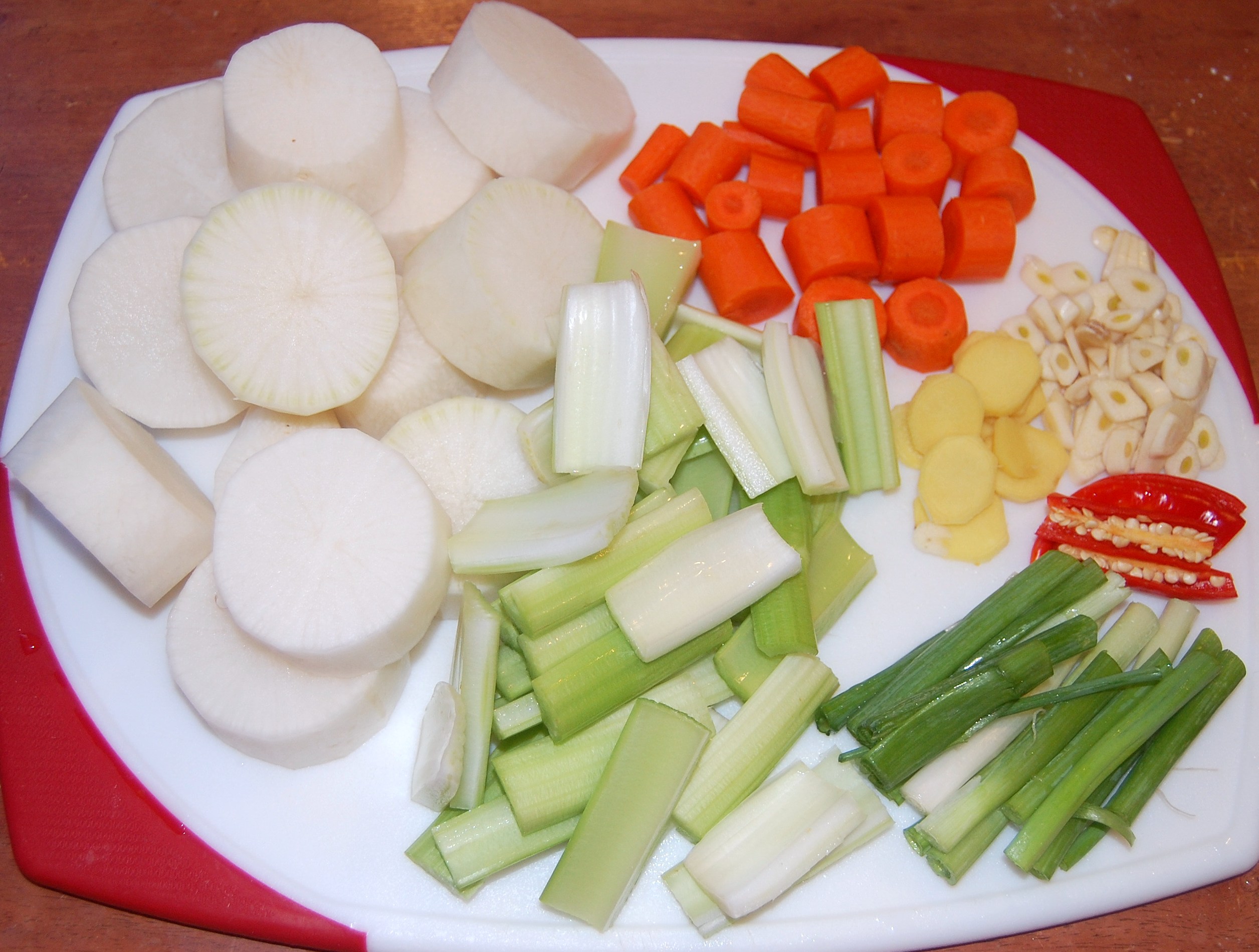
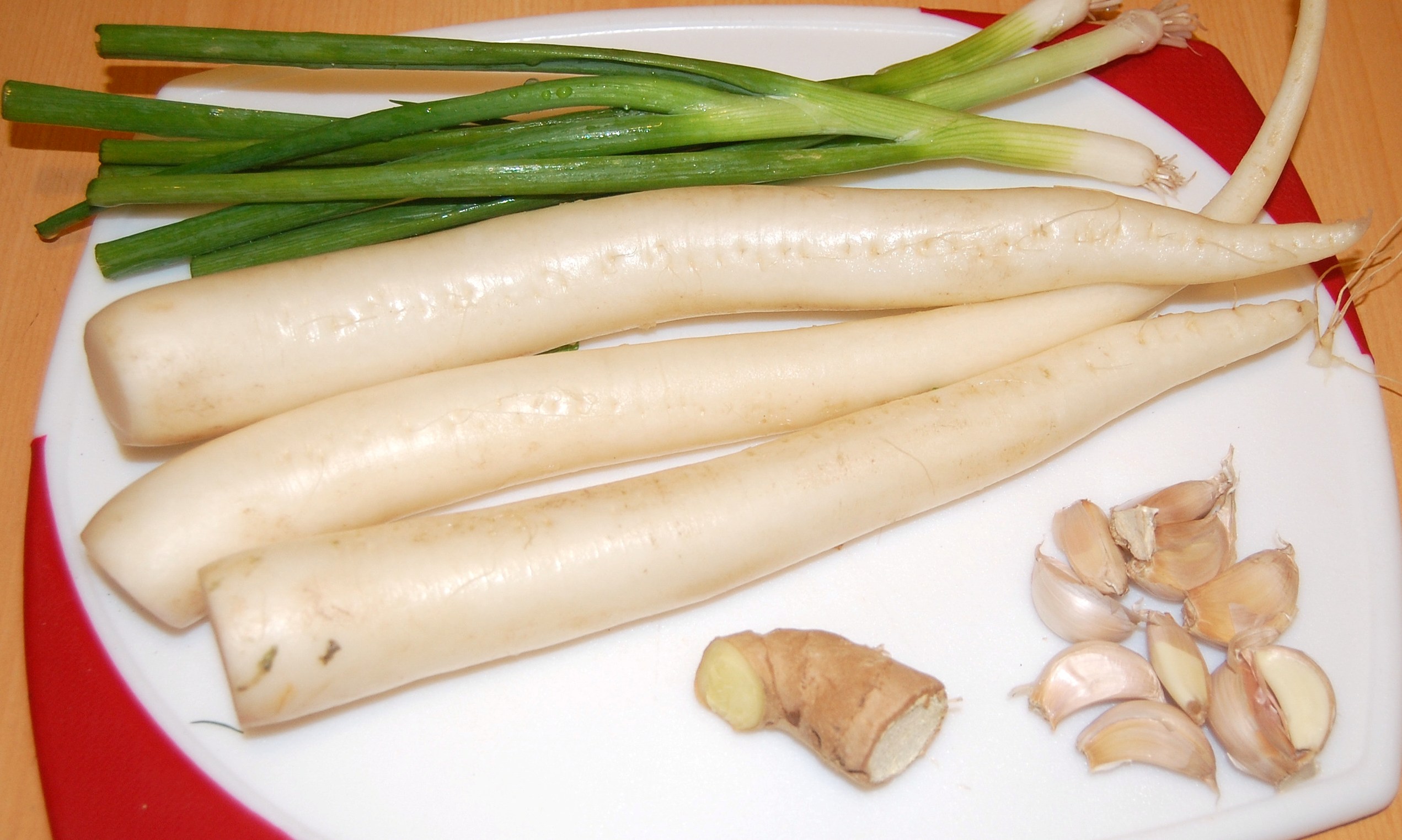
Here were the raw materials for one batch:

We could have cut the white Daikon radish pieces smaller, but this size did fine: by day 7 they were softened all the way through.

Sea salt, ginger, garlic, and peppercorn are seasonings we consider essential; green onion and red pepper have worked for us as well.

You’ll need a large glass or ceramic container that seals. If it is glass, keep it in a dark cabinet while fermenting to avoid light exposure. We like to look at ours in progress, so we bought glass containers.

Fill the glass container about 80% full with diced vegetables, then cover with water so the container is 90% full. Add enough sea salt that the water tastes salty, but not undrinkably so. Also add the other seasonings – ginger, garlic, peppercorn, and any others you choose.

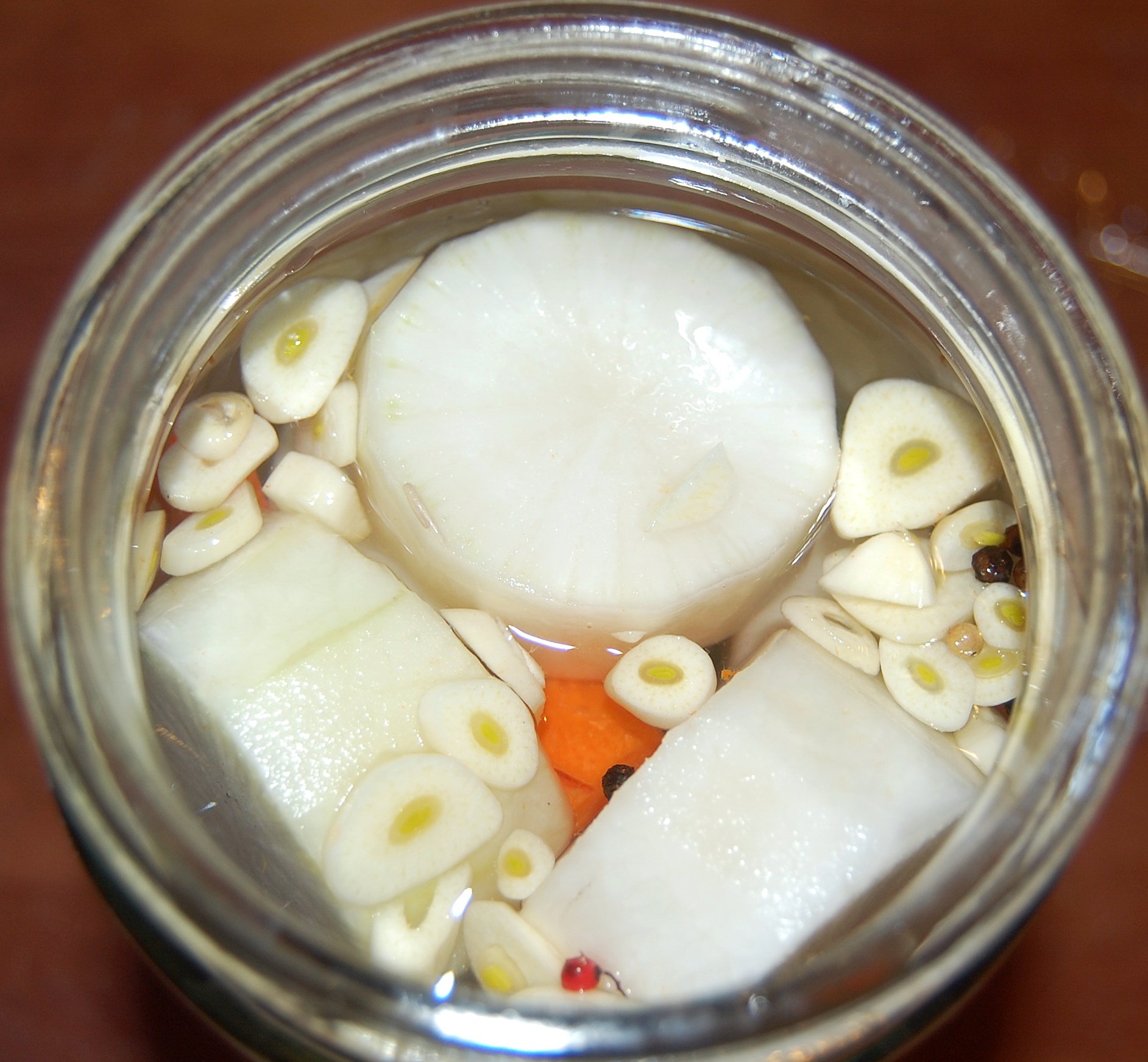
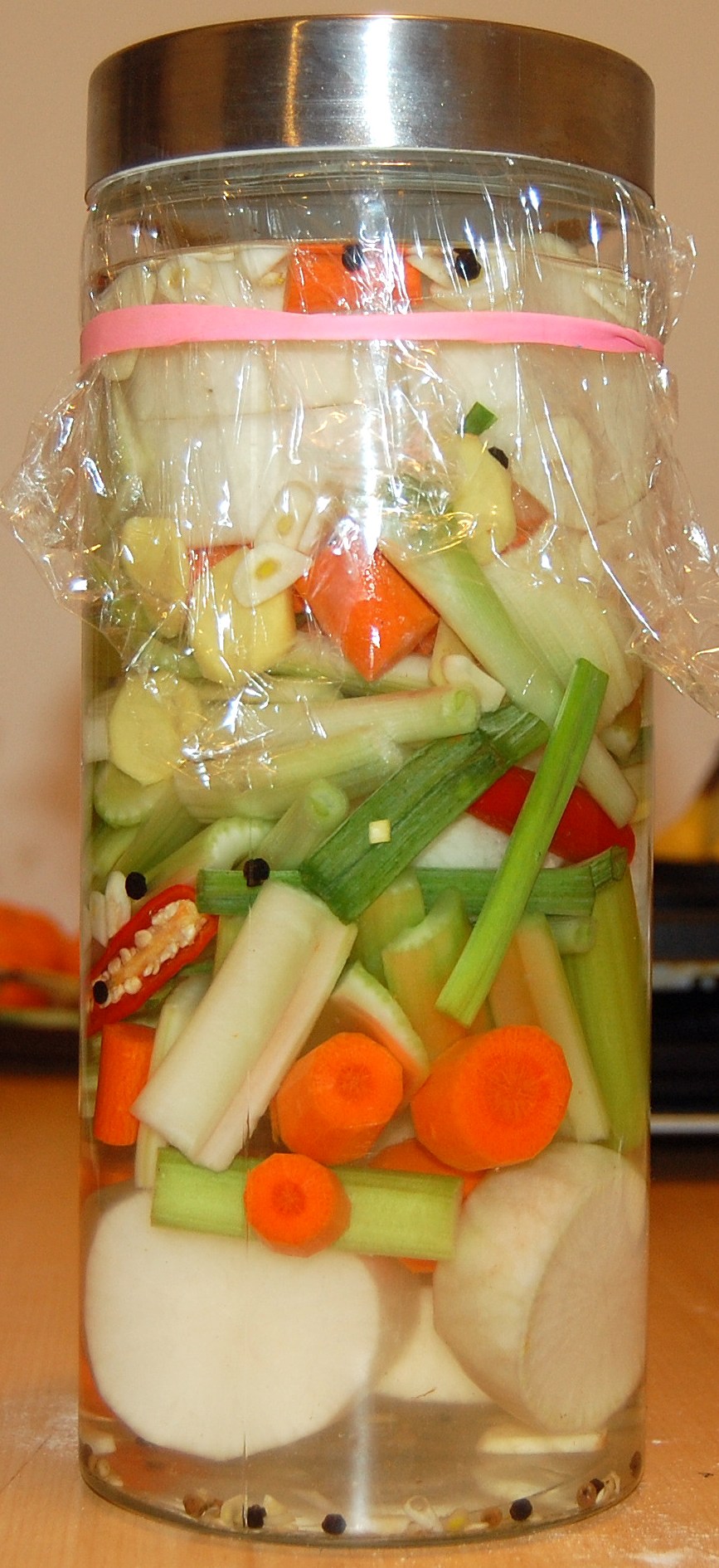
The container will now look like this:

Now it has to be covered with an air-tight seal. We placed plastic wrap over the top, wrapped a rubber band around the jar, and then sealed the lid over the wrap:

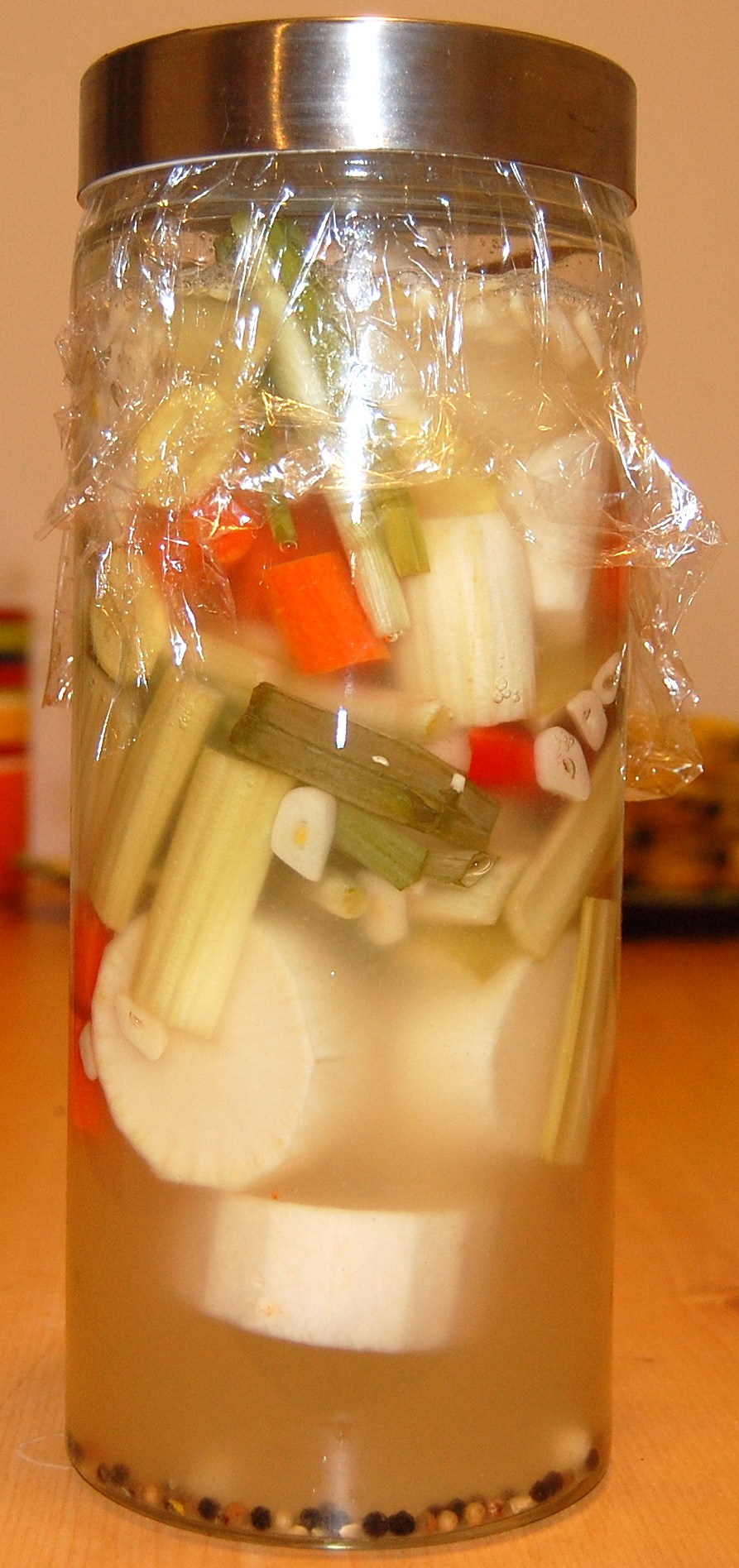
After a week it will look like this:

Note how cloudy the water has become.

After a week you should be able to start removing vegetables to eat. Here are some vegetables:

It’s also a good idea to remove the cloudy fluid and drink it. This makes a great “soup” or beverage along with your meal.

As you remove fluid, add water and sea salt to replace what you took. When you run out of vegetables, add a new batch of diced vegetables to the old fluid and let it ferment for a week.

Second Batch: Daikon radish, green onion, and red radish

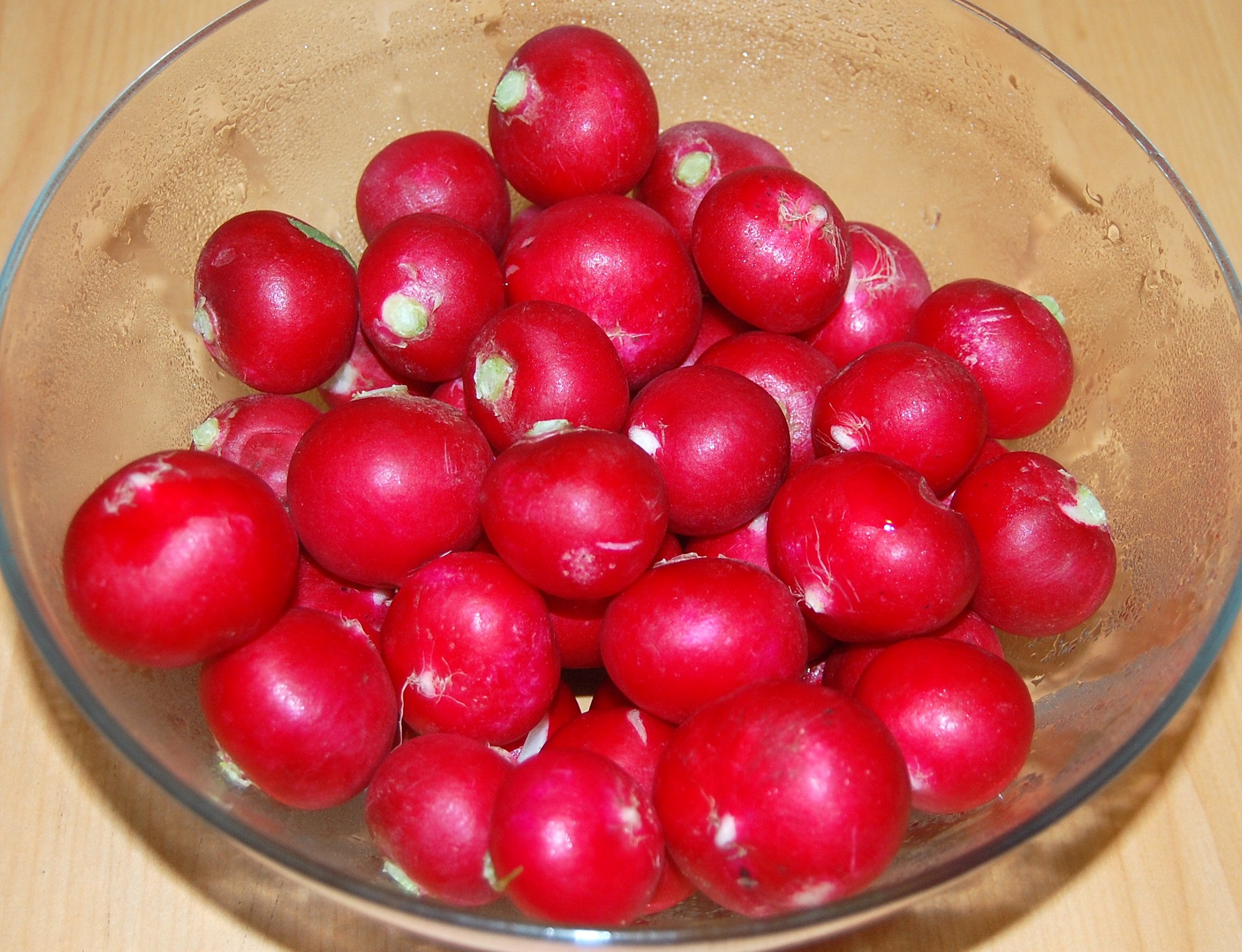
This first try was so successful we bought a larger glass container and made another batch, this time including red radish. Ingredients:

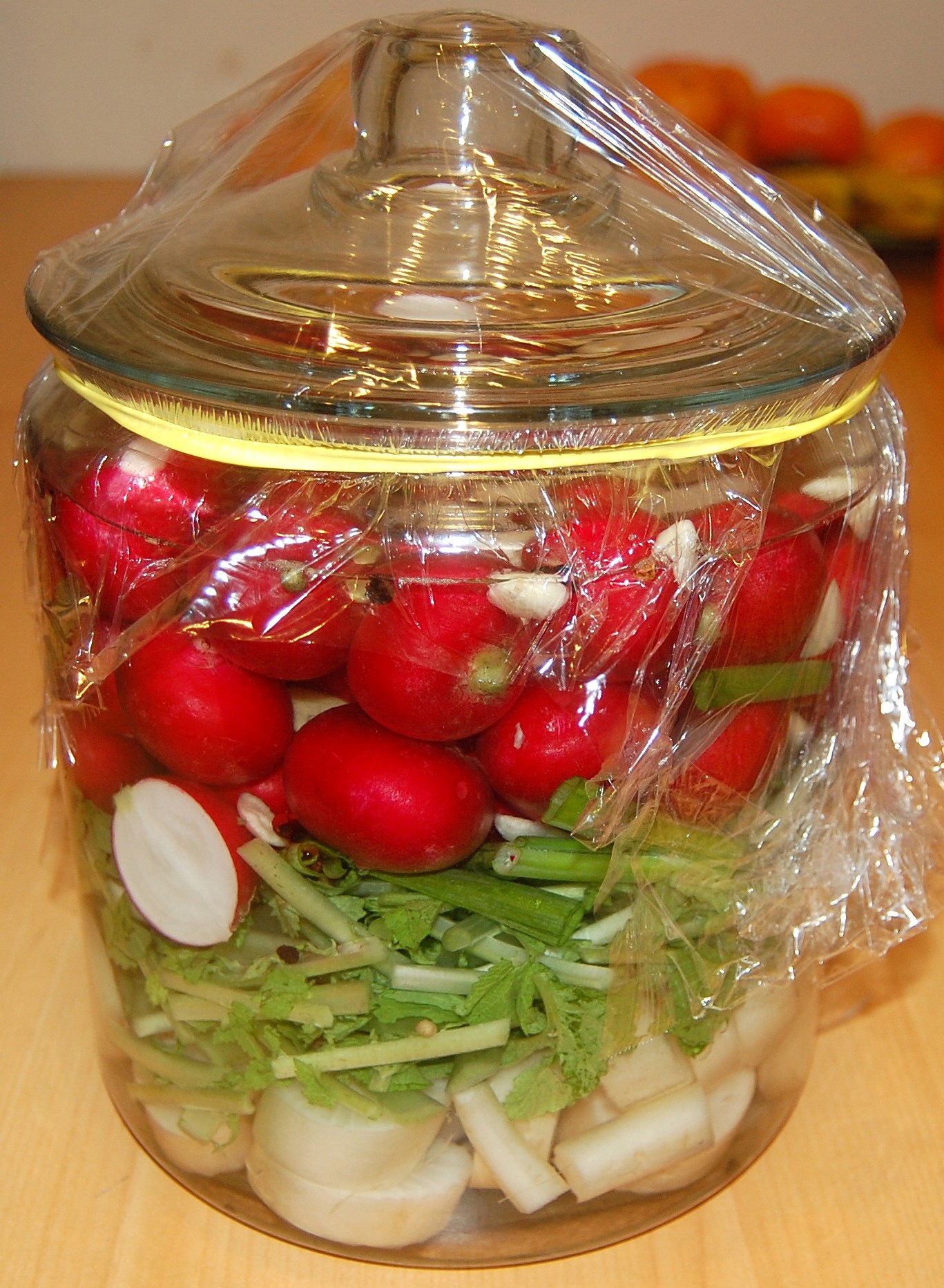
Here it is ready to go into a dark cabinet for fermentation:

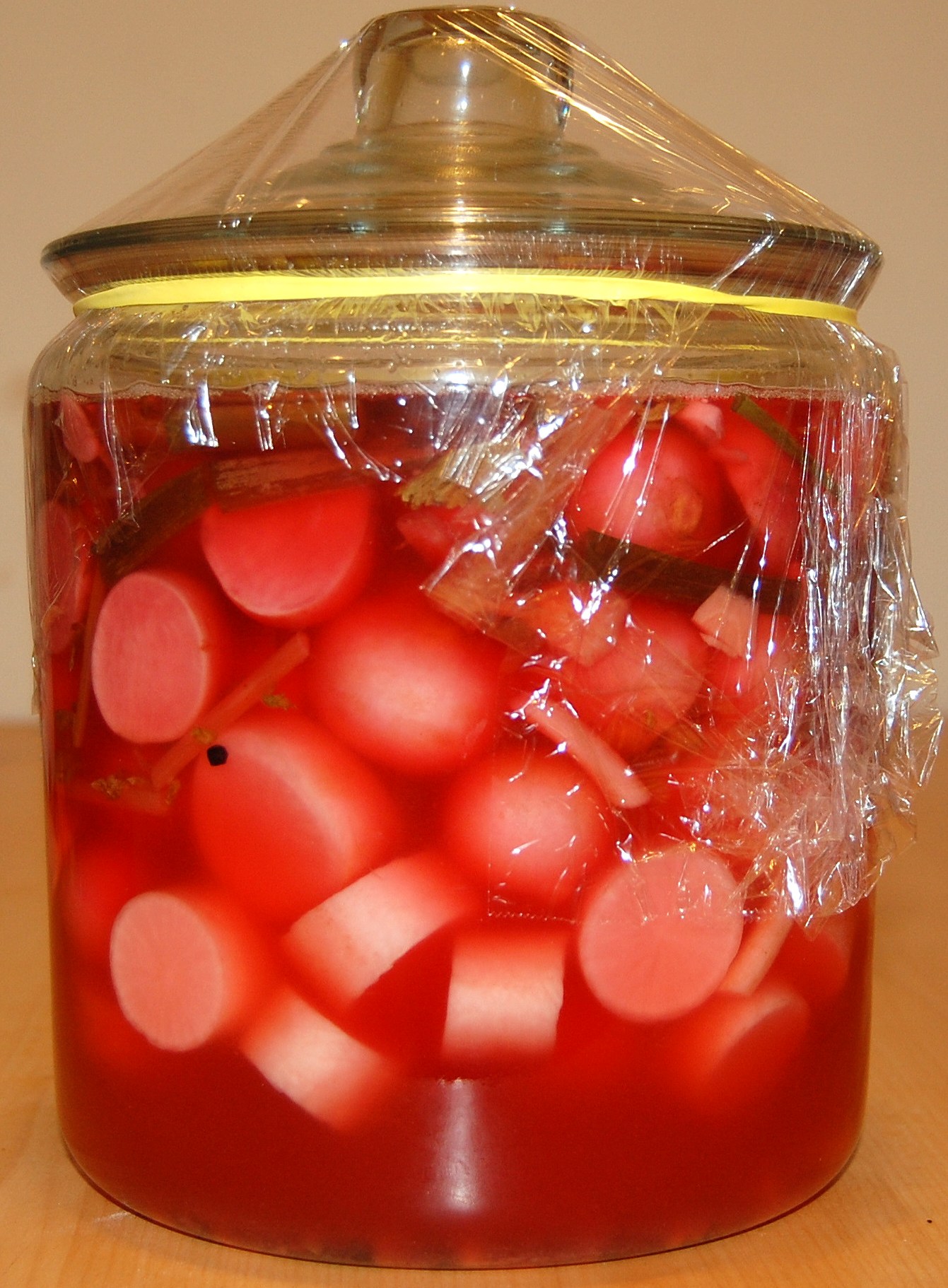
And here it is a week later:

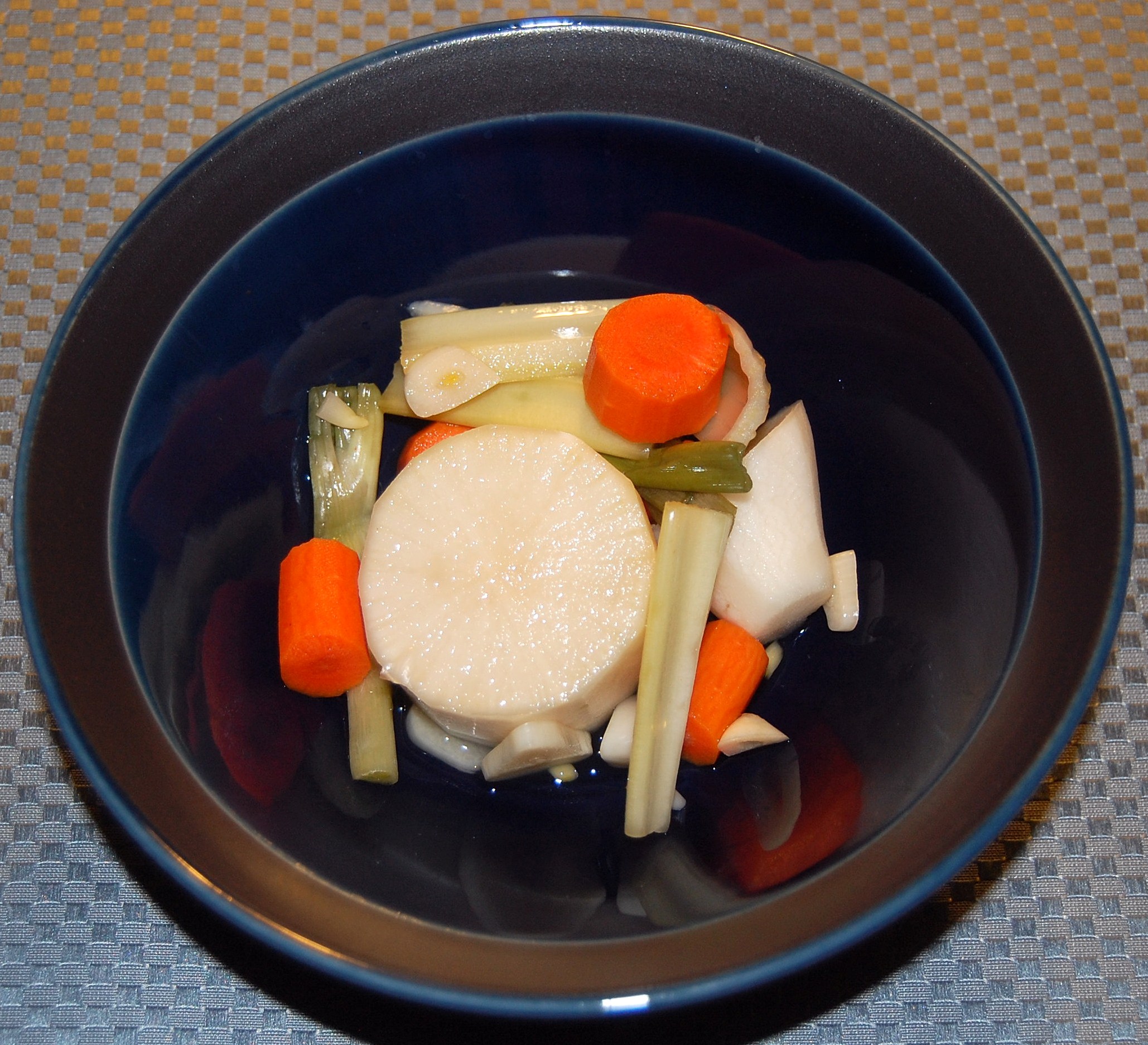
All the red skin pigment has come off the radishes and into the fluid. Here is a bowl of vegetables and fluid:

We’ve been eating two bowls a day, one at dinner and the other at breakfast or lunch.

Other Tips

Try to keep the fermentation jar sterile. We replace the wrap every time we open the container, and keep the lid region dry at all times: if any fluid spills on it as we take vegetables out, we dry the top of the jar with a paper towel. (Bacteria need moisture to thrive.)

If you have concerns about the bacteria on your vegetables, sprinkle salt over them and let them sit for a bit, then rinse the vegetables before dicing them and adding them to the container. This salting will help sterilize the surface a bit.

Conclusion

Even if you don’t like vegetables, you’ll probably like this. Fermented vegetables are surprisingly tasty. Moreover, the fluid is also very tasty. It makes a healthful hydrating beverage, and a great accompaniment to a meal; the acidic fluid helps clear the palate and improve the taste of foods.

We couldn’t be happier with our vegetable fermentation. It makes vegetables taste great, provides us with helpful probiotic flora and lactic acid, and is exceptionally easy to prepare. No cooking necessary!