



Around the Web; Steve Jobs Memorial Edition

Note: I’ve been overwhelmed with work lately and have fallen behind on the comment threads. I will get to comments on the Anti-Cancer and Q&A threads as soon as I can.

Appeal for Help: One of our readers is a dear lady in Queensland, Australia, near Brisbane. She is a chronic disease patient and housebound. She would like to have an assistance dog for emotional support, and would like to have a puppy that she can train. Australian law requires housing units to permit certified support dogs, but her housing complex is denying permission for a puppy that is not yet certified. If any Australian lawyer would be willing to provide her with advice on her legal rights pro bono, please send an email to pauljaminet@perfecthealthdiet.com and I will put you in touch.

[1] Jimmy Moore’s symposium: I’d like to thank Jimmy Moore for organizing his symposium on “safe starches.” It’s a great topic and only Jimmy could have brought together so many interesting people to discuss it.

It might have worked better if I had been able to provide some background to the panel. As it was, too many of the responders were unfamiliar with what we mean by “safe starches” and many may have supposed that our diet was designed for diabetics.

Kurt Harris did yeoman’s work this week, commenting on my post, Jimmy’s, and threads on PaleoHacks. It was great to have someone of like mind taking the time to comment. Thank you, Kurt, Melissa Hartwig, Emily Deans, Praguestepchild, and everyone who wrote supportive comments.

Some humor did come out of the discussions. My favorite was a PaleoHacker consoling Jack Kruse: “It’s just pillar envy, Quilt.”

I expect to post my reply on Tuesday.

[2] Music to read by: Brook Benton and Dinah Washington have what it takes:

[3] Interesting posts this week:  Michael A Smith of Critical MAS tests our ideas about ketogenic fasting and finds that he can eliminate hunger while fasting by eating coconut oil and fermented vegetables.

Sean at PragueStepChild reminds us of some great posts by an outstanding blogger who has gone silent, Robert McLeod, on the subject of macrophages and the role of chronic infections in disease. Start with Sean, but be sure to finish at Robert’s blog.

Chris Masterjohn reports that AGEs come from … ketones!

We know God is jealous, but is He also female? Sex outside of marriage may raise the risk of penile fractures. Via Tom Smith.

Stephan Guyenet continues his series defending the food reward hypothesis of obesity. JS Stanton of Gnolls.org has been doing a closely related series, here’s his Part VI which explains key concepts relating to food reward, and has links to Parts I through V. Part IV was my favorite.

Two economists took their hand at finding the cause of the obesity epidemic. The biggest cause they found? Declines in smoking rates, which explained about 2% of the weight gain since 1979.

Peggy the Primal Parent has had a fascinating experience with gut dysbiosis. Fiber and fructose give her hypoglycemic episodes, but pure glucose doesn’t.

Bruce Charlton notes that scientists tend to develop theories into taboos, so that “using the taboo concept in reasoning triggers nerves and hormones and alters the body state to feel bad.” This may explain the reaction of some low-carb gurus to the word “starch.”

Emily Deans and Melissa McEwen both reviewed Wheat Belly; Melissa emphasizes what’s not in the book.

Don Matesz proposes the unconventional idea that strength training reduces protein requirements.

Jamie Scott, That Paleo Guy, produced the ultimate primer on phytic acid. Chris Kresser recently advised not going nuts on nuts, because of their phytic acid.

Chris Highcock reports that Shift Work at Young Age Is Associated with Elevated Long-Term Cortisol Levels and Body Mass Index. This fits with our theme that proper circadian rhythms are important for many aspects of health including weight regulation.

Frank Hagan of Low Carb Age dissects a study we mentioned last week, that recommended a diet of 1/3 carb 1/3 protein 1/3 fat. Turns out they found that 1/3 carbs is better than high carb, but didn’t have any data to show that lower carb was worse.

Michael Greger, the vegetarian doctor, asks if animal food lovers are missing “vitamin S” – salicylic acid.

Mark Sisson at Mark’s Daily Apple has been holding reader video contests and has a ton – metric ton even – of reader workout and food videos. “Tuna Tataki with Gazpacho” won the prize for best recipe video.

Peter of Hyperlipid blames the Denmark saturated fat tax on Unilever. This story he linked says that Denmark has a low obesity rate – below 10%. Look for that to change now that saturated fats are more expensive.

Via John J. Ray, the sad story of a 25-year-old woman who killed herself with cough medicine. The acetaminophen was destroying her liver, but she thought she had a cold and kept taking more.

At PaleoHacks, a healthy 34 year old had a heart attack. Did his doctors misdiagnose a protozoal infection?

[4] Cute animal photo:

[5] Remembering Steve Jobs:

Steve Jobs passed away Wednesday night. When we got the news, we had just finished a dinner with the Living Paleo in Boston group and Julie Mayfield, author of Paleo Comfort Foods. We stopped at Shou-Ching’s office so that, coincidentally enough, she could finish submitting a pancreatic cancer grant application before a midnight deadline.

A commenter asked if I had anything to say about his health history. No; we don’t know the causes of Jobs’s cancer, and have no reason to assume he wasn’t following the best available health advice. Indeed, he survived pancreatic cancer longer than most.

It is true that Jobs was a close friend of Dean Ornish – one of his last meals was with Dr. Ornish at a Palo Alto sushi restaurant, Jin Sho. After his diagnosis with pancreatic cancer in 2003, he apparently tried to treat his cancer with a vegetarian diet under Dr. Ornish’s direction, but it didn’t go well. He finished his life eating a pescetarian diet.

Jobs leaves a wife and four children. I like this photo of Jobs leaning on his wife Laurene after an exhausting talk:

Jobs was always a bit of a rebel; in the third grade he released snakes into the classroom and exploded bombs. At Apple the early ads celebrated rebelliousness in pursuit of progress:

We’ll remember Jobs as the greatest entrepreneur of his time, a man who did exactly what Apple’s ads said: “push the human race forward.” If you doubt how far the human race has come, watch the 28-year-old Steve Jobs introducing the “insanely great” Macintosh computer:

UPDATE: A modification of the Apple logo, by a student from Hong Kong:

[6] Let’s buy a lemon tree honey: It’s time for civil disobedience:

Several years ago, Bridget Donovan, who has now been dubbed “The Lemon Tree Lady,” purchased a Meyer lemon tree from meyerlemontree.com. A resident of Wisconsin, Donovan purchased the tree legally and in full accordance with all federal and state laws regulating citrus transport, and had lovingly cultivated and cared for her indoor citrus plant for nearly three years.

Then, out of nowhere, Donovan received an unexpected letter from the USDA informing her that government officials were going to come and seize her tree and destroy it — and that she was not going to be compensated for her loss. The letter also threatened that if Donovan was found to be in possession of “regulated citrus” again, she could be fined up to $60,000.

Donovan was shocked, to say the least, as her tree was not a “regulated citrus.” The store from which she purchased it is fully legitimate, and she had done absolutely nothing wrong. But it turns out Donovan and many others who had also purchased similar citrus plants had faced, or were currently facing, the very same threats made against them by the USDA.

Most of those targeted simply surrendered their trees without trying to fight back, Donovan discovered. And while she, herself put up a hefty fight in trying to get honest answers in order to keep her tree, Donovan was eventually forced to surrender it as well. And worst of all, many of those who were told that a replacement tree would be in “compliance” later had those trees confiscated, too.

Why has the USDA been targeting lemon tree owners? The answer is unclear, other than that they are a supposed threat to the citrus industry. And a USDA official admitted to Donovan that the agency has been spying on those suspected of owning lemon trees, and targeting all found to be in possession with threats of fines and raids if they failed to give them up — and the agency has been doing this without a valid warrant.

UPDATE: Apparently the threat is “citrus greening disease.” Hat tip James.

One of the comments: “First they came for the raw cow’s milk and I didn’t speak out, as I prefer raw goat’s milk. Then they came for the vegetable gardens in the front yards and I didn’t speak out, as I have my vegetable garden elsewhere. Then they came for the citrus trees and I didn’t speak out, as I prefer someone else to squeeze them …”

[7] Best comments this week:

Vincent explains the tuber fermentation strategy that helped cure his gut dysbiosis. He followed instructions at wildfermentation.com. Bella, like Vincent, cured her constipation with anti-fungal strategies.

We had great comments on both sides of the food reward issue. The general consensus: Perfect Health Dieters have substantially reduced food cravings and appetite, and can easily ignore most junk food, but there are still some combinations of food that create cravings or addictive eating. Here’s Stabby:

I have been eating the PHD for a while, and it has really reduced any sort of cravings and tendency to mow down, even if the food is really yummy. But indeed, I will down a bag of potato chips in an instant, because it is just that cracktastic, pretty much designed to stimulate me in every possible way.

Erp:

I’ve tried to lose weight by going low carb. The weight losses were successful, but I didn’t stop craving high carb/sugary stuff and would always gradually go back to the bad old ways and gain the weight back.

One year later strictly following the PHD, I lost almost 40 lbs and not only don’t I crave carbs and sugar, I am actually repelled by the smell of a bakery. Yeast and cinnamon are off putting.

Peter:

After approximately six months of PHD I have zero craving for sweets and have easily resisted entire tables groaning with plates of cakes, doughnuts, cookies and so forth. Resisted is the wrong word though – it’s as if all desire for a (formerly craved) substance has left my body. I’m not sure if it’s related, but I have no desire to drink alcohol these days.

Nancy:

I am maintaining my weight loss without cravings or white knuckling and feel great. Thank you! Thank you!

Interestingly, it seems to be the richer, more complex taste combinations that stimulate addictive eating. For Ellen, it’s a dessert made from “rice krisps, coconut flakes, macadamias, rice syrup, coconut oil, ghee, salt and cinnamon”; for Shelley, “trail mix of chopped up 85% dark chocolate, raisens, dry roasted salted macadamia nuts and unsweetened coconut flakes”; for Jaybird, wheat-based cake batter. Ellen writes:

Because I had seen some positive changes in my blood sugar from incrementally increasing my starches (and also from the PHD regimen of supplements especially high dosage of iodine) I got carried away and thought maybe I was getting closer to perfect and I could handle dessert type treats. It has only been two weeks, but I have been creating more and more of them. A bad sign.

Shelley writes:

I have made PHD ice cream, sweetened berry compotes, etc and this doesn’t happen. So far it’s just this one combination of products. strange?!

Fascinating.

[8] Not the weekly video: Cat and mouse:

Via Pål Jåbekk.

[9] Shou-Ching’s Photo-Art:

[10] Weekly video: Robb Wolf was the hero of Discovery Channel’s “I, Caveman.” They have selections from the show online. This one is about their difficulty obtaining potable water:
Perspectives on Low-Carb, I: Dr. Kurt Harris

Last week in An Anti-Cancer Diet (Sep 28, 2011), I recommended that cancer patients eat 400 to 600 carb calories per day, but combine it with a program of daily intermittent fasting plus longer “ketogenic fasts” and periods of ketogenic dieting or low-protein dieting to promote autophagy.

The recommendation to eat some carbohydrates, plus my statement that it was possible for cancer patients to develop a “glucose deficiency” which might promote metastasis and the cancer phenotype, seems to have stirred a bit of a fuss.

In addition to making @zooko sad, it led Jimmy Moore to reach out to a number of gurus to ask their opinion. On Twitter, Jimmy says:

Working on an epic blog post today about @pauljaminet and his “safe starches” concept. Input from numerous #Paleo and #lowcarb peeps.

I’m excited to have this discussion. As Jimmy later tweeted:

Should be fun to hash all this out publicly for ALL of us to understand better about your concepts. Here’s to education.

So far, I have seen responses from Dr. Kurt Harris and Dr. Ron Rosedale. On PaleoHacks, there is an extensive discussion on a thread started by Meredith.

UPDATE: Jimmy’s post is up: Is There Any Such Thing as “Safe Starches” on a Low-Carb Diet?.

I think this discussion is wonderful. With so many people putting effort into this, I have an obligation to respond. I’ll start with Kurt’s perspective today, then Ron Rosedale’s early next week, then whoever else participates in Jimmy’s epic post.

PHD and Archevore: Similar Diets

Kurt and I have essentially identical dietary prescriptions. However, our reasoning sometimes works from different premises. Kurt observes:

My arguments are based more on ethnography and anthropology than some of Paul’s theorizing, but I arrive at pretty much the same place that he does.

An example of a point of agreement is Kurt’s endorsement of glucose-based carbs:

[I] see the human metabolism as a multi-fuel stove, equally capable of burning either glucose or fatty acids at the cellular level depending on the organ, the task and the diet, and equally capable of depending on either animal fats or starches from plants as our dietary fuel source …

We are a highly adaptable species. It is not plausible that carbohydrates as a class of macronutrient are toxic.

I think that if there is no urgency about generating ATP then fatty acid oxidation is slightly preferable to glucose burning. But essentially, I share Kurt’s point of view. Our ancestors must have been well adapted to consuming high-carb diets, and necessity surely thrust such diets upon some of our ancestors. Certainly there’s no reason why consuming starch per se should be toxic.

Kurt and I also agree on which starches are safe:

These starchy plant organs or vegetables are like night and day compared to most cereal grains, particularly wheat. One can eat more than half of calories from these safe starches without the risk of disease from phytates and mineral deficiencies one would have from relying on grains.

White rice is kind of a special case. It lacks the nutrients of root vegetables and starchy fruits like plantain and banana, but is good in reasonable quantities as it is a very benign grain that is easy to digest and gluten free.

We agree that safe starches are a more useful part of the diet than fruits and vegetables:

[E]ating starchy plants is more important for nutrition than eating colorful leafy greens …

I view most non-starchy fruit with indifference. In reasonable quantities it is fine but it won’t save your life either. I like citrus now and then myself, especially grapefruit. But better to rely on starchy vegetables for carbohydrate intake than fruit.

We agree on the optimal amount of carbs to eat:

I personally eat around 30% carbohydrate now and have not gained an ounce from when I ate 10-15% (and I have eaten as high as 40% for over a year also with zero fat gain) If anything I think even wider ranges of carbohydrate intake are healthy.

One can probably eat well over 50% of calories from starchy plant organs as long as the animal foods you eat are of high quality and micronutrient content.

I think being slightly low-carb, in the sense of eating slightly below the glucose share of energy utilization which I estimate at about 30% of energy, is optimal. However, I think we are metabolically flexible enough that a very broad range of carb intake may be nearly as good. I would consider 10% a minimal but healthy intake of carbs, and 50% a higher-than-optimal, but still healthy, intake so long as the carbs are “safe” and the diet is nourishing.

Differing Origins of Our Ideas

Kurt mentions that his ideas are more derived from ethnography and anthropology than mine.

I give great weight to evolutionary selection as an indicator of the optimal diet, and am friendly to ethnographic and anthropological arguments. If I don’t give tremendous weight to such arguments, it’s because I think some other lines of argument give us finer evidence about the optimal diet.

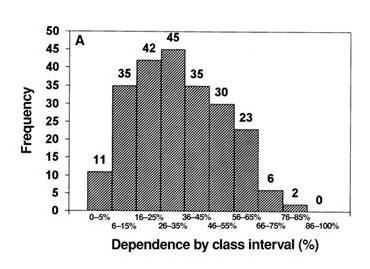
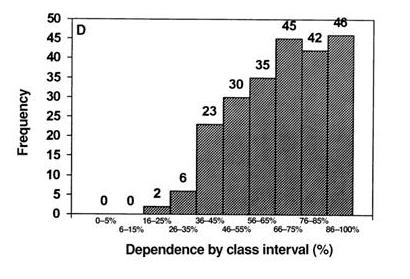
Here, from a paper by Loren Cordain et al [1], are representations of hunter-gatherer diets:

The top graph shows plant food consumption by calories, the bottom graph animal+fish consumption by calories. The numbers are how many of 229 hunter-gatherer societies ate in that range. Typically, hunter-gatherers got 30% of calories from plant foods and 70% of calories from animal foods.

I think the Cordain et al data supports my argument that obtaining 20% to 30% of calories from carbs is probably optimal. However, it’s hardly decisive. There is considerable variability, mainly in response to food availability in the local environment. Inuits, who had few edible plants available, ate hardly any plant foods; tropical tribes with ready access to starchy plants, fruits, and fatty nuts sometimes obtained a majority of calories from plants.

Hunter-gatherer diets, therefore, are a compromise between the diet that is healthy and the diet that is easy to obtain. A skeptic could argue that hunter-gatherers routinely ate a flawed diet because some type of food was routinely easier to obtain than others, and thus systematically biased the diet.

I believe evidence from breast milk is both more precise about what diet is optimal, and much harder for skeptics to refute. Breast milk composition is nearly the same in all humans worldwide, and it has been definitely selected to provide optimal nutrition to infants.

So breast milk, I think, gives us a much clearer indication of the optimal human diet than hunter-gatherer diets. It is an evolutionary indicator of the optimal diet, but it is not ethnographic or anthropological.

There are other evolutionary indicators of the optimal diet — mammalian diets, for instance, and the evolutionary imperative to function well during a famine — which, as readers of our book, we also use to determine the Perfect Health Diet. So, while I think ethnographic and anthropological findings give us important clues to the optimal diet, I think there are plenty of other sources of evidence to which we should give weight. Fortunately, all of these sources of insight seem to be consistent in supporting low-carb animal-food-rich diets — a result which is gratifying and should give us confidence.

Food Reward and Obesity

Kurt seems to have been more persuaded than I am by Stephan Guyenet’s food reward hypothesis (which is, of course, not of Stephan’s creation – it is the dominant perspective in the community of academic obesity researchers). Kurt writes:

Low carb plans have helped people lose fat by reducing food reward from white flour and excess sugar and maybe linoleic acid. This is by accident as it happens that most of the “carbs” in our diet are coming in the form of manufactured and processed items that are simply not real food. Low carb does not work for most people via effects on blood sugar or insulin “locking away” fat. Insulin is necessary to store fat, but is not the main hormone regulating fat storage. That would be leptin.

I agree with Kurt in rejecting what he calls the carbohydrate-insulin hypothesis of obesity, but I am uneasy at the confident assertion that “reducing food reward” is the mechanism by which excluding flour, sugar, and omega-6 fats helps people lose weight.

Let me say first that there is no doubt that the brain has a food reward system that regulates food intake, and also an energy homeostasis system that regulates activity and thermogenesis, and that these systems are coupled. The brain is the coordinating organ of metabolic activity. And the brain’s food reward and energy homeostasis systems are altered in obesity.

But the direction of causality is unclear. Is “reducing food reward” the best strategy against obesity, or is “maximizing food reward with nourishing food” the best strategy?

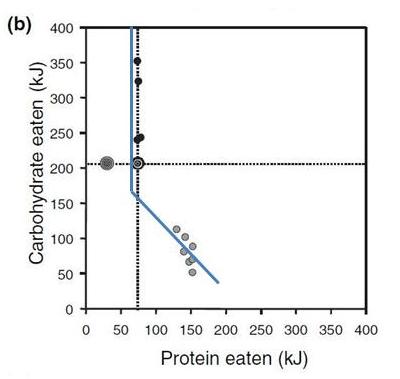
Some data may illustrate what I mean. Here’s an investigation of how the food reward system in rats controls appetite to regulate protein and carbohydrate consumption. The data is from multiple studies and was collected by Simpson and Raubenheimer [2].

Rats were given a chow consisting of protein and carbohydrate in varying proportions. The figure below shows how much of the protein-carb chow they ate.

I’ve drawn a kinked blue line to show what a “Perfect Health Diet” analysis would consider optimal. Protein needs consist of a fixed amount of protein, around 70 kJ, to meet structural needs, plus enough protein to make up any dietary glucose deficiency via gluconeogenesis. Glucose is preferable to protein as a fuel. Glucose needs in rats are in the vicinity of 180 kJ. When dietary glucose intake falls short of 180 kJ, rats eat extra protein; they seek to make carb+protein intake equal to 250 kJ so they can meet both their protein and carb needs, with gluconeogenesis translating the dietary protein supply into the body’s glucose utilization as necessary.

As the data shows, the food reward system in rats seems to organize food intake to precisely match this:

  • When the chow is low-carb, the food reward system directs rats to eat until carb+protein intake is precisely 250 kJ – then they stop eating.
  • When the chow is high-carb, the food reward system directs rats to eat until protein intake is precisely 70 kJ – then they stop eating.

I interpret this to show that the food reward system evolved to optimize our health, and in healthy animals does an excellent job of getting us to eat in a way that achieves optimal health.

Note that if the chow is high-carb, rats eat more total calories. Is this because their diet has “high food reward”? No, it is because it is malnourishing. It is protein deficient.

Now, a diet of wheat, sugar, and omega-6 fats is malnourishing. There are any number of nutrients it is deficient in. So the food reward system ought to persuade people to eat more until they have obtained a sufficiency of all important nutrients, and rely on the energy homestasis system to dispose of the excess calories in one way or another. But if the energy homeostasis system fails to achieve this, then obesity may be the result.

If this picture is correct, then what is the solution to obesity? Is it to eat a diet that is bland and low in food reward? I don’t think so; the food reward system evolved to optimize our health. Rather the diet that defeats obesity will be one that is efficiently nourishing and maximally satisfies the food reward system at the minimum possible caloric intake.

A good test of these two strategies is the severely calorie (and nutrient) restricted diet. It would be hard to conceive of a diet lower in food reward than one with no food at all. Yet severe calorie restriction produces temporary weight loss followed by regain – often to even higher weights. This “yo-yo dieting” cycle may be repeated many times. I think this proves that at least some methods of “reducing food reward” – the malnourishing ones – are obesity-inducing.

So I would phrase the goal of an anti-obesity diet as achieving satisfaction of the food reward system, rather than as reducing food reward; and would say that wheat, sugar, and seed oils are obesogenic because they fail to provide genuine food reward, and thus compel the acquisition of additional calories.

Conclusion

Jimmy Moore is friends with the smartest people in the low-carb movement, so this discussion is sure to be interesting. I’m grateful that he’s persuaded people to comment on Shou-Ching’s and my ideas, and I’m eager to hear what Jimmy’s experts have to say.

One thing I’m sure of, the discussion will help us understand the many open issues in low-carb science. It should be a lot of fun!

References

[1] Cordain L et al. Plant-animal subsistence ratios and macronutrient energy estimations in worldwide hunter-gatherer diets. Am J Clin Nutr 2000 Mar;71(3):682-92. http://pmid.us/10702160.

[2] Simpson SJ, Raubenheimer D. Obesity: the protein leverage hypothesis. Obes Rev. 2005 May;6(2):133-42. http://pmid.us/15836464.

Bone Broth Revisited; and Pumpkin Soup

We’d like to thank Shilpi and Amit Mehta for hosting the potluck dinner last night. My talk was on “Common Pitfalls of Paleo,” and it was a pleasure to meet so many Paleo enthusiasts, including people we knew from PaleoHacks, email, comments, and Facebook.

We brought pumpkin soup to the potluck, and that will be our food post this week. But we’ve had some questions about bone broths, so let’s revisit that first.

Making a Tasty Broth

Earlier, we discussed making a broth from ox feet (Ox Feet Broth, Miso Soup, and Other Soups, Jan 2, 2011). The advantage of feet (ox feet, chicken feet) or tails (ox tail) is that they have a lot of connective tissue, so they make a gelatinous broth full of nourishing collagen.

However, you can make a good broth from any bones, and it’s possible to find marrow bones that also have some connective tissue. With longer cooking, you can extract collagen and minerals from the bone itself, and get a good broth from these larger bones.

We’ve found, on limited data so far, that bones from grass-fed animals from local farms seem to produce a tastier broth than supermarket bones. I’d be curious to hear if others have had the same experience.

A few other tricks can help make a tasty broth. One tactic that seems to work is to discard and replace the cooking water at an early stage.

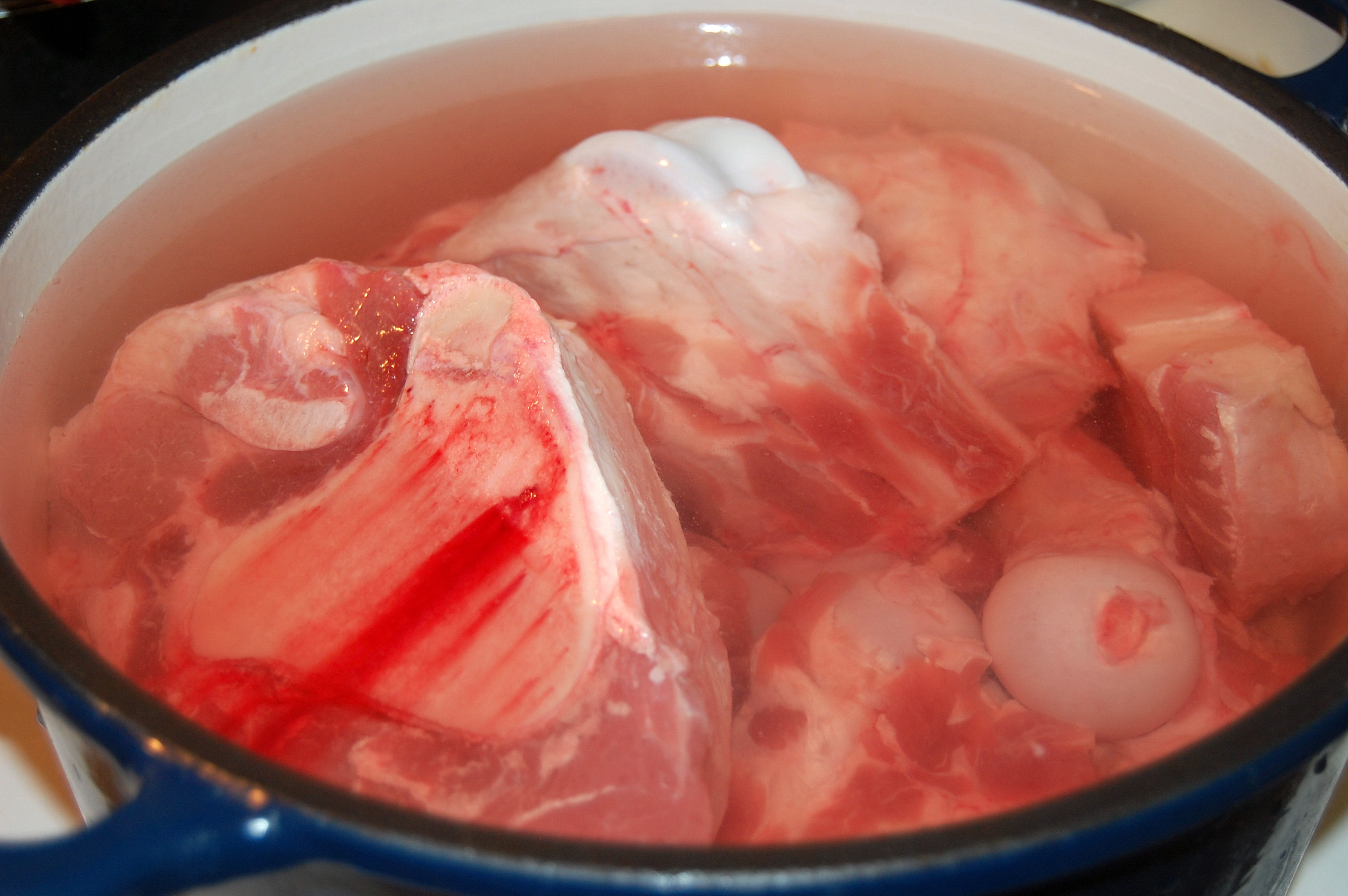
Here’s what we do. In this case, we started with a mix of beef and pork bones:

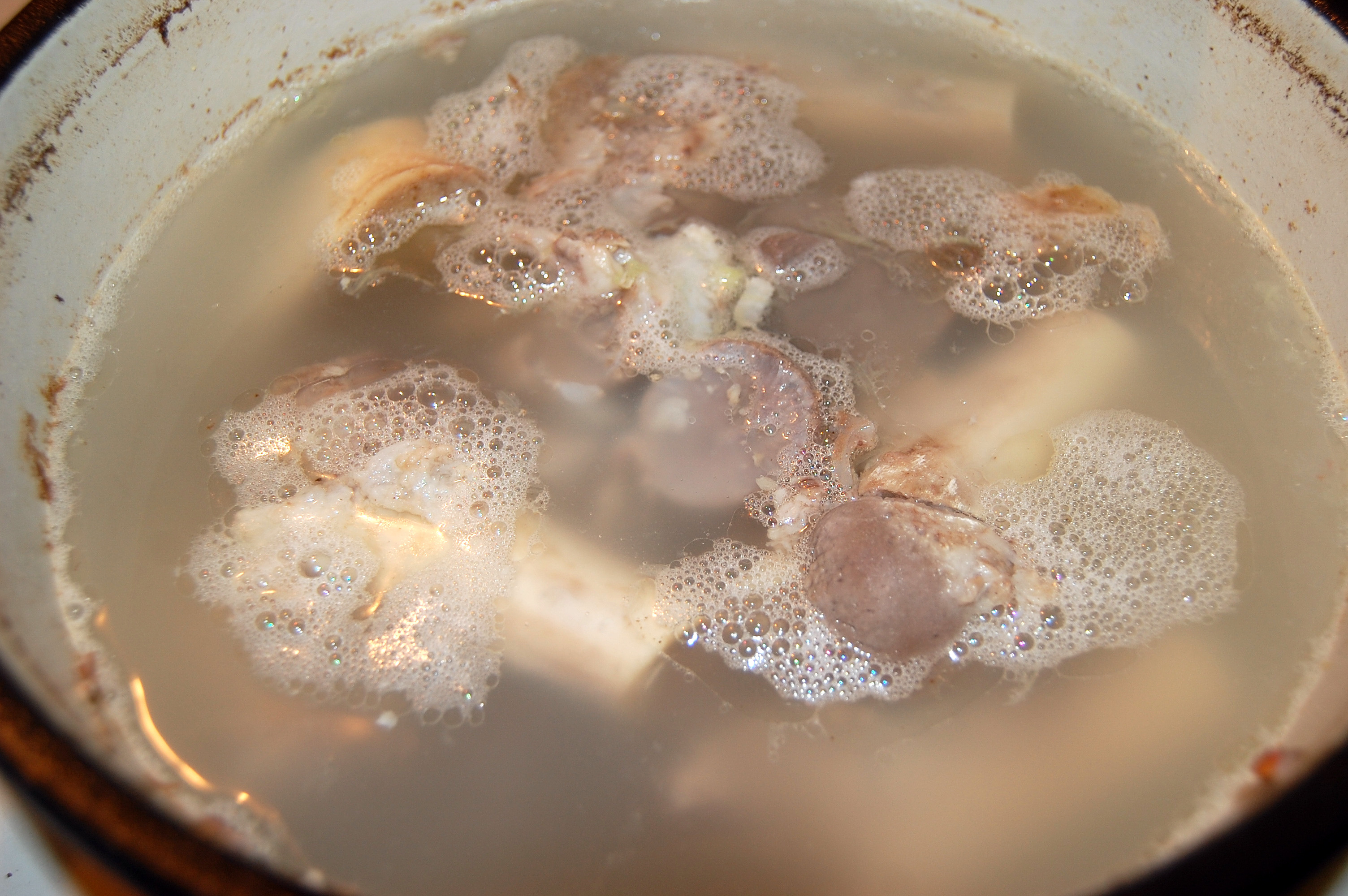
As you can see some blood comes out of the bones, especially the pork bones, almost immediately. This may be responsible for the poor taste some experience.

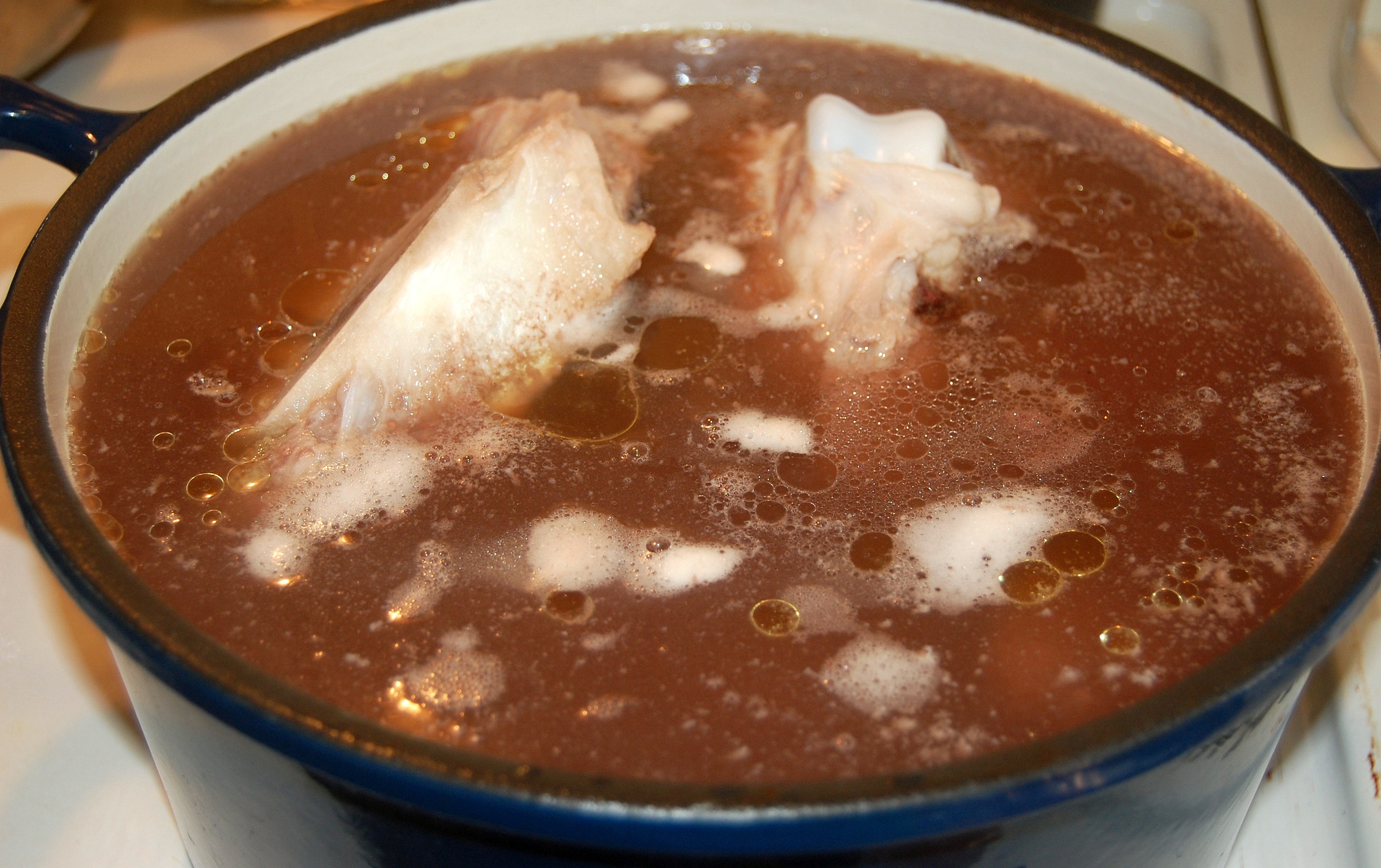
We put the heat on very low and let the water warm up gradually. Before it reaches a boil, after an hour or less, it looks like this:

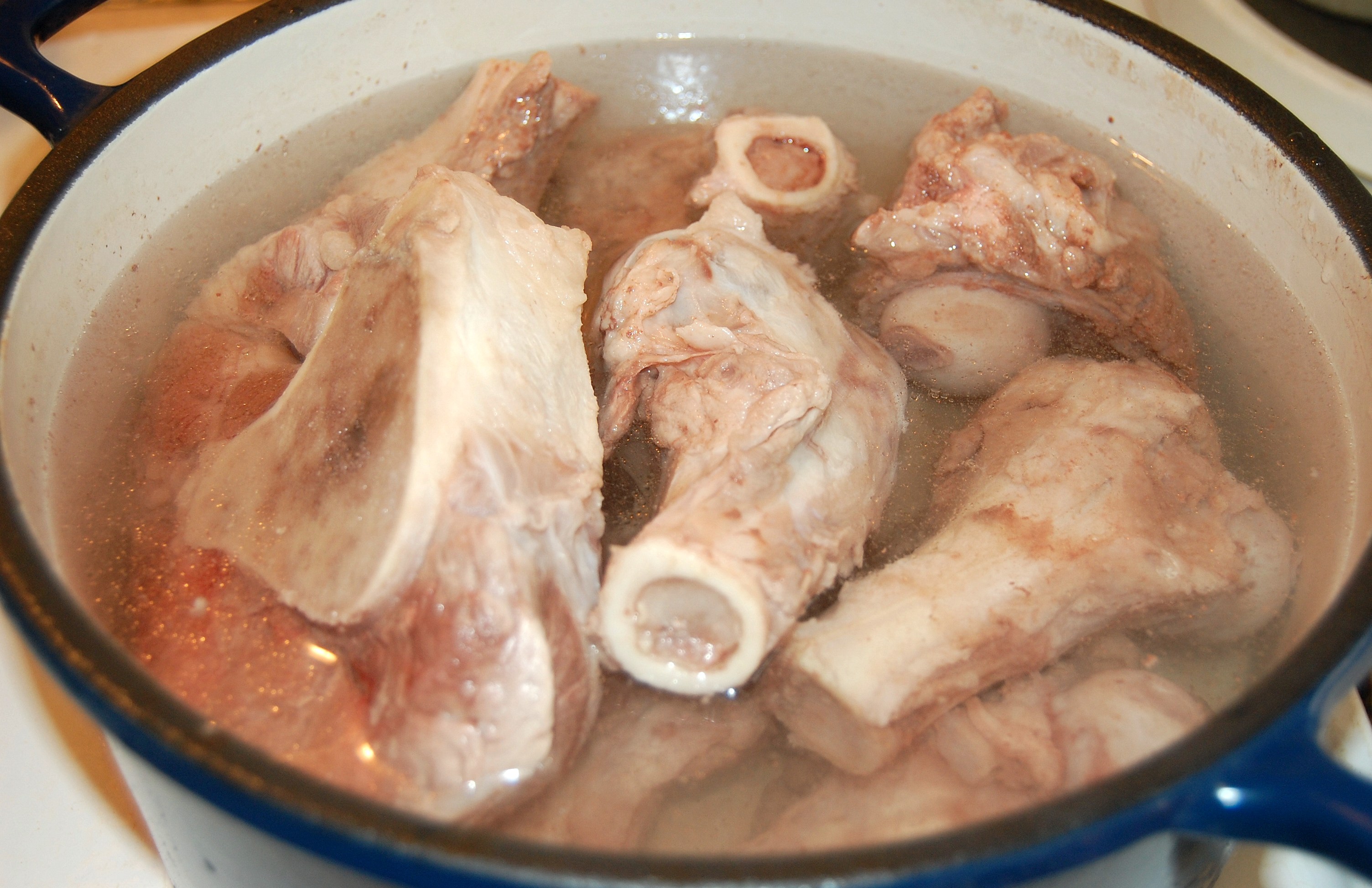
At this point we drain and discard the liquid, adding new water. It now looks like:

You can see the marrow inside the pork bones, which will fall out before we’re done, and the ligaments and tendons in the joints, which will produce a nourishing gelatin. Bits of meat and fat will also be released.

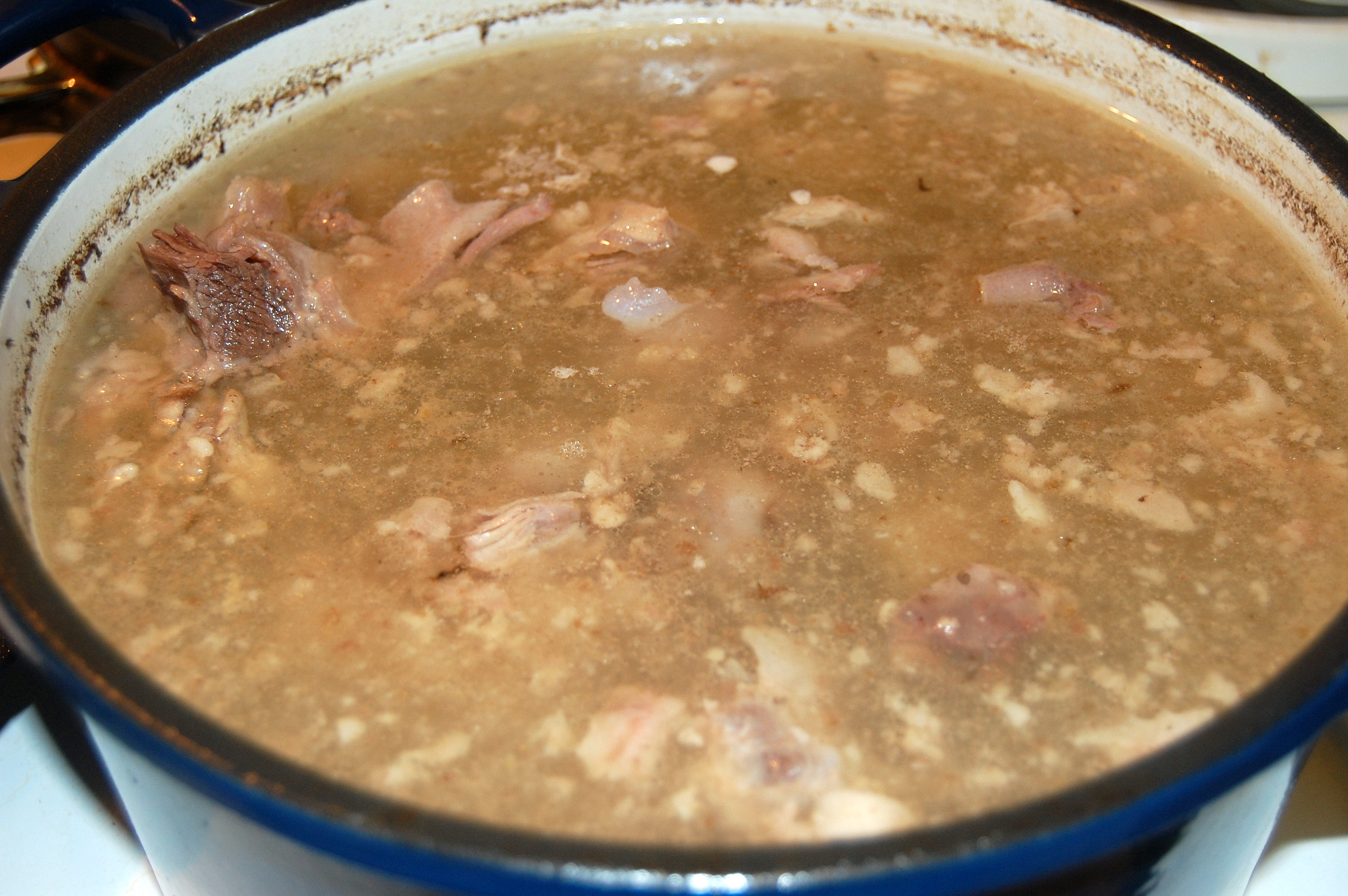
After some hours of cooking, all the meat and fat and most of the marrow and connective tissue will have fallen off the bones. It will look something like this:

At this point you can pour out the broth into a container and use this fatty, meaty broth for rich soups. Seaweed, vegetables like tomatoes and onions, and thinly sliced beef, tendon, or pork bellies go well with this broth. We often use it for Pho (Vietnamese Noodle Soup) (Feb 27, 2011).

Add water and acid and continue cooking. This second round of broth will mainly contain minerals and some collagen, and will need longer cooking.

In the second and later rounds of cooking, we add an acid to help extract minerals from the bones and expose the collagen matrix. Lime juice, lemon juice, and vinegar all work well. We especially like the juice of a lime, and rice vinegar, which gives a slightly sweet taste; others seem to like apple cider vinegar, which is more acidic.

Here are our beef and pork bones early in the process:

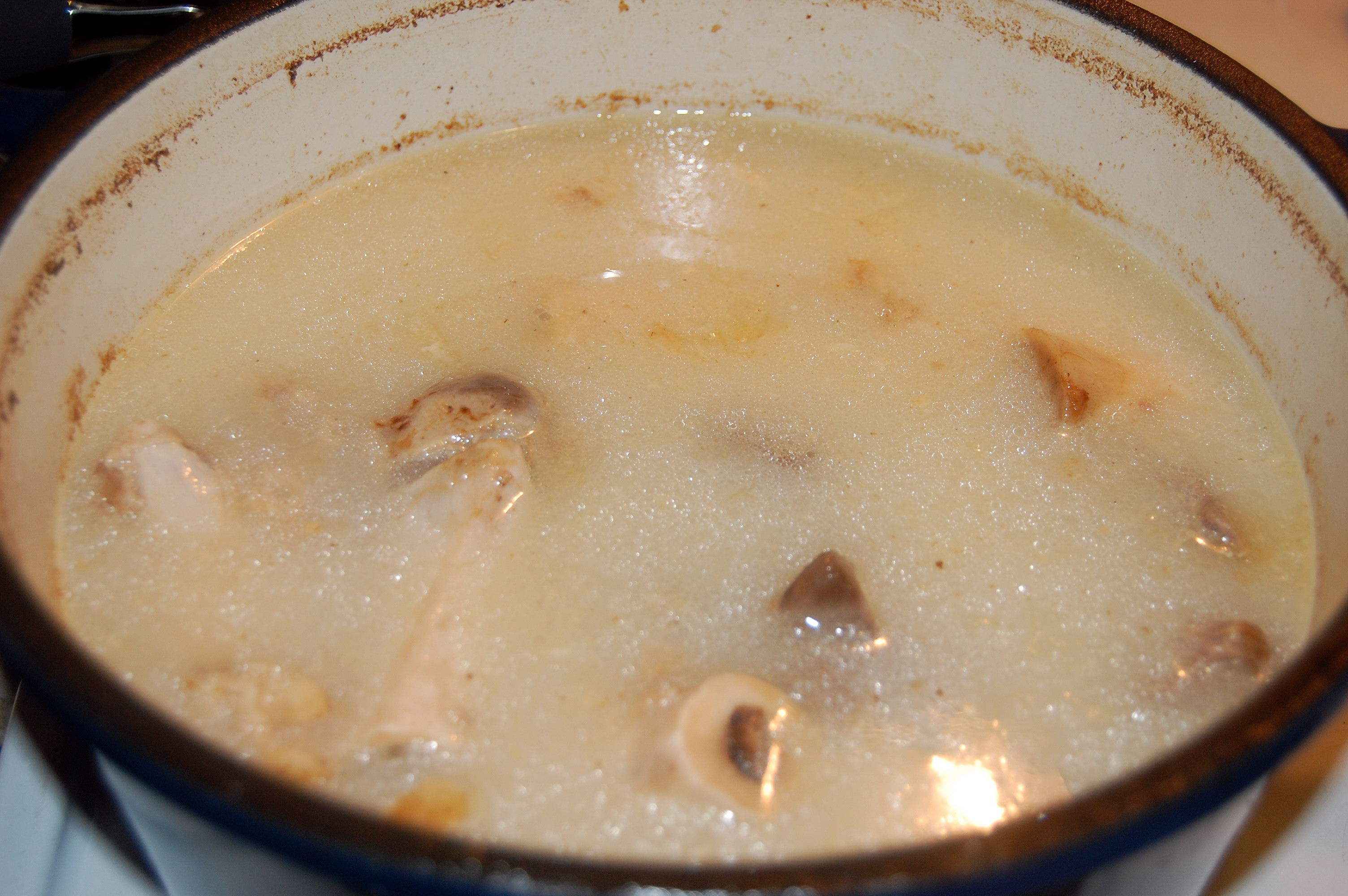
And here they are later:

The bones will be obviously softening by this point, as you can tell by poking them with the tine of a fork.

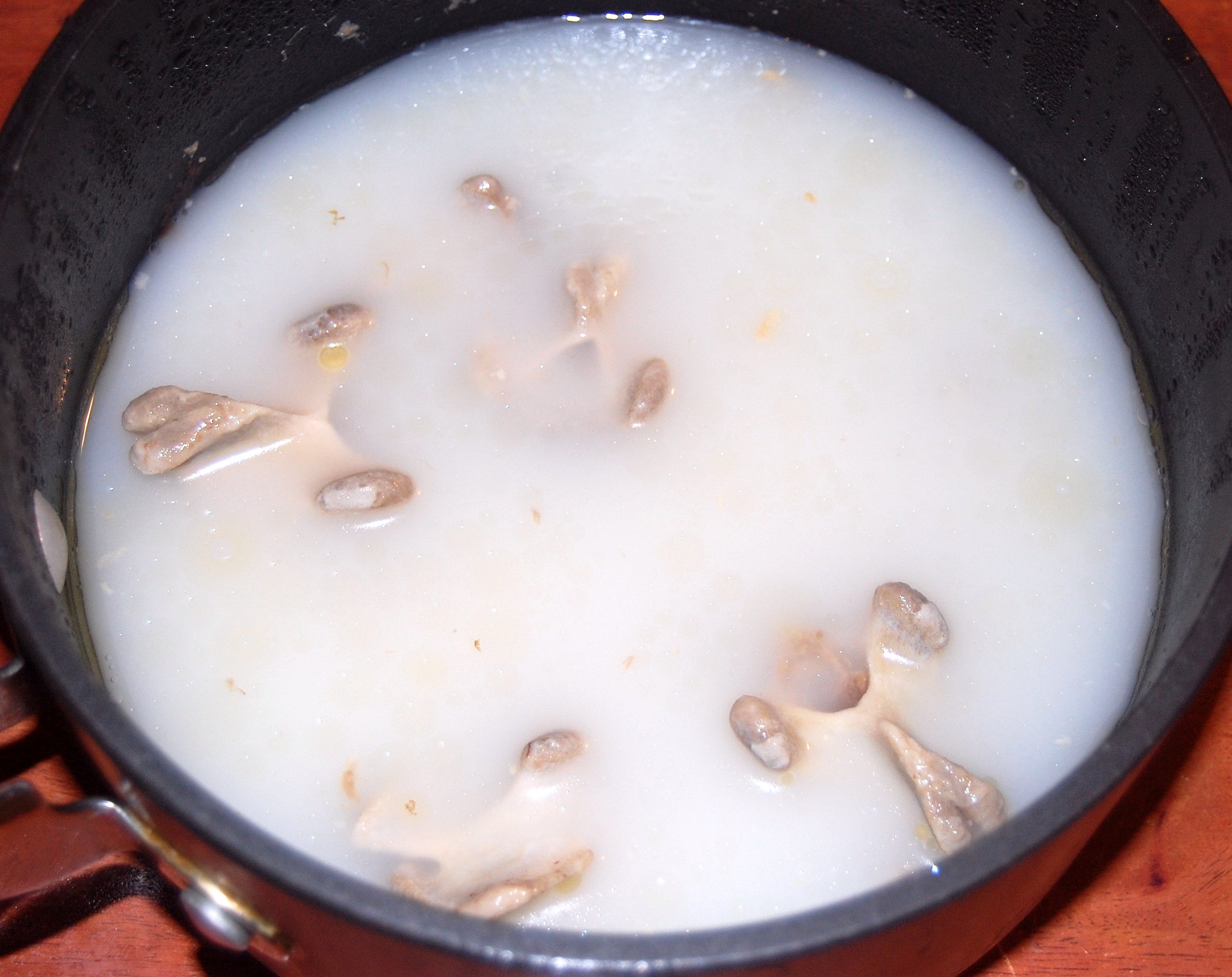
If you wish, you can once again collect the broth, add new water and cook again. Every successive broth will be lighter. In the third round, with long enough cooking, the broth becomes white, like this:

I have heard that in earlier times, when food was costly but fuel cheap, that bones would get cooked until all the nutrients had been extracted – for as long as a month.

Pumpkin Soup

Pumpkins are abundant in New England in October, and we love pumpkin soup.

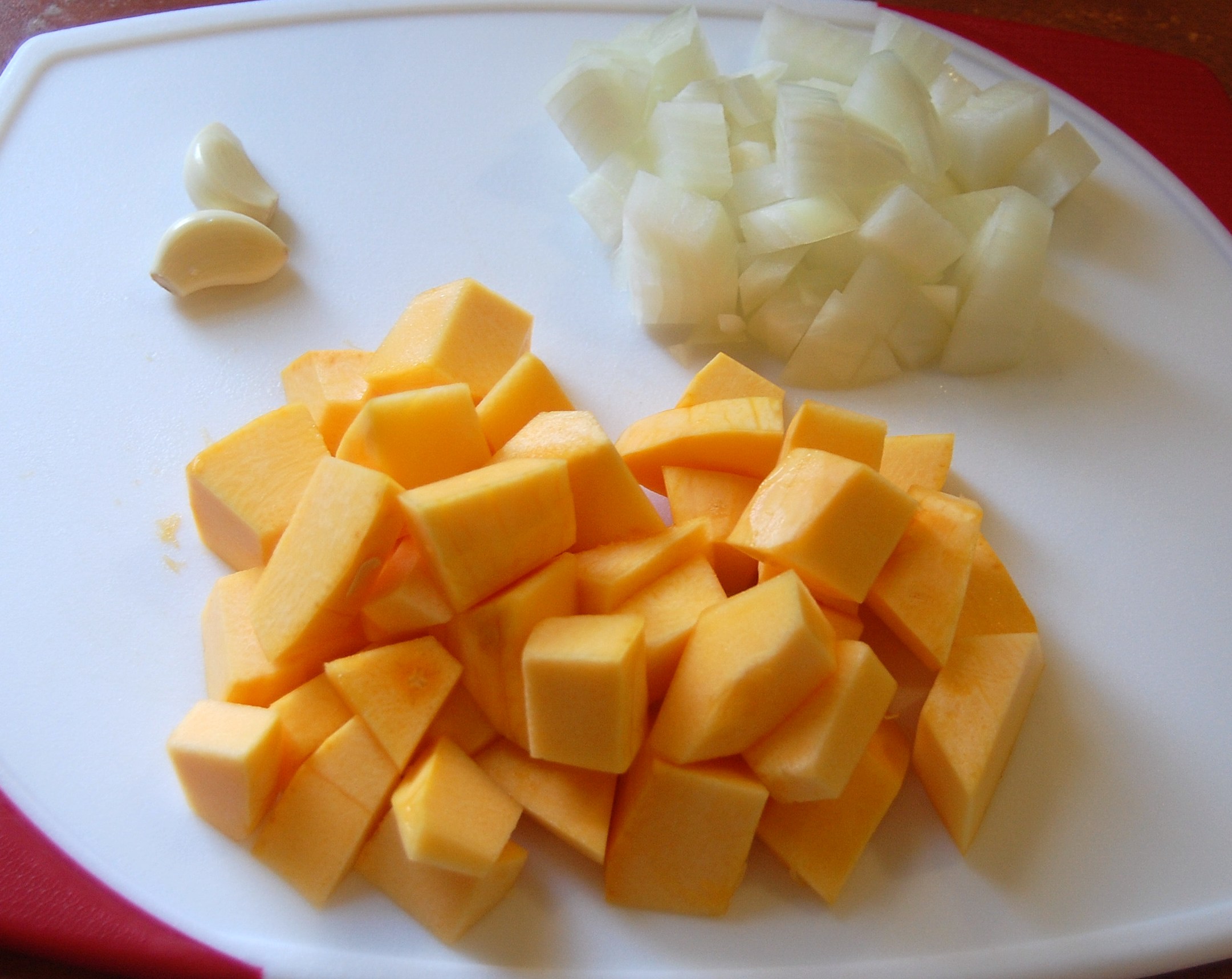
Here are the ingredients – garlic, onion, and pumpkin:

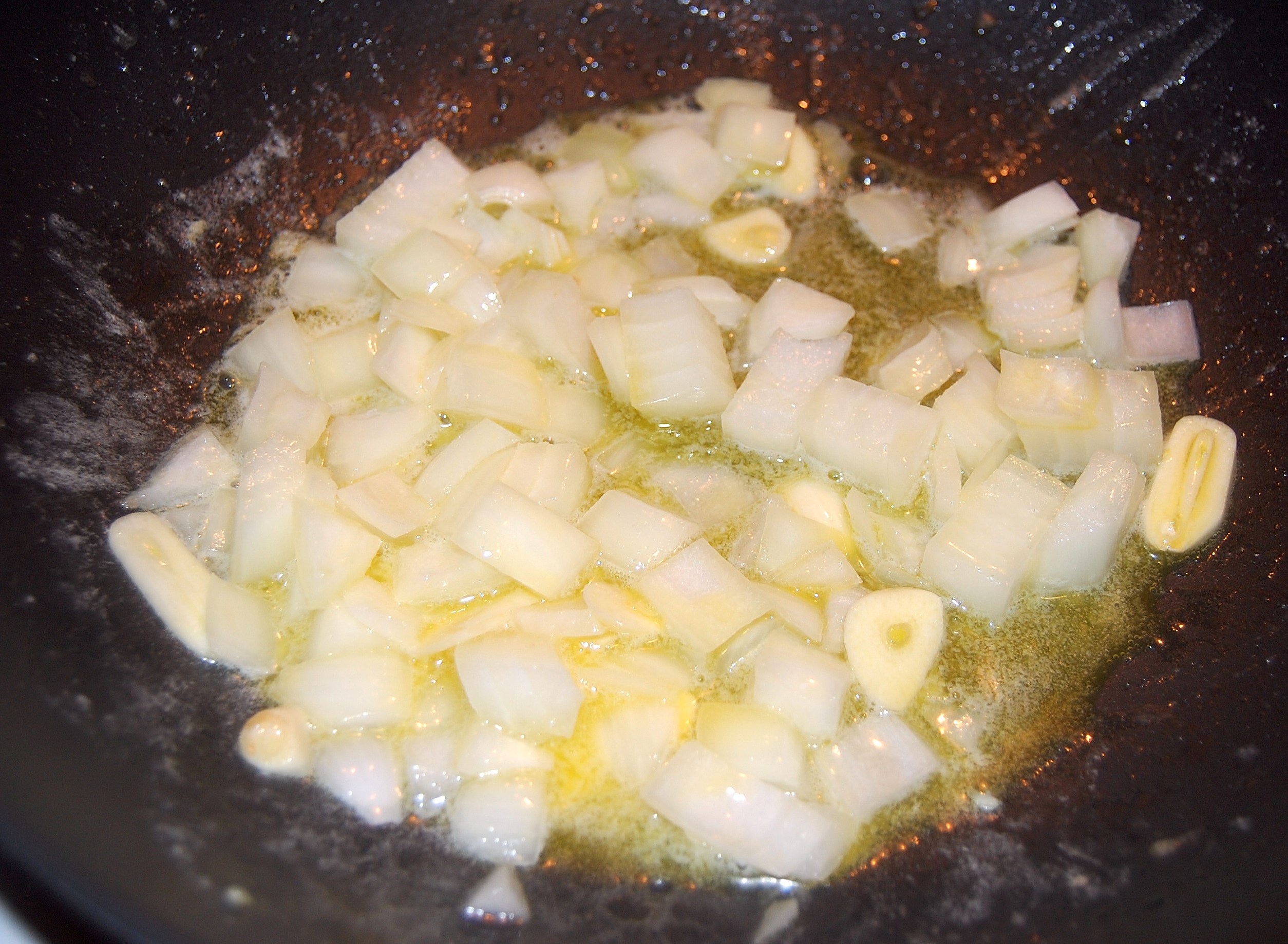
On very low heat, gently cook the garlic and onion in 3 tbsp butter:

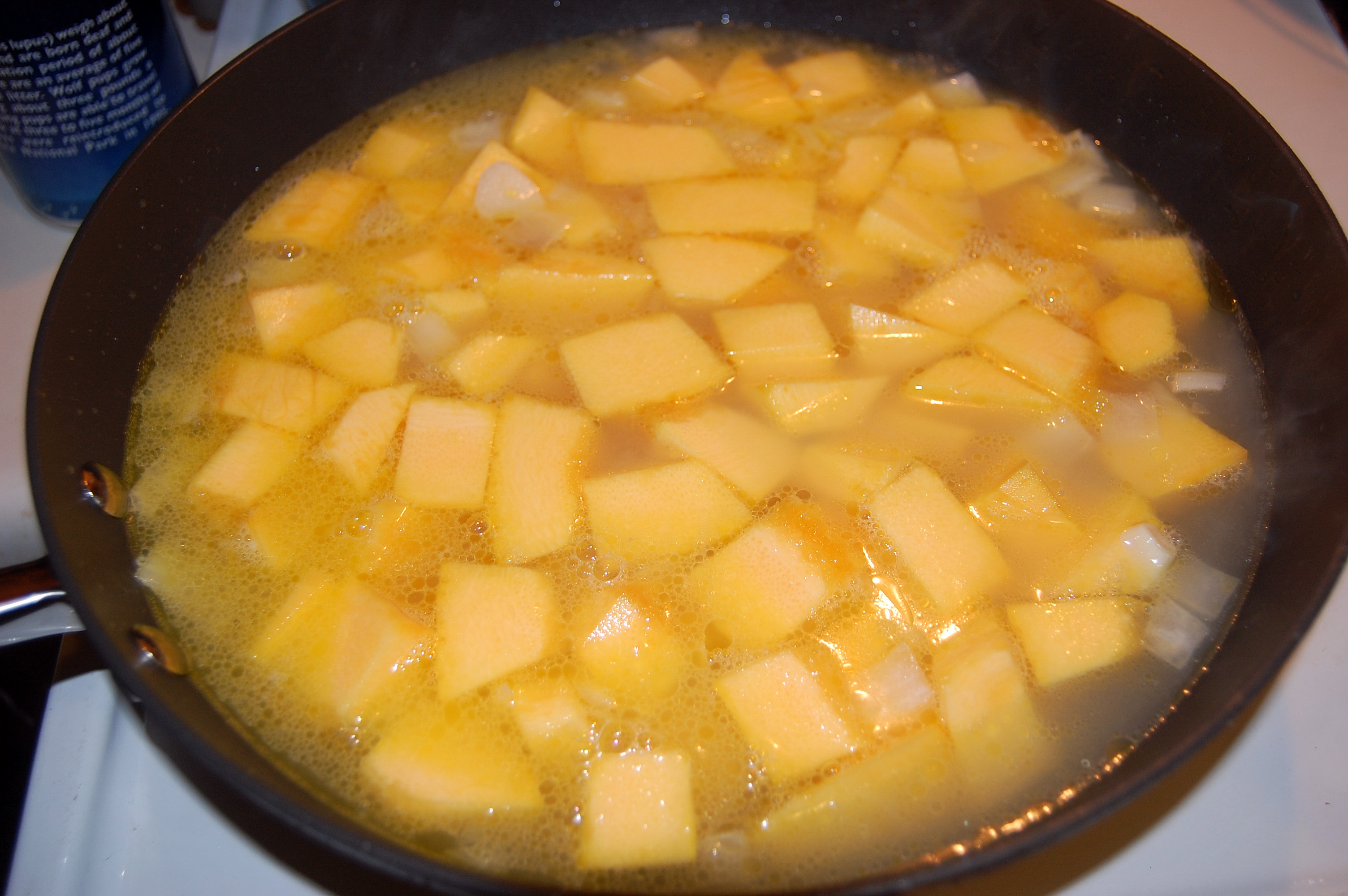
Then add the diced pumpkin and enough bone broth to cover:

Bring to a simmer but don’t boil. When the pumpkin is cooked, after about 20 minutes, use a hand blender to puree the pumpkin-onion-broth mixture in the pot. It will look like this:
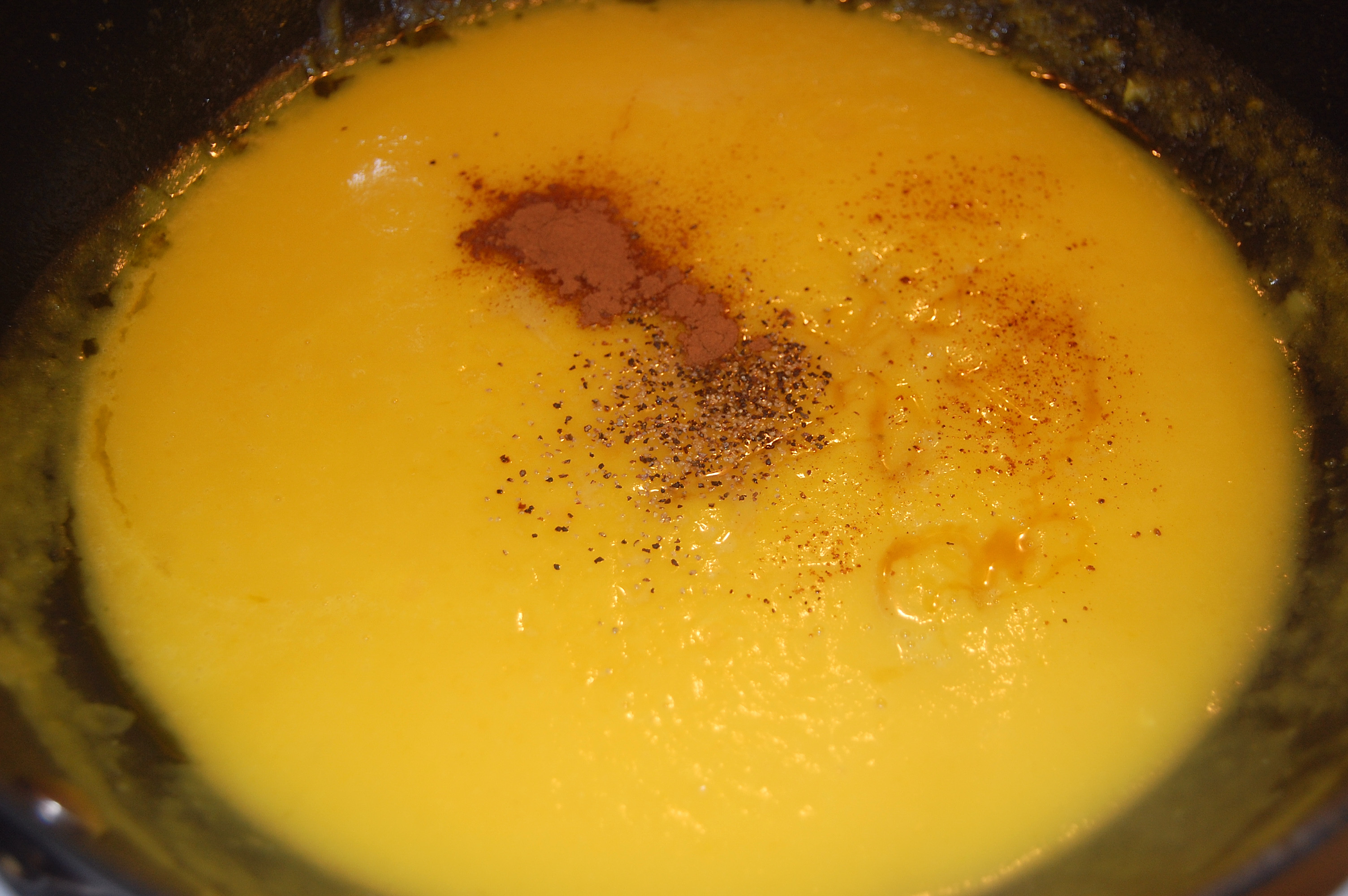
Add salt, pepper, cinnamon, and nutmeg to taste, and 1 tbsp rice syrup for a touch of sweetness. Add curry, or other spices, if you like a more flavorful soup. Serve hot, adding a dollop of sour cream if you like a richer, fattier taste:

A delicious autumn appetizer! It can even serve as a meal by adding meat and vegetables to the soup.

Around the Web; Curing Constipation Edition

Shou-Ching and I will be speaking tomorrow to the Living Paleo in Boston group, at a potluck dinner hosted by Amit and Shilpi Mehta, on the topic of “Common Pitfalls of Paleo.” We’re excited to meet everyone. Kamal Patel has already promised a question about “the philosophical and emotional aspects of glycogen.”

Also, Paul will be appearing on Patrick Timpone’s The Morning Show on Thursday, Oct 13, at 11 am EST/10 am CST.

[1] Book Reviews and Cures: Several mentions of our book came to our attention this week:

Larry Carter of Dan’s Plan included us in his “Five Slightly Different Flavors of the Paleo Diet.” (The other flavors: Cordain, Wolf, de Vany, and Sisson.)

Steve Omohundro called our book, “My favorite reference … I’ve read it twice and am still learning lots from it.”

Sean at Prague Stepchild offered kind words:

What’s cool about this book is that it is sort of the health aficionado’s health book, yet at the same time extremely accessible. So accessible that my wife has pretty much been monopolizing it since it arrived more than a month ago. This is especially notable because my wife’s native language is Czech, and while her English is excellent, she’s not crazy about reading books in English. In fact she just plain doesn’t do it.

Jennifer Fulwiler of Conversion Diaries gives the best review ever:

I love the subject of nutrition. My fascination with it began when I was 18, and for the past 16 years I’ve read tons of books on the subject, from pop diet paperbacks to heavy textbooks…. I have found a book that is head and shoulders above everything else I’ve ever read on the subject … It’s called The Perfect Health Diet, and it is awesome. (To give you an idea how good it is, I stayed up late reading it in the hospital the night after the baby was born because I couldn’t put it down!)

There you go: We keep moms awake even better than their newborns!

Gratifyingly, a couple of cures were reported on the constipation thread. First, Anna:

I’m so grateful to you for this information. I’ve been suffering for weeks but I took the recommended supplements and did nothing else — and experienced relief the second day. In a world full of useless and confusing information, having a good source is such a godsend. Thank you for all that you do.

Then, Vincent reported his constipation is almost cured with our anti-fungal diet:

After a few weeks of little improvement, I experienced my first normal bowel movement in a long time (years?).  After more changes to my regimen, I now have normal stools on most days.  The greatest improvements coincided with the times I added fermented tubers and (later) ThreeLac.  I also think that cranberries, turmeric, increased amounts of safe starches, the Now Foods anti-fungal, and removal of my beloved coconut oil were all quite helpful.  My victory is not complete — I still get diarrhea fairly easily and the occasional hard stool — but the improvement is incredible.

Many thanks, Paul, for helping me fix a problem that has plagued me for a long time.  I wish you, Shou-Ching, and all your readers the great health and happiness you deserve.

Sincerely,

Vincent

Our sincere thanks to everyone who reports results. It’s such a pleasure to hear from you!

[2] My Research for Kamal’s Question:

Via Andrew Day on Facebook.

[3] Interesting Items This Week: Kurt Harris is one of the most respected authorities in the Paleo movement, and Jimmy Moore asked his thoughts on our advice to eat a certain amount of “safe starches.” Kurt’s discussion is excellent. His diet advice is essentially identical to ours, although the reasoning by which we reach our conclusions differs in a few respects.

Over at Dallas and Melissa Hartwig’s blog, a great “Whole9 success story”: How Jessica O cured trichotillomania and seizures with a Paleo diet.

Beth Mazur explains why she’s the Weight Maven (“A Maven is someone who wants to solve other people’s problems, generally by solving his own.”) and links to a cool cartoon showing the significance of a Ph.D.

Robb Wolf backs ever so slightly away from low-carb: “In years gone by I’d have staunchly recommended a low carb paleo diet as THE best intervention but I can’t in good faith recommend that anymore.”

Perhaps he was influenced by this study. Bix at Fanatic Cook passes on results from a large population-based study (27,140 participants) in Sweden:

  • A high-protein intake was associated with an increased risk for type 2 diabetes.
  • Replacing protein with carbohydrate … was associated with a lower risk for type 2 diabetes.

Stephan Guyenet is starting a series on the mechanisms underlying food reward. I think this is much needed, and I’m in the group he’s targeting (“skeptics” and “scientifically inclined people who want mechanism”). (Note: I’m not skeptical that food reward exists, or that addictive-like wanting is an important factor in many cases of obesity. I’m skeptical over the origins of addictive-like wanting, and over the universality and importance of this factor – whether it is the cause, or a symptom; whether bland food is curative, or merely a means of symptomatic relief. I’m wondering whether there will be compliance to an unrewarding diet.)

Peter at Hyperlipid conducts a trial to prove that chocolate is more rewarding than bananas. On another thread at Peter’s, Jenny Ruhl points out an interesting fact about obesity and diabetes:

The number of people with diabetes in the overall population stays fairly close to 9% but the number of obese and insulin resistant people keeps growing to where it is somewhere between 1/2 and 2/3rds of all older adults.

So whatever is causing the obesity epidemic, it doesn’t promote diabetes.

Stan the Heretic gives us a study from Sweden claiming that gene expression is optimized on a 1/3 carb 1/3 fat 1/3 protein diet:

“Both low-carb and high-carb diets are wrong,” says Johansen. “But a low-carb diet is closer to the right diet. A healthy diet shouldn’t be made up of more than one-third carbohydrates (up to 40 per cent of calories) in each meal, otherwise we stimulate our genes to initiate the activity that creates inflammation in the body.”

Dr. Briffa discusses a study showing that B12 deficiency is linked with brain shrinkage in later life.

Chris Masterjohn shows evidence that dietary protein protects against cancer by raising glutathione levels.

Via Julianne Taylor on Twitter, CoQ10 maintains fertility in older women.

ScienceDaily links to a new Nature paper showing that fat cells in obese people store fats more easily and shed fats less easily than fat cells in normal people. A study author says “this is the first time that someone has demonstrated that the metabolism of fat in the fat cells differs between healthy and obese individuals.” If something so basic had never been demonstrated, it’s no wonder the blogosphere can’t agree on what causes obesity.

More manipulation of mammals by germs: From The Scientist, A Lactobacillus rhamnosus strain reduces anxiety and depression in mice, and may do the same in people, according to a new paper in PNAS.

While fermentation of vegetables produces very healthful foods, fermentation of meat tends to culture germs that can digest us, and is a very risky activity. Melissa McEwen points out that the lore of how to do it safely has largely been lost.

Wired.com has some neat graphics on the gut microbiome. Most striking to me was this chart of how long it takes people who don’t eat kimchi to refresh their gut flora:

[4] More music: We’re so classy, classical music isn’t good enough unless wine glasses are involved. Here’s Bach’s Toccata and fugue in D minor:

[5] The 2011 Ig Nobel Prize for Medicine has been awarded: For demonstrating that people make better decisions about some kinds of things, but worse decisions about other kinds of things, when they have a strong urge to urinate.

Via Peter Klein.

[6] Cute animal photo: From Logan Pass, Glacier National Park, Montana:

Via EarthPorn by way of Lance Strish.

[7] Best Comments This Week (not about constipation):

Jana had a great comment on the relentless pressure on cancer patients to be “upbeat,” and the harm it may do.

Majkinetor guides us to a paper showing that a maternal protein-deficient diet can promote high blood pressure and impaired glucose metabolism in offspring, but that this effect can be rescued by folate supplementation. Vitamins B6, B12, and choline are even better.

Lance Strish had a very informative discussion of toxicity from AGEs and ALEs.

[8] Shou-Ching’s Photo Art:

[9] “Little Miss Muscle”: Was spindly 7th-grader April Atkins the world’s strongest teenager?

Via Instapundit.